

Overview
“Poussières de Juillet”, produced in 1967 by Hachemi El-Chérif, is taken from a poem by Kateb Yacine. "We made a film on the return of the ashes of Emir Abdelkader, to Algeria. It was the opportunity to make a film on the ancestors with M'hamed Issiakhem. He designed glass plates on the basis of my texts. Then we had actors collaborate. It was a film which cost us a total of 300 dinars, proof that we could do work for television without too much money. We won two first international prizes at the Belgrade festival. We left the original of the film with the Egyptians in Alexandria and they lost it. We kept a copy but over time I wonder what happened to it, because there is no not even had a screening, they say it still exists, but I don't know in what state." Kateb Yacine, July 28, 1986, interview with Arlette Casas.
Top Cast

Naïma El Medhi
Samir Ben Chérifa
Key Film Crew
Production Stats
You May Also Like


At an elite, old-fashioned boarding school in New England, a passionate English teacher inspires his students to rebel against convention and seize the potential of every day, courting the disdain of the stern headmaster.
Dead Poets Society

A triple exposure on EXR 50D 16mm film: two layers shot in summer, and the third captured on the cusp of winter. A collection of statues fading in and out of consciousness, around the Weissensee lake in northeast Berlin, where the filmmaker lives.
Seasonal Concerns

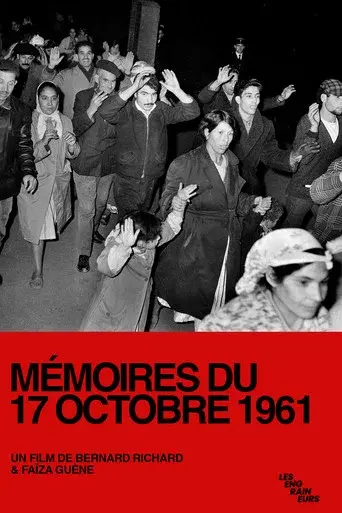

"Yasmina" filmed in 1961 in the middle of the Algerian war tells the story of a little Algerian girl with her hen and her family whose father was killed in a bombing by the French colonial army of occupation. The family, after a long journey, heads towards the refugee camps on the Tunisian border. Produced by the Cinema Service of the Provisional Government of the Algerian Republic (GPRA) in the midst of the war of independence, these films were intended to re-inform the population and international public opinion on the abuses committed by the French colonial army: torture, arrests and arbitrary executions, napalm bombings, fires in douars, entire villages wiped off the map, etc. which the French media described as a "pacification" campaign. The latter censoring or reorienting any images that could harm the colonial narrative.
Yasmina


Anne Elliot was once in love with Frederick Wentworth, a commander in the Royal Navy who was rejected by her snobby parents eight years ago. When the family hits hard times and are forced to rent out their mansion to his brother-in-law, Frederick returns as a captain - but will he remember Anne?
Persuasion

Self-absorbed artist Jenny voices her grievances with the world and the people around her as she enters a series of poetry competitions.
Please Pass Me By


A grieving young man searches his dreams for a few more sweet memories with his fiancé
If Only For Memories

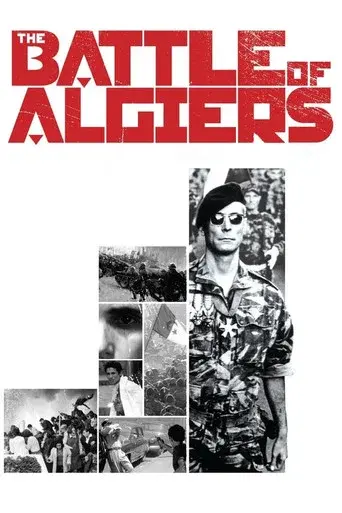
Former petty criminal Ali la Pointe becomes a commander of the Algerian Front de Liberation Nationale, directing a guerilla insurgency against the colonial French occupation. Paratrooper commander Colonel Phillippe Mathieu, a veteran of World War II and the First Indochina War, is sent to Algeria to reinforce efforts to squelch the uprisings.
The Battle of Algiers

The tumultuous life of Arthur Rimbaud, the cursed poet, who completed his masterwork at the age of twenty, became an arms dealer and died at thirty-seven; and his passionate relationship with Paul Verlaine, full of wanderings, storms and falling out.
A Season in Hell
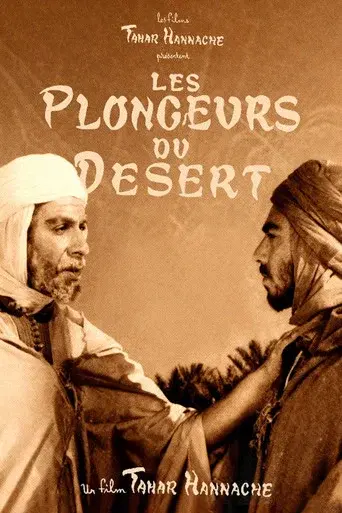
Les Plongeurs Du Désert, directed by Tahar Hannache in 1952, is considered the first entirely Algerian fiction film. It tells the story of the inhabitants of an oasis whose well has dried up. The village elder, Sheikh Messaoud, calls upon the renowned desert divers, artisans specializing in clearing sand- and silt-filled wells, to restore access to the vital water for the community. After their intervention, the water begins to flow again, bringing relief to the oasis and its inhabitants. The film depicts the contrast between the traditional techniques of the divers, embodied by Sheikh Ali and his son Mansour, and the arrival of modernity, represented by the machine that ultimately replaces their craft. This story symbolizes the marginalization of local knowledge in the face of technological progress and the social injustice of the colonial era.
The Desert Divers
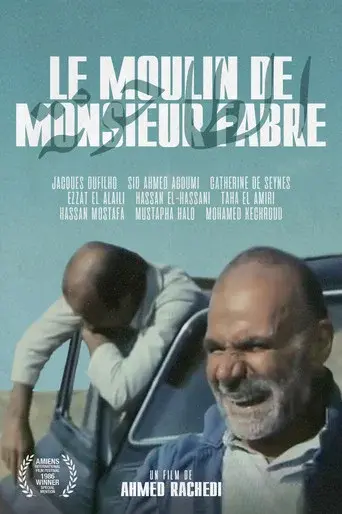
The story of the post-independence nationalization of the mill of Monsieur Fabre, an old man attached to the land of Algeria where he was born. In this small town in eastern Algeria, there was nothing else to nationalize and they were actively preparing for the arrival of high dignitaries who would elevate the mill to the rank of an industrial flour mill even though it was threatened with ruin. The comedy gets worse when the football player from the local team withdraws for love, the officials' visit is canceled and Mr. Fabre returns.
The Mill of M. Fabre


"Fag End" is an astute representation of the metaphorical death of a mother. The movie revolves around a girl named 'Tania', a victim of smoking and alcohol abuse, going through the process of In vitro fertilization. When it comes to alcohol and smoking, an abuser is overlapped with the tendencies of both alcoholism and chain smoking wherein one is subjected to intense cravings, followed by untoward mental as well as physical detention. Things go downhill one morning, as she relapsed the night before and she suffers a miscarriage. Does it not leave us with the raucous screams of the unborn?
Fag End

A woman finds herself in a distorted reality, walking through a labyrinthine space. Seeking to leave this place, she faces and gives new meaning to her memories so she can move on.
