Dusk of the Lights
Overview
Dusk of the Lights is a short experimental film directed by Allan Bustovsky.
Top Cast

Allan Bustovsky
Self
Key Film Crew
Production Stats
You May Also Like


The film discusses the evolution and potential of using light waves, particularly coherent light, for communication. It highlights the development of lasers at Bell Telephone Laboratories, explaining how they produce a highly controlled and intense beam of light that could revolutionize communication. The film emphasizes the vast possibilities of lasers, including applications in telecommunications, surgery, and exploring the universe, suggesting that this technology represents a significant step in humanity's understanding and use of light.
The Conquest of Light

A homogeneous structure of wind and light across tree branches in the South region of Isère
Tree Limbs


From the light that falls on the backyard of his house on the day of the equinox without shadow in Quito, and inspired by the "Theory of colors" of Goethe, the director takes us to several cities in America to reflect on the influence that the light has in the understanding of our surroundings.
Luz de América


An exciting video journey through the world of time-lapse photography by one of the founders of the science of photobiology, Dr. John Nash Ott. Do fluorescent lights cause cancer and childhood learning and behavior disorders? Can long-term exposure to low-level radiation as from TV sets, computers, fluorescent lights, and similar devices harm you? Does living behind window glass and with glasses covering our eyes over years affect our health? Is natural sunlight and trace ultra-violet radiation really harmful? Or is it necessary and beneficial? How do cells, plants, and animals respond to constant exposure to different light color frequencies? These and similar questions were the subjects of Dr. Ott's pioneering investigations in the field of photobiology, using the methods of time-lapse photography.
Exploring the Spectrum
A study of brief motion through cuts, lights, family conversations and grief in a quiet home at Félines, Ardèche. Filmed in a Keystone Americana camera from two 8mm B/W reels
Easter Sunday at Félines
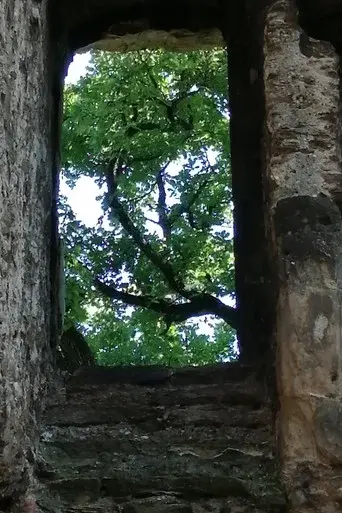

Five fragments of observation and sensations during a journey with Gorneton's trail in Seyssuel, Isère. A work-in-progress with sounds, the interest of light and the solitude of a digital camera.
The Aqueduct of Seyssuel
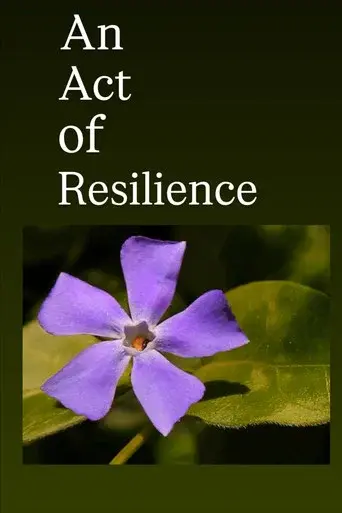
A strange orchestra of bodies, light, reflections and shadows throught shots of brief action and surprising appearances of humans and animals. A small film rejecting hierarchy while finding connectedness of love and affection in the small gestures of life.
An Act of Resilience
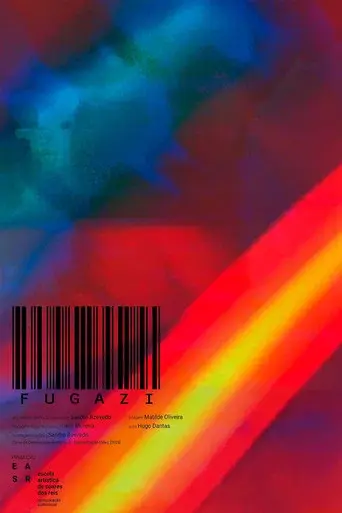
FUGAZI is an experimental short film that explores the genesis of space through the presence of sound. Inspired by Leibniz’s relational theory, the film suggests that space only exists when it is inhabited, in this case, by sound. Through a sensory and progressive montage, sound reveals, transforms, and collapses space, guiding the viewer through cycles of creation and dissolution. It is an audiovisual experience about the invisible becoming visible when heard.
Fugazi

A study of observation, perceptions and sensations of nature and human interactions from the eye of a digital camera
Green Leaves
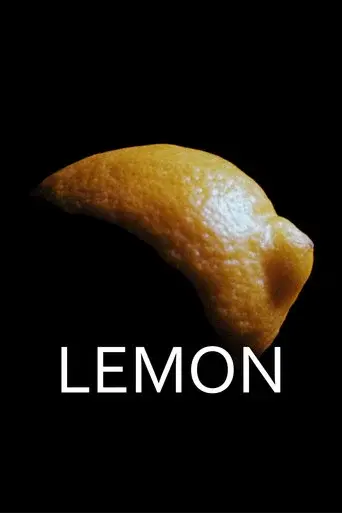
Light begins to illuminate the small, nipple-like end of a lemon on the right edge of the frame and gradually spreads until the entire lemon is clearly visible. Then the light recedes across the frame.
Lemon

Light is a fascinating phenomenon. Without light, there would be no cinema, no film – and no life. So light is at the origin of everything, and yet it remains invisible to the eye until it hits matter. This moment is – quite literally – the starting point of Thomas Riedelsheimer’s latest work, for the springtime spectacle of rainbow shreds in the cinematographer and documentary filmmaker’s flat became the starting point of a search for the origin of the images we form of this world. For this quest he dived deep into two spheres that seem to follow different laws but always strive to fathom the magical: physics and art.
Tracing Light

Soji-ji (1979) is a video work documenting a chant recitation at a Zen temple. The chant recited by many monks does not proceed in unison like group singing. Each monk recites in sync with his breath, so that the intake of breath occurs at different moments. That is to say, each monk articulates the chant differently. Since there is no unified division, when the multiple chants overlap, an endless wave of chant (sutra) appears as a collective density or modality (at the same time, each monk’s steps form a totally different rhythm from the individual chants).