

Lemon
Overview
Light begins to illuminate the small, nipple-like end of a lemon on the right edge of the frame and gradually spreads until the entire lemon is clearly visible. Then the light recedes across the frame.
Key Film Crew
Production Stats
You May Also Like

A condensation of a handful of sunsets with various visual moods. Red and blue as opposites that still find a way to cohere. Concrete silhouettes over an ever-changing, expanding canvas. Every movement is collective, molecular. Over an invisible horizon, a chance presents itself to meditate on the “speed” of water (and the sea) and also for a more fluid kind of editing.
Shapeless Variations


Ellie Epp’s 12-shot study of a soon-to-be-demolished public bath in London, which “maps another way out of structural film toward a cinema of delicate implication".
Trapline

The film discusses the evolution and potential of using light waves, particularly coherent light, for communication. It highlights the development of lasers at Bell Telephone Laboratories, explaining how they produce a highly controlled and intense beam of light that could revolutionize communication. The film emphasizes the vast possibilities of lasers, including applications in telecommunications, surgery, and exploring the universe, suggesting that this technology represents a significant step in humanity's understanding and use of light.
The Conquest of Light
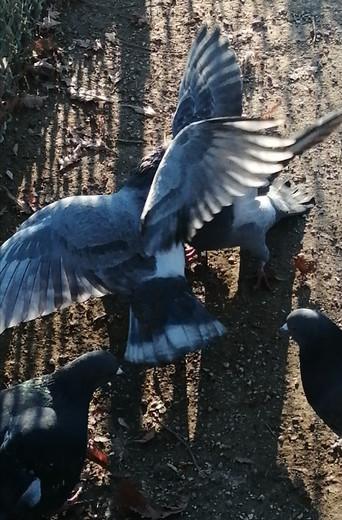

A homogeneous structure of wind and light across tree branches in the South region of Isère
Tree Limbs

Fog has a curious effect on cinema. On the one hand, it precludes the production of those images that seem artificial, on account of their sharpness. On the other, the mist gives each frame a mysteriously narrative quality. The joy of watching the sea and the beach under a blanket of mist allows eluding the world of the quotidian, to suspect the beauty of the uncertain and unstable
Niebla
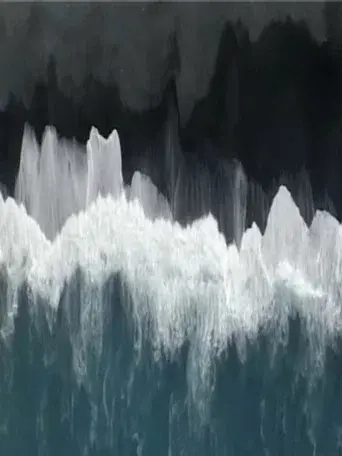
The passing time is displayed as a series of still frames, or a rapid sequence of moments, ever flowing like the waves that break on the shore, like a repeated chant with no beginning, middle or end.
La Mer


An exciting video journey through the world of time-lapse photography by one of the founders of the science of photobiology, Dr. John Nash Ott. Do fluorescent lights cause cancer and childhood learning and behavior disorders? Can long-term exposure to low-level radiation as from TV sets, computers, fluorescent lights, and similar devices harm you? Does living behind window glass and with glasses covering our eyes over years affect our health? Is natural sunlight and trace ultra-violet radiation really harmful? Or is it necessary and beneficial? How do cells, plants, and animals respond to constant exposure to different light color frequencies? These and similar questions were the subjects of Dr. Ott's pioneering investigations in the field of photobiology, using the methods of time-lapse photography.
Exploring the Spectrum

A short structural film that questions the reality we live in under capitalism through various images of Paris, Edinburgh, and Disneyland.
Some Real Places
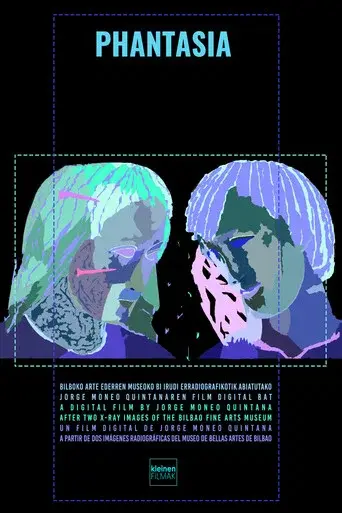
X-ray images were invented in 1895, the same year in which the Lumière brothers presented their respective invention in what today is considered to be the first cinema screening. Thus, both cinema and radiography fall within the scopic regime inaugurated by modernity. The use of X-rays on two sculptures from the Bilbao Fine Arts Museum generates images that reveal certain elements of them that would otherwise be invisible to our eyes. These images, despite being generally created for technical or scientific purposes, seem to produce a certain form of 'photogénie': they lend the radiographed objects a new appearance that lies somewhere between the material and the ethereal, endowing them with a vaporous and spectral quality. It is not by chance that physics and phantasmagoria share the term 'spectrum' in their vocabulary.
Phantasia

A silent dance documenting a brief visit to Minneapolis in the fall of 2022. A reflection on the sleeping city's tumultuous recent history through a recollected interaction and a plea for continued disturbance. Twin City Twist was shot on Kodak Tri-X reversal super 8 film with kaleidoscopic lenses. The film was scanned and edited digitally.
Twin City Twist

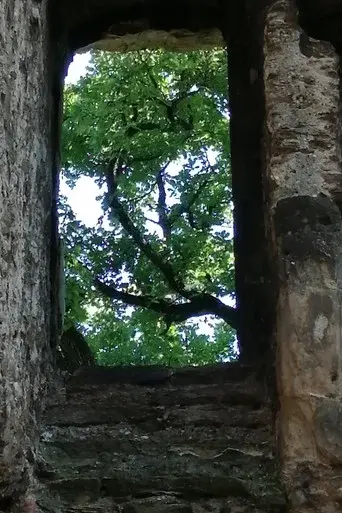
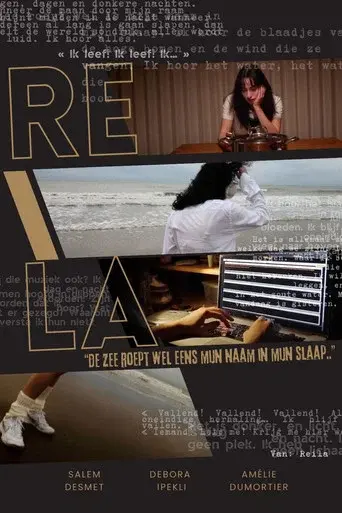

An obsessive exploration of the three geometric dimensions in hopes of reaching a fourth.
XYZ

A study of observation, perceptions and sensations of nature and human interactions from the eye of a digital camera
Green Leaves


Two women in a living room: smoking, playing cards, listening to the radio. As often in Dwoskin’s films, the use of masks, make-up and costumes allows the characters to playfully transform themselves. Shot in colour film, C-film exuberates swinging London energy. In the second part of the film, the women appear to be watching the rushes of the film on an editing table. ”We are making a movie” we hear them say. As Dwoskin points out, “C-film asks how much is acting acted”, an ongoing question in Dwoskin’s cinema. Produced by Alan Power, with Esther Anderson & Sally Geeson.