

Corpo Presente
Overview
A hybrid feature film that investigates contemporaneity through the body and its countless possibilities of expression and meanings. The film puts the body and the idea of the body in evidence, through metalanguage, articulation and confrontation of documentary, fictional and performative languages. The film follows the trajectory of the main character who uses her own body to formulate universes and investigate the meanings that are drawn in it. In a kind of subjective diary written on her skin, she records sensations and reflections, building relationships with thinkers, performances and archival materials, which lead her to other bodies and other stories.
Top Cast

Ludmilla Ramalho
Ana Luísa Santos
Janaína Tábula
Guilherme Morais
Marc Davi
Ayrson Heráclito
Elisa Santana
Maria Clara Machado Signorelli
Jahi Amani
Key Film Crew
Production Stats
You May Also Like
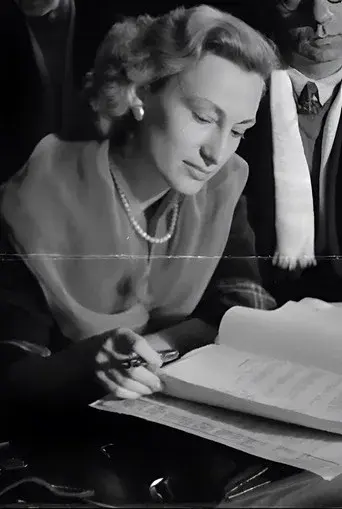
Made on the occasion of March 8, it presents a series of brief portraits of women, from various professional fields, of different ages and even of different ethnicities, pointing out the benefits that the communist organization had brought to their daily lives. A special emphasis is placed on their status as mothers and on the role of nurseries and socialist kindergartens not only in making their lives easier, but also in giving them the time they need to build a career. Another concern of the filmmaker, starting from the concrete case of one of the protagonists, is to highlight the differences between the happy present and the not-too-distant past in which someone with her social status should have dedicated herself exclusively to raising children, in hygienic and extremely difficult lives.
Women of Today

In this layered short film, filmmaker Janine Windolph takes her young sons fishing with their kokum (grandmother), a residential school survivor who retains a deep knowledge and memory of the land. The act of reconnecting with their homeland is a cultural and familial healing journey for the boys, who are growing up in the city. It’s also a powerful form of resistance for the women.
Stories Are in Our Bones


In an experimentally compiled film review, Danielle Jaeggi, Paule Baillargeon and Claudia von Alemann reflect on their work as filmmakers and life as mothers. Just as the title is based on Michel Leiris' book of poems Bright Nights and Many a Dark Day, the film has its own poetry, which is also evident in shots of everyday activities, such as hands washing dishes. “Just the hair or the relationship of the hands to each other or gestures, and then words come in between and film clips that we talk about, and we were amazed to find that the women we portray in the films always have a lot of trouble with theirs Identity, their search for something, for lost people or lost things. “They are usually looking for something that has been lost, forgotten or gone,” said Claudia von Alemann in the 1992 interview conducted by Renate Fischetti, A Pioneer of Female Film Language. An essay about desire, doubt, contradictions. (fib)
Bright Nights

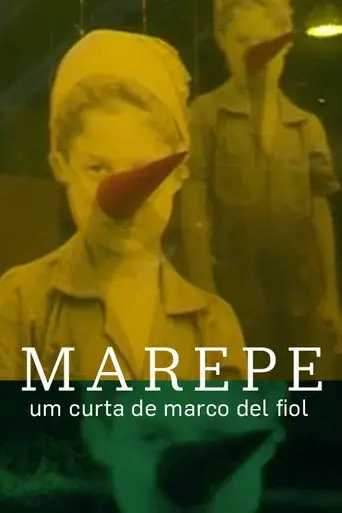
Marepe, an artist from Bahia, produces art with anything he comes across in the town he lives in, Santo Antônio de Jesus. Packs of cigarettes, coconut palms, walls, and memories taken from the streets, go into putting together a personal archeology for this young artist.
Marepe
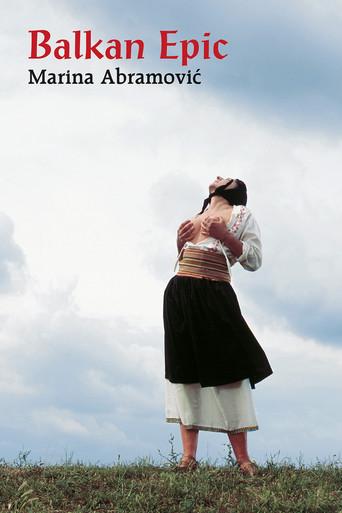


One Meter of Democracy (2010) challenged the endurance of viewers, as well as the courage of the artist. In a quasi-democratic process, He Yunchang invited approximately 20 friends to vote in a secret ballot on whether he should have a surgeon cut a one metre incision the length of his body, from collar bone to knee, without anaesthesia. The vote was carried by a narrow majority, with several abstaining. The performance was documented in video and photographs that reveal the emotional cost of witnessing this gruelling event. This work, sometimes also known as ‘Asking the Tiger for its Skin’ was also staged on a symbolic date: 10 October 2010 was the 99th anniversary of the Wuchang uprising and the Xinhai Revolution which led to the fall of the Qing Dynasty and the establishment of the Republic of China. The final image shows the group with sombre, shocked faces.
One Meter Democracy

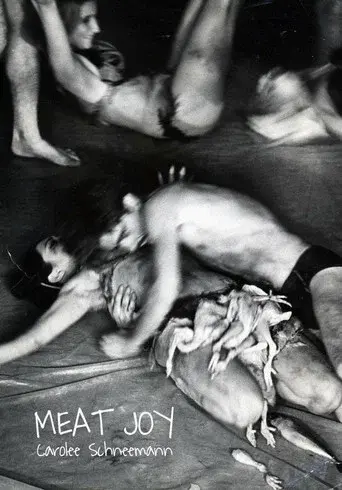
"Meat Joy is an erotic rite — excessive, indulgent, a celebration of flesh as material: raw fish, chicken, sausages, wet paint, transparent plastic, ropes, brushes, paper scrap. Its propulsion is towards the ecstatic — shifting and turning among tenderness, wildness, precision, abandon; qualities that could at any moment be sensual, comic, joyous, repellent. Physical equivalences are enacted as a psychic imagistic stream, in which the layered elements mesh and gain intensity by the energy complement of the audience. The original performances became notorious and introduced a vision of the 'sacred erotic.' This video was converted from original film footage of three 1964 performances of Meat Joy at its first staged performance at the Festival de la Libre Expression, Paris, Dennison Hall, London, and Judson Church, New York City."
Meat Joy
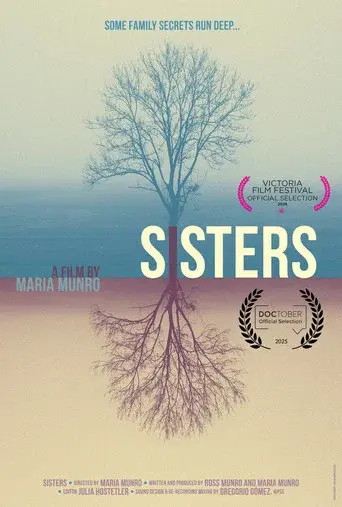
“Sisters” is a deeply personal story about my journey back to my home country of Venezuela to investigate the possibility of a long lost sister.
Sisters

A discovery of the pictorial art that Ndebele women traditionally practice in South Africa: painting the walls of their houses.
Black Pénélope
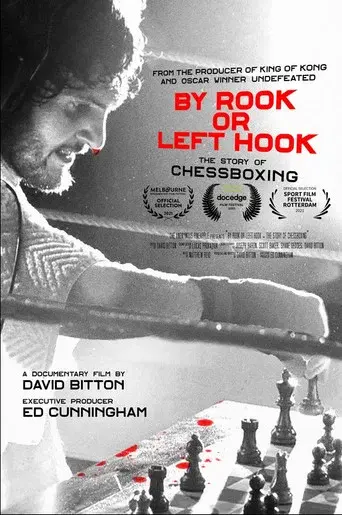
In 2003, Dutch artist Iepe Rubingh became the first World Champion of Chessboxing. This brain-busting combination of alternating rounds of chess and boxing was in fact an art performance calling for more balance in a world of extremes, and the audience reaction was so electric that it inspired Rubingh to push it as a real sport. Rubingh’s methodical ability to achieve balance in the ring is put to the test outside of it when impulsive British TV Producer Tim Woolgar takes up the sport and his opposing vision for success creates a rift between them, endangering chessboxing’s future.