
Overview
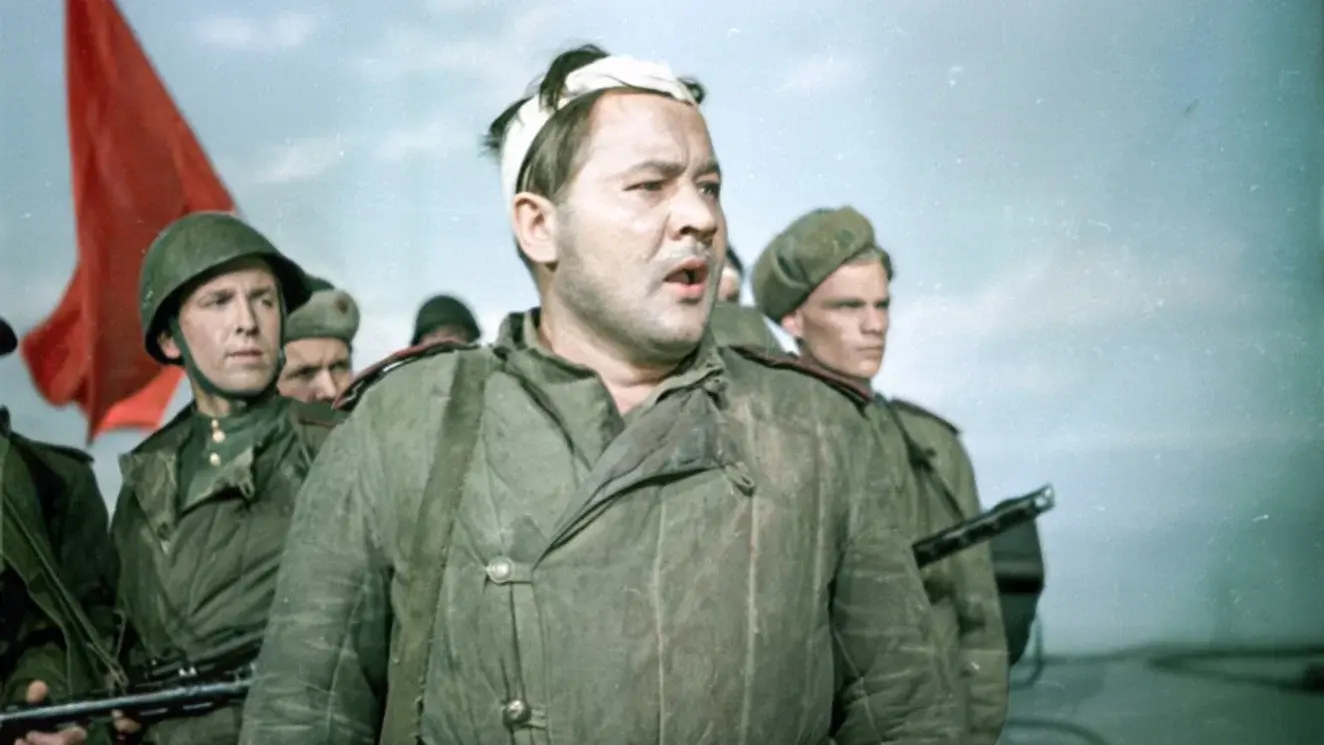
Surrounded by a few party officials, Alexei Ivanov, a stakhanovist smelter, is decorated by Stalin. The "Little Father of the Peoples" takes this opportunity to invoke threats of war.... One day, war indeed breaks out. Bombs fall on the field where Alexei finds himself in the company of the schoolmistress Natacha, his fiancée. Alexei joins the Red Army and soon becomes a sergeant. Fighting rages and German troops advance. Natacha is arrested and deported. But the tide turns decisively with the German defeat at Stalingrad. Now the major offensive against Hitler can begin.
Top Cast

Mikheil Gelovani
I. V. Stalin
Maksim Shtraukh
Molotov

Aleksei Gribov
Voroshilov

Nikolai Ryzhov
Kaganovich
Gavriil Belov
Kalinin

Ruben Simonov
Mikoyan

G. Pasechnik
Malenkov
Vladimir Lyubimov
Marshal Vasilyevsky

Sergei Blinnikov
Marshal Konev
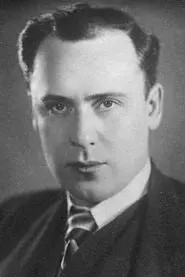
Boris Livanov
Marshal Rokossovsky
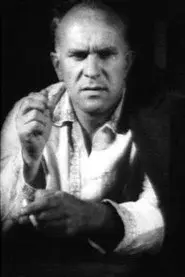
Fyodor Blazhevich
Marshal Zhukov

Konstantin Bartashevich
General Sokolovsky
Key Film Crew
Production Stats
You May Also Like

In the mid-1950s, an unnamed convict succsesfully manages to escape from the Goli Otok prison island, seeking shelter in a monastery on the nearby island of Rab and striking a kinship with one of the nuns in it. A few days later, an agent of the Yugoslav State Security Service arrives on the island, desperate to find the man's whereabouts. The nuns and the monks face a decision of their lifetime. Are they going to turn the wounded man they know nothing about to the authorities, or will they continue concealing him and risk their lives in the process?
The Seventh Cronicle
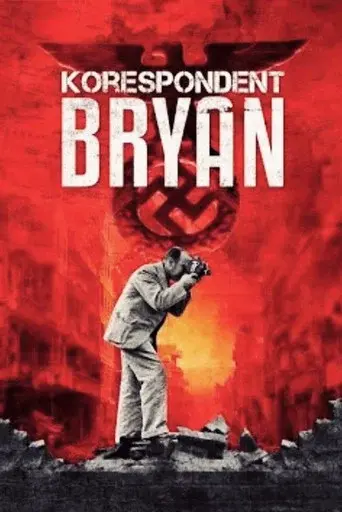
The film is based solely on footage shot in Warsaw in 1939 by Julien Hequembourg Bryan. This American filmmaker and photographer documented life in Poland, the Soviet Union and Nazi Germany between 1935 and 1939. Following the outbreak of the Second World War, he arrived in Warsaw, where he shot a number of films documenting the city under siege, and is said to be the only foreign correspondent in the Polish capital at the time. Bryan also took the first colour photographs of wartime Warsaw.
Korespondent Bryan

In 1943, while the Allies are bombing Berlin and the Gestapo is purging the capital of Jews, a dangerous love affair blossoms between two women – one a Jewish member of the underground, the other an exemplar of Nazi motherhood.
Aimée & Jaguar

On March 24, 1944, in the heart of Nazi Germany, 76 British, Canadian, Norwegian and French pilots who were held in Stalag Luft III, a prison camp of the Luftwaffe, escaped. Unique testimony from the last survivors, recreations and today’s digital images sheds new light on the audacious escape.
The Great Escape

Shortly before the end of the war in 1945, the Allies can already be heard in Nesselbühl in Swabia when three freight cars are uncoupled at the station. The screams of the starving concentration camp prisoners inside can be heard throughout the village, but nobody dares to help them. Only the innkeeper's daughter Anna takes heart...
Drei Tage im April
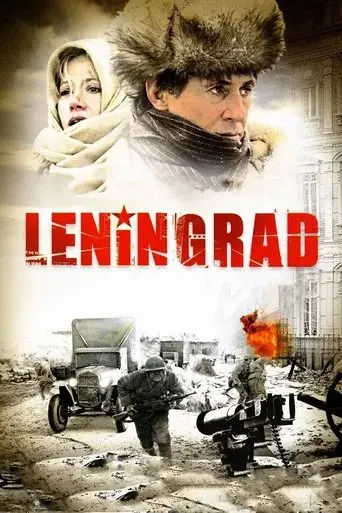
When in 1941 Nazi Germany invaded the Soviet Union, their troops quickly besieged Leningrad. Foreign journalists are evacuated but one of them, Kate Davies, is presumed dead and misses the plane. Alone in the city she is helped by Nina Tsvetnova a young and idealist police officer and together they will fight for their own survival and the survival of the people in the besieged Leningrad.
Leningrad
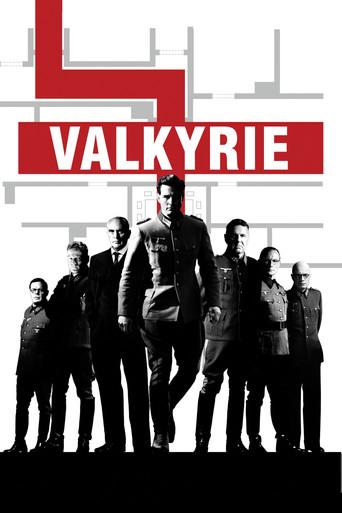
Wounded in Africa during World War II, Nazi Col. Claus von Stauffenberg returns to his native Germany and joins the Resistance in a daring plan to create a shadow government and assassinate Adolf Hitler. When events unfold so that he becomes a central player, he finds himself tasked with both leading the coup and personally killing the Führer.
Valkyrie

In 1944 Poland, a Jewish shop keeper named Jakob is summoned to ghetto headquarters after being caught out after curfew. While waiting for the German Kommondant, Jakob overhears a German radio broadcast about Russian troop movements. Returned to the ghetto, the shopkeeper shares his information with a friend and then rumors fly that there is a secret radio within the ghetto.
Jakob the Liar

This story starts in 1980 in Paris as the memories of Andrei Borodin, a Soviet agent, take the action back to 1943 during the Teheran meetings of Stalin, Roosevelt and Churchill. A high-ranking Nazi officer developed a plan to assassinate the three world leaders in order to undermine the Allied forces. He commissioned the German agent Max Richard to carry out his plan, but it failed miserably due to the quick action and thinking of Andrei. While in Teheran, Andrei met a French woman, Marie Louni, living in the city and they had a brief but intense affair. Nearly four decades later, the Nazi officer has been captured - but not for long. Freed by terrorists, the officer is hunting down the German agent who failed to carry out the planned assassinations. Max lives at Françoise, a young French woman, who hides him.
Teheran '43

The true, harrowing story of a young Jewish girl who, with her family and their friends, is forced into hiding in an attic in Nazi-occupied Amsterdam.
The Diary of Anne Frank
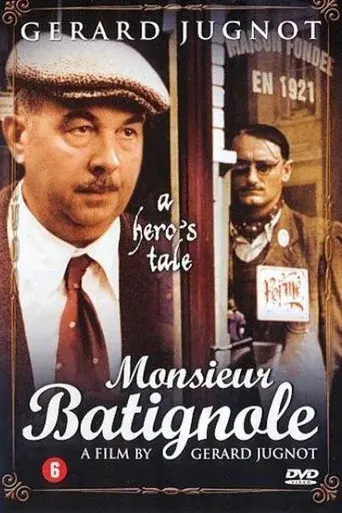
In 1942, in an occupied Paris, the apolitical grocer Edmond Batignole lives with his wife and daughter in a small apartment in the building of his grocery. When his future son-in-law and collaborator of the German Pierre-Jean Lamour calls the Nazis to arrest the Jewish Bernstein family, they move to the confiscated apartment. Some days later, the young Simon Bernstein escapes from the Germans and comes to his former home. When Batignole finds him, he feels sorry for the boy and lodges him, hiding Simon from Pierre-Jean and also from his wife. Later, two cousins of Simon meet him in the cellar of the grocery. When Pierre-Jean finds the children, Batignole decides to travel with the children to Switzerland.
Monsieur Batignole

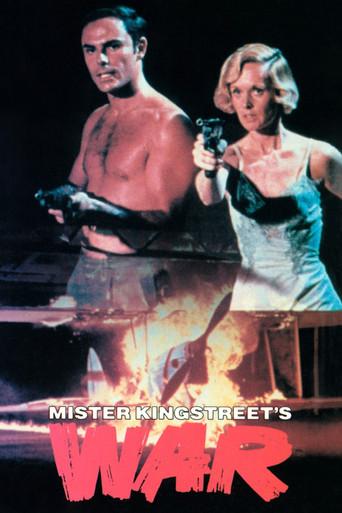
A couple sets up an African game preserve, only to have British and Italian armies fight over the waterholes.
Mr. Kingstreet's War
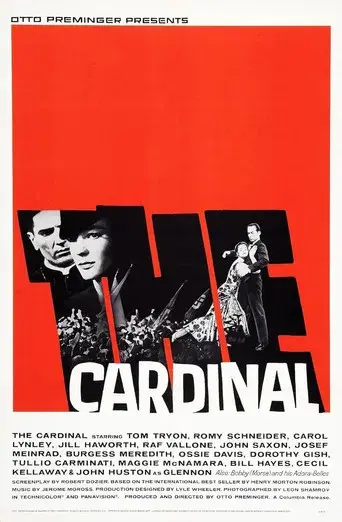
A young Catholic priest from Boston confronts bigotry, Nazism, and his own personal conflicts as he rises to the office of cardinal.
The Cardinal
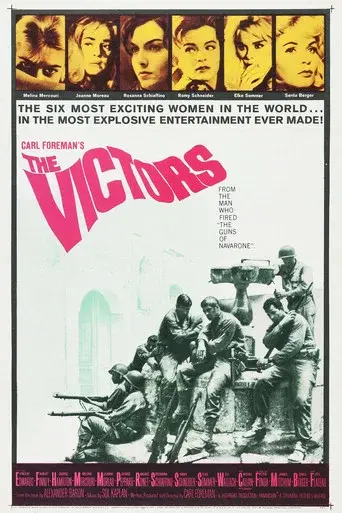
Intercutting dramatic vignettes with newsreel footage, the story follows the characters from an infantry squad as they make their way from Sicily to Germany during the end of World War II.
The Victors

It was autumn 1939, shortly after the attack on Poland by the German army. The military component of the Slovak State are allies of the Nazis, and with them came on Polish territory. They're alongside the mighty army of Hitler's occupation force. In the decimated Polish town the Commander of the Slovak company Major Valenta issues orders that all residents surrender weapons if they own any. Insubordination will be punishable by death. Shortly after, the charming young Polish lady Žofie reports Valenta about: Professor Klosowski, who is Professor of Botany at the local high school, said to be hiding out at home in the library of the gun. Valenta reluctantly executes search warrant and weapon is found, but it is immediately clear that the old Professor became the victim of misunderstandings or possible fraud. To his surprise, he soon discovers that Sophie has a close relationship with Klosowski. But just before he fathoms the mystery, the occupation machinery executes havoc.
Dáma
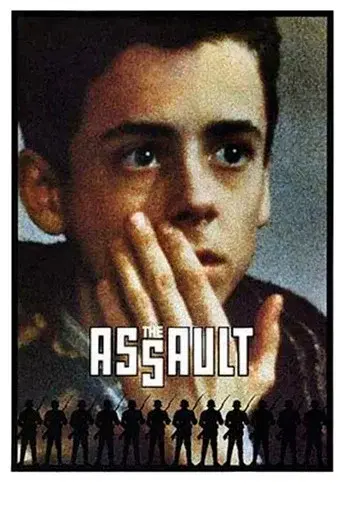
At the end of WWII the Dutch resistance kills a German officer in front of the house of a Dutch family. Years after the war the young boy who witnessed the killing runs into the members of the resistance who committed the killing.
The Assault

After World War II, Antonia and her daughter, Danielle, go back to their Dutch hometown, where Antonia's late mother has bestowed a small farm upon her. There, Antonia settles down and joins a tightly-knit but unusual community. Those around her include quirky friend Crooked Finger, would-be suitor Bas and, eventually for Antonia, a granddaughter and great-granddaughter who help create a strong family of empowered women.