

Exponents: A Study in Generalization
Overview
Created as a demonstration of multi-disciplinary thinking, this film was produced in association with UCLA Mathematics professor, Ray Redheffer. With the exclusive use of storytelling through animation this lively and exuberant presentation of the “architecture of algebra,” the film explains the behavior of specific exponents and concludes with the general laws that all exponential expressions obey – all achieved without the use of narration. Council on International Non-Theatrical Events (C.I.N.E.) Gold Eagle Award, 1975. Columbus International Film Festival Bronze Chris Plaque Award-C, 1975. New York International Animation Festival Bronze Praexinoscope Award, 1975. Melbourne Film Festival Selected for Participation, 1976.
Key Film Crew
Production Stats
You May Also Like


A mathematical play on one repeated movement. It imparts a sense of possibilities: that something simple can produce complex and unexpected patterns. As with an atom, the variety of possibilities from a base movement is potentially infinite.
Dimensions
Made entirely on Roger Wagner's HyperStudio software, Chris Marker explores set theory, using Noah's Ark as an example.
Theory of Sets
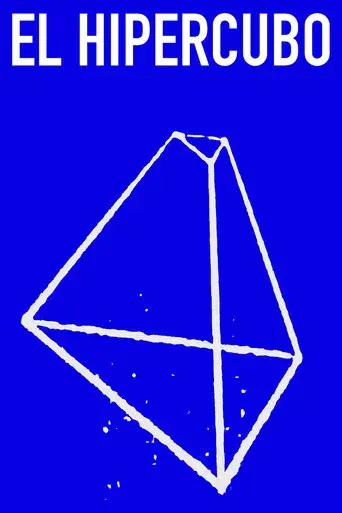
Based on the thesis of Alejandro Rivero and Ernesto Pacheco, this documentary attempts to glimpse, through the senses, the fourth mathematical dimension.
El hipercubo

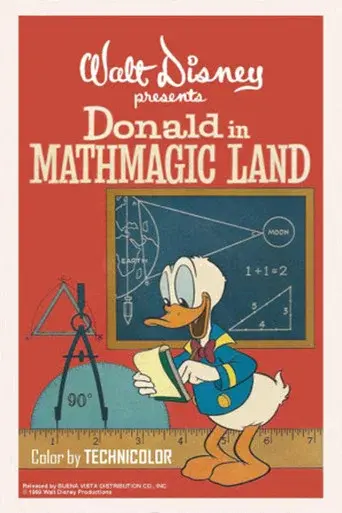
Disney used animation here to explain through this wonderful adventure of Donald how mathematics can be useful in our real life. Through this journey Donald shows us how mathematics are not just numbers and charts, but magical living things.
Donald in Mathmagic Land


As the narrator explains, educating children is one of the most important things today and the heroic man who takes on this role is "the school teacher" (Goofy, naturally). After taking role call, Goofy tries to teach the class but keeps having to deal with a mischievous trouble-maker named George who enjoys sneaking out of class to go fishing, eating the teacher's apple, squeaking chalk, making faces while teacher gives a geography lesson, and terrorizing the other students with his water pistol. In the end, George's mischief goes too far when he destroys the school with an exploding bomb and is forced to write "I will not bomb the school again" 100 times!
Teachers Are People

An attempt to visualize a secret knowledge about the nature of man —a philo-clip—, through the use of structures of dissociated geometry and laser beams, with direct references to the Renaissance, Leonardo da Vinci and the work of Agrippa von Nettesheim.
The Occult Philosophy
“If abstract films are really abstract films… they deal exclusively with those abstract relations that can be expressed in terms of shape and motion” wrote Robert Fairthorne in Film Art in 1936. A mathematician and information scientist, Fairthorne saw aesthetic potential in an animation made as a teaching aid by Salt, and proposed this collaboration. (Tate.org.uk)
The Equation X + X = 0

The computer animation Outside In explains the amazing discovery, made by Steve Smale in 1957, that a sphere can be turned inside out by means of smooth motions and self-intersections. Through a combination of dialogue and exposition accessible to anyone who has some interest in mathematics, Outside In builds up to the grand finale: Bill Thurston's "corrugations" method of turning the sphere inside out.
Outside In
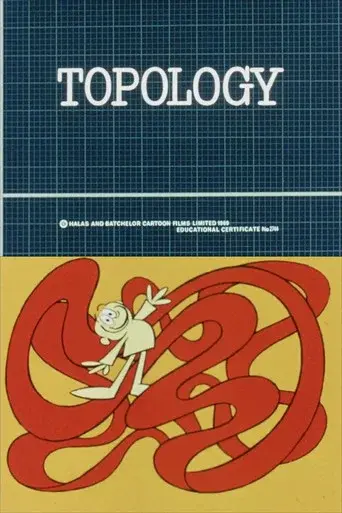
One of a humorous series of films devised to explain in graphic terms the concepts of basic mathematical functions.
Topology
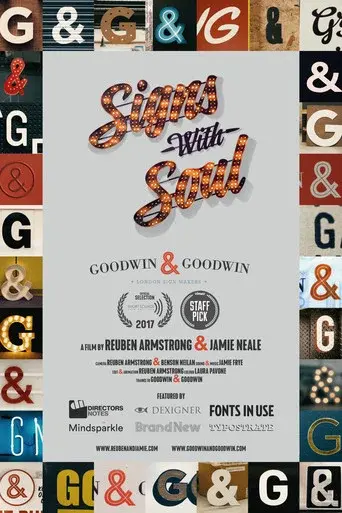
Goodwin & Goodwin are a creative sign company based in North London — an eclectic, international team of architects, designers, typographers and sign makers. From their passion for retro typography, through to their pride in seeing the final pieces hanging on the wall, this is a heart-warming documentary about hand-crafted design and teamwork.
Signs With Soul
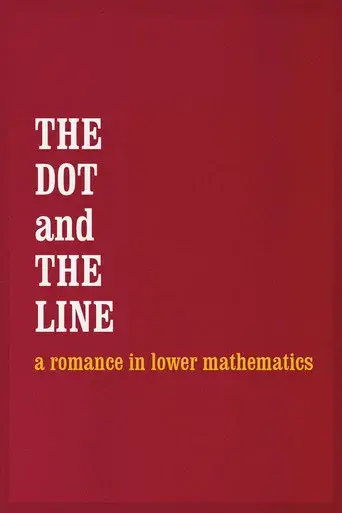
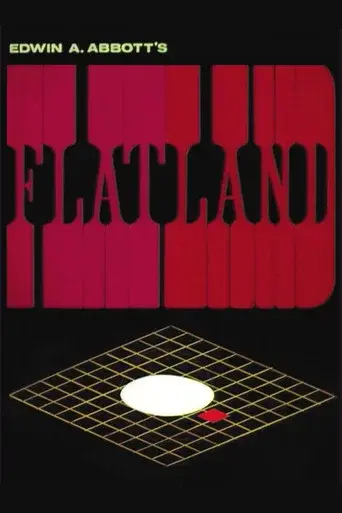
A short, animated film based on Edwin Abbott's 1884 satirical novella, Flatland: A Romance of Many Dimensions.
Flatland

An experimental mathematics film designed to elucidate the study of four-line conics.
Four-Point Conics
During the 1995 Summer Institute at The Geometry Center, a team of undergraduates, middle and high school mathematics teachers and Center staff developed curriculum materials supporting The Shape of Space video. The team developed a comprehensive curriculum, covering many areas related to the video. The following materials were selected for distribution based on their direct relevence to understanding the video itself.