Overview
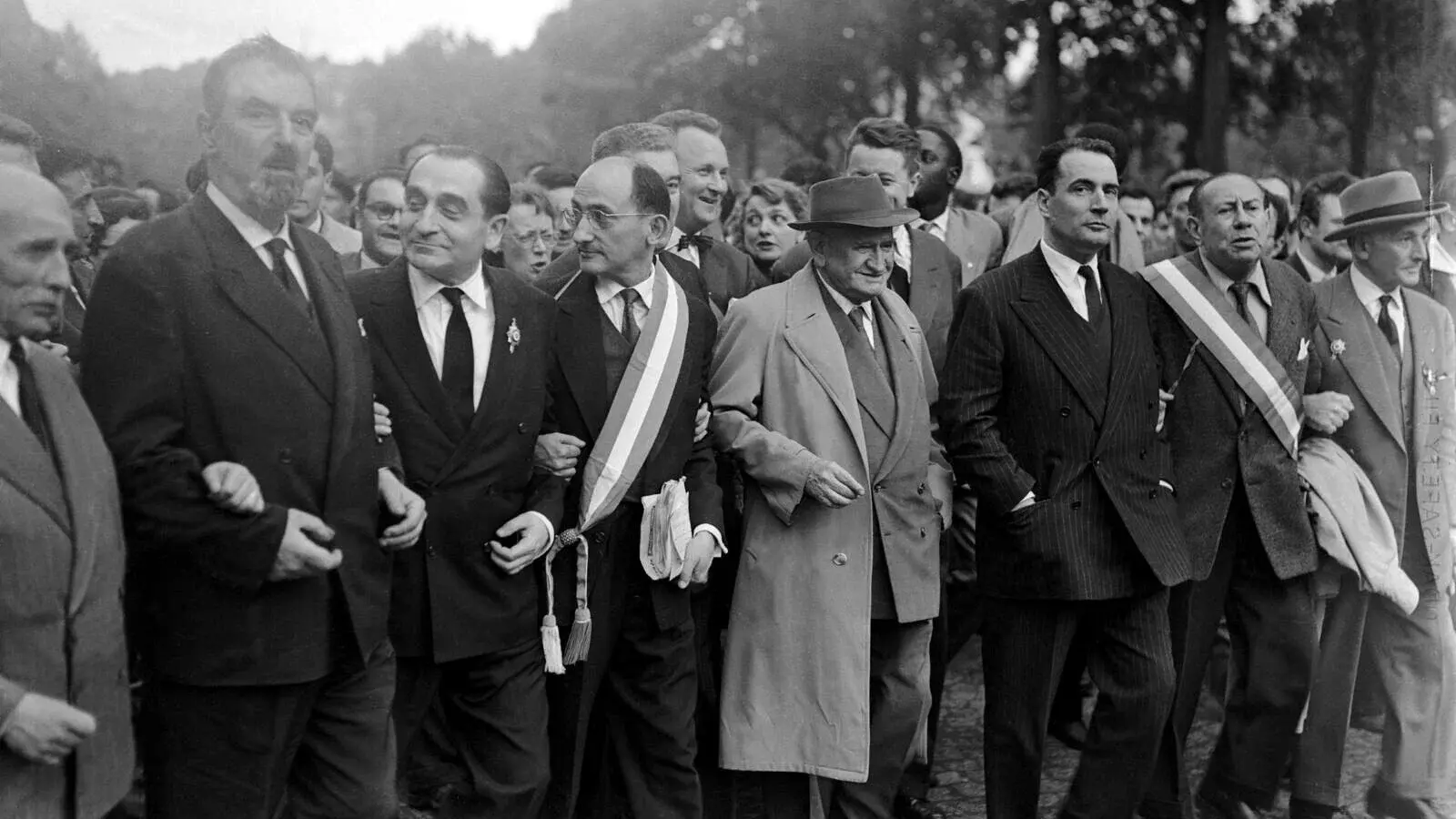
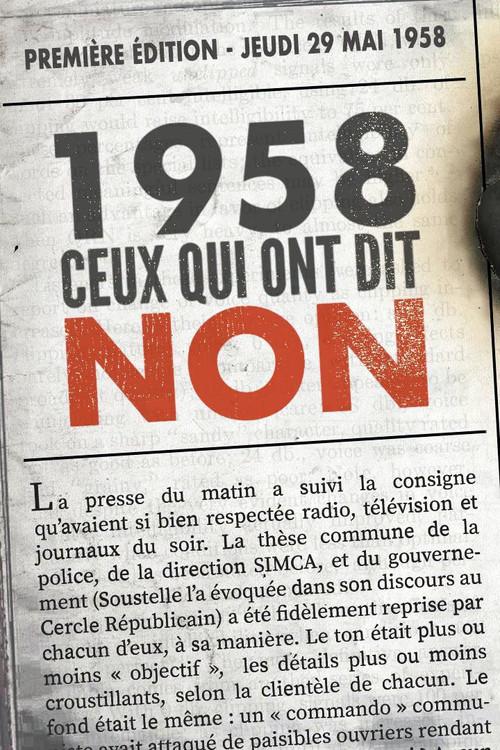
On October 4, 2018, France celebrated the 60th anniversary of the Fifth Republic. It is a republic born in the throes of the Algerian War and one which—from the day it was founded by General de Gaulle until the presidency of a very Jupiterian Emmanuel Macron—has been assailed as a “Republican monarchy” by partisans of a more assertive parliamentarian state. By revisiting the struggle of those who dared oppose the new regime — only to suffer a crushing defeat on September 28, 1958, when they were barely able to garner 20% of the vote against the constitutional text — this film shines a powerful new light on the origins of the Fifth Republic and its consequences for the next 60 years. It is a constitutional debate that planted the seeds for a complete upheaval of the French political landscape, on the left in particular, and set the country in motion toward what would be called the Union of the Left.
Top Cast

Philippe Saada
Narrator (voice)
Pierre Pflimlin
Self (archive footage)
Raoul Salan
Self (archive footage)

Jacques Massu
Self (archive footage)

Pierre Joxe
Self

Jean-François Sirinelli
Self
Charles de Gaulle
Self (archive footage)

Pierre Mendès France
Self (archive footage)

Charles Hernu
Self (archive footage)

Édouard Daladier
Self (archive footage)

Anicet Le Pors
Self

François Mitterrand
Self (archive footage)
Key Film Crew
Production Stats
You May Also Like

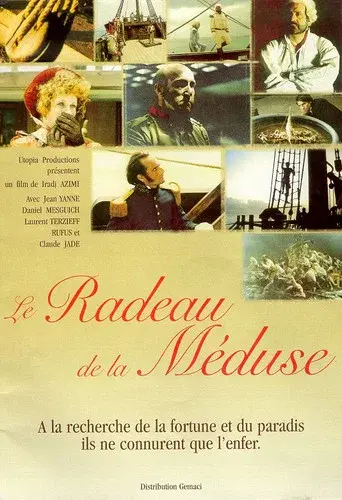
Iranian Iradj Azimi directed this French historical drama re-creating events depicted in the famous 1819 painting The Raft of the Medusa by Jean Louis Andre Theodore Gericault (1791-1824). The ill-fated voyage of the frigate Medusa begins when it departs Rochefort for Senegal in 1816. After striking a sandbar off the African coast, 150 civilians row safely to shore, but Captain Chaumareys (Jean Yanne) orders 140 soldiers and sailors onto a raft (minus supplies) and has it cut loose. Only 14 survive from the 140, creating a scandal back in France. Gericault (Laurent Terzieff) later talks to three of the survivors while researching his painting. Work on this film began in 1987, but sets destroyed by Hurricane Hugo caused delays, so the film was not completed until 1990. However, it then remained undistributed until an incident in which writer-director Azimi slashed his wrists in front of French Ministry of Culture officials.
Le radeau de la Méduse
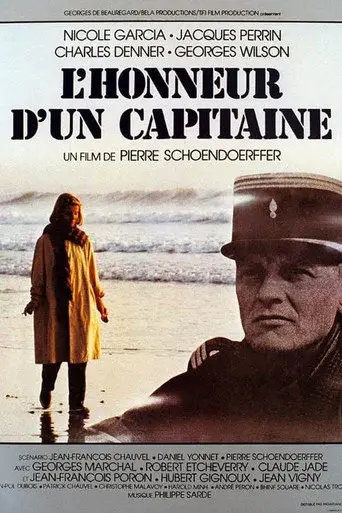
During a televised debate on the Algerian war in the early 1980s, Professor Paulet denounced the methods of Captain Caron, killed in action in 1957. The widow of the captain, Patricia, decided to file a defamation suit.
A Captain's Honor





FIAT EMPIRE was one of the first films to come out on the Federal Reserve System providing a valuable primer on a complex subject. This 60-minute documentary explores why some feel the "Fed" is a "bunch of organized crooks" (as John Adams put it) and others feel some of its practices "are in violation of the U.S. Constitution." Discover why experts agree the Fed is a banking cartel that benefits mainly bankers, their clients in need of "easy money" and bailouts, and a Congress that would rather go deeper in debt than seek funding from its constituents. Long-term studies indicate the Federal Reserve System encourages war, destabilizes the economy (by causing boom and bust cycles), generates inflation (a hidden tax) and is the supreme instrument of unjust enrichment for a select group of insiders. If you are fed up with an ever-expanding state and corporations that are "too-big-to-fail," look no farther than the fiat currency printed by the Federal Reserve System.
Fiat Empire

In 1964, Algeria, just two years after the end of the war of independence, found itself catapulted into new contradictions, a still rural territory which responded to the modernity brought by the revolution. Filmed during the winter of 1964-1965 by the young director Ennio Lorenzini, it is the first international Algerian production which paints a rare portrait in color of a multifaceted nation, far from the simplistic vision created by the press and the French army. Produced by Casbah Film, Les Mains Libres (initially titled Tronc De Figuier) bears witness to the stigmata of colonization and the future of free Algeria throughout the Algerian territory and reveals the richness of its landscapes and the diversity of its traditions . The documentary, using the aesthetics of militant cinema of the time, is made up of four scenes: Sea and Desert, The Struggle, The Earth, Freedom.
Les Mains Libres

Director Peter Joseph examines examples of economic subjugation and offers solutions based on alignment with nature.
Zeitgeist: Addendum

After marrying a successful Parisian writer known commonly as Willy, Sidonie-Gabrielle Colette is transplanted from her childhood home in rural France to the intellectual and artistic splendor of Paris. Soon after, Willy convinces Colette to ghostwrite for him. She pens a semi-autobiographical novel about a witty and brazen country girl named Claudine, sparking a bestseller and a cultural sensation. After its success, Colette and Willy become the talk of Paris and their adventures inspire additional Claudine novels.