

Overview
Before the Trojan War, Agamemnon gathered the Greek armies at the port of Aulis. The goddess Diane sent unfavorable winds to prevent the Greeks from sailing. Her oracle set a condition for Agamemnon: to earn the right to sail forth and destroy an innocent country, he would have to sacrifice his own daughter. Agamemnon accepted these terms and killed his young daughter Iphigénie on the altar. In his play Iphigenia in Tauris Euripides imagines that Diane plucked Iphigénie from that altar and delivered her to a temple in distant Tauride, where Iphigénie began to serve the enemy Scythians as Diane’s high priestess—all the while Iphigénie’s family believing her dead.
Top Cast

Véronique Gens
Inphigenie

Nicolas Testé

Laurent Alvaro
Thoas

Salomé Haller
Diane

Mireille Delunsch
Iphigenie

Yann Beuron
Pylade
Simone Riksman
First Priestess
Rosanne van Sandwijk
Second Priestess
Peter Arink
A Scythian
Harry Teeuwen
A Minister
Gonnie van Heugten
Priestess

Madieke Marjon
Priestess
Key Film Crew
Production Stats
You May Also Like
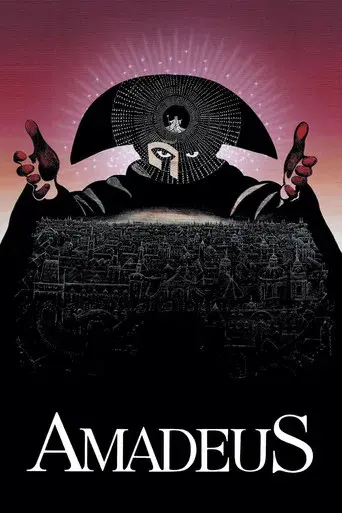
Disciplined Italian composer Antonio Salieri becomes consumed by jealousy and resentment towards the hedonistic and remarkably talented young Salzburger composer Wolfgang Amadeus Mozart.
Amadeus

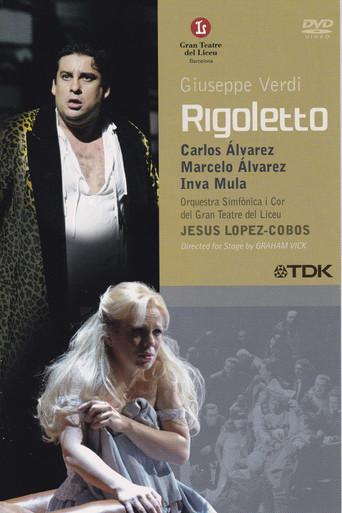
In Rigoletto, the deformed figure of the hunchbacked jester at the Mantuan court acts as a foil to his cynical and powerful master, an unscrupulous philanderer contrasted with his cruel and unforgiving fool. Rigoletto encourages and welcomes the Duke's conquests, pitilessly mocking his victims until he discovers that the Duke has abducted the one person he genuinely loves, his own daughter. As a result, the character of the court jester is transformed into a tragic figure who, in spite of his evident immorality and malice, allows us to sense the devotion he feels for his daughter and his horror at being destroyed by the same despotic world as that which he himself has helped to create.
Rigoletto

Trapped in an abusive marriage, a wealthy German prince desperately seeks a way out. But what appears to be the road to salvation soon turns into a highway to hell. The universal language of music meets the international language of Esperanto in this debut opera by Ivan Acher. The carpenter, forest worker, designer and composer has cleverly blended electro-acoustic and contemporary music to breathe life into Ladislav Klíma’s expressionist novel, The Sufferings of Prince Sternenhoch.
Sternenhoch


Arabella, Op. 79, is a lyric comedy or opera in three acts by Richard Strauss to a German libretto by Hugo von Hofmannsthal, their sixth and last operatic collaboration.
Arabella



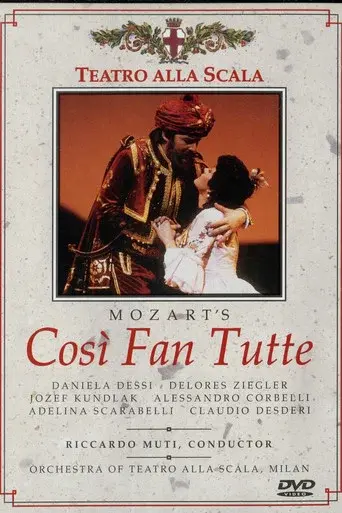
Officers Ferrando and Guglielmo are certain that their lovers Dorabella and Fiordiligi are faithful to them, but the cynical Don Alfonso challenges them to a bet that the women will be unfaithful given the chance. The officers thus pretend to go off to war, and return in disguise as Albanian strangers, to woo Dorabella and Fiordiligi incognito. The ladies are initially frosty, but soon warm to their new suitors, spurred on by their maid Despina. Performed at the La Scala Theatre in Milan.
Cosi Fan Tutte



Emma, a talented conductor and rising star on the Montreal scene, has a complicated relationship with her father and agent Patrick. She has to face up to her emotions and decide whether she wants to successfully combine her career with her love affair with Naëlle, a recently separated cellist and mother of a young son.
Days of Happiness

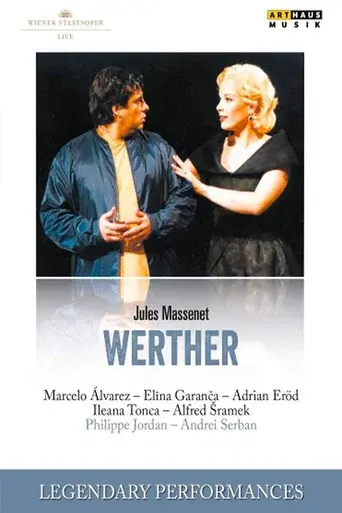
The production was the Vienna State Opera debut for the young Swiss conductor Philippe Jordan – the Argentinian tenor Marcelo Álvarez, took the title role. His Charlotte on this occasion was the young Latvian mezzo-soprano Elīna Garanča. Her performances have been enthusiastically received and she has already been labelled as the new mezzo wonder. Staged by internationally sought-after Rumanian director, Andrei Serban, the apparently sentimental love story – normally presented in 18th century period costumes - reveals a study of personal relationships and a close observation of a woman, who comes of age too late. Serban’s aim was to rid the opera of the unjustified reputation of banality that clings to it despite its underlying tragic mood. By setting the production in the stiff, claustrophobic atmosphere of a small town in the 1950s, he aimed to make the audience more aware of its deeper levels of self-denial.
Werther



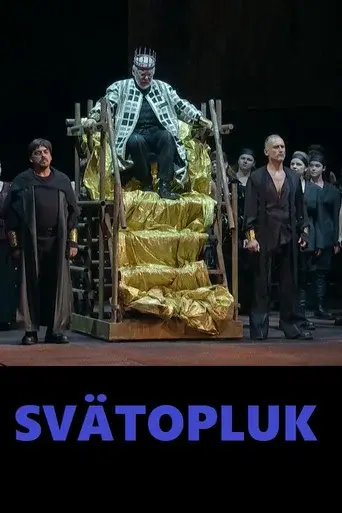
Eugen Suchoň's opera Svätopluk returns to the stage of the Slovak National Theatre Opera in 2023. Since 1960, when it had its world premiere, this is the fifth production of this musical drama at the Slovak National Theatre. It returns as an eloquent witness of Slovak operatic history, as a bearer of a message, as an impulse for reflection and reassessment of historical attitudes in a broader context.