

Nan Lakou Kanaval
Overview
A 16mm visual and auditory exploration of the Haitian carnival. A hallucinatory and unparalleled carnival. Made in collaboration with students from the Cinema Institute in Jacmel, Haiti, and based on a poem by the young Haitian poet Gabriel Wood Jerry.
Key Film Crew
Production Stats
You May Also Like

In 1937, tens of thousands of Haitians and Dominicans of Haitian descent were exterminated by the Dominican army, on the basis of anti-black racism. Fast-forward to 2013, the Dominican Republic's Supreme Court stripped the citizenship of anyone with Haitian parents, retroactive to 1929, rendering more than 200,000 people stateless. Elena, the young protagonist of the film, and her family stand to lose their legal residency in the Dominican Republic if they don't manage to get their documents in time. Negotiating a mountain of opaque bureaucratic processes and a racist, hostile society around, Elena becomes the face of the struggle to remain in a country built on the labor of her father and forefathers.
Elena


Hercules travels by bicycle from Krefeld on the Lower Rhine to Olympus, the throne of ancient deities. The Hercules myth, as a primal myth of male power, is questioned through biographical reflections and the staging of mythological echoes. The dramaturgical structure of the hero's journey disintegrates in a multi-material perspective into questions about male identity, ideals and remorse.
Herkules
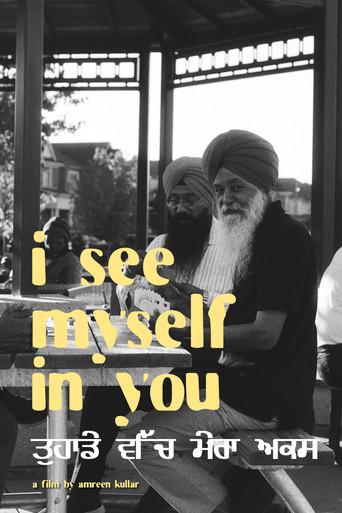
Amidst rising xenophobia, three South Asian settlers paint a more holistic picture of what Brampton is today. The film acts as a fleeting memory, creating vignettes of the ever changing cultural pocket, through multi language prose and 16mm film.
i see myself in you
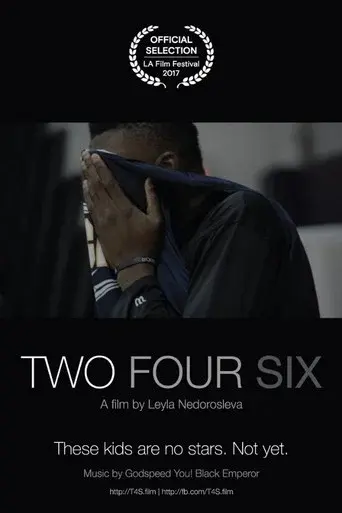
Set mainly in present day Dallas, Texas and Port-au-Prince, Haiti, this film features three main characters at three different stages of the same process. Supported by a nonprofit, these extremely tall teenagers come to the United States from Haiti using basketball as means to get an education and help their own country change.
Two Four Six

The history of art in Ethiopia. The film emphasizes the styles, materials, etc. ofpaintings on walls and roofs of ancient churche
Art in Ethiopia
Shows the measures taken to combat the drought which leads to famine
Struggle against drought

This film chronicles the turbulent gang war and the spiraling violence happening on the ground in Haiti and attempts to cut through the hype surrounding Chérizier, the former police officer-turned-gang chieftain at the center of Haiti’s of it all. It offers a sobering look at the man behind the myths.
Haiti On Fire

A seagull, a dog, a child, a call to prayer; Looking through a window, the corridor of a train, the wall of a medina; Everyday life is momentarily paused through the eyes of a stranger in an unknown land.
Seagull dog child

Shot on 16mm film, Brume de Temps tells a story of intimacy, nostalgia, and the fragile boundary between loving your perception of a person and love as it truly is. It unfolds as a journey through the quiet moments of a couple at ease with one another, enclosed in the bubble they have created. Their gestures are subtle, and the safe space surrounding them becomes part of their story. Without dialogue or voice-over, the story unfolds through the images, which shapes the emotions that emerge. An original musical arrangement carries the narrative, enhancing and guiding this journey. Time intrudes through clocks, calendars, and digital displays, yet each object remains blank. Can this illusion endure where reality cannot be denied?
Brume de Temps

Structural study of a tree. Light, water and air coax it out of the soil in a manner foregrounding time’s relativity to different forms of life on Earth. Made the day my brother got his fork-lift license.
Tree

A scientific expedition travels to an alternative Earth in hope of finding a new home for humanity, which has destroyed its own planet. But is it even possible to escape old patterns?
Alternate Earth
A 4-year-old girl cries, lost in the city. A Soviet soldier on a ferry takes her in and takes her to her home village.
Vltava po válce
A brilliant performance of Schönberg's monumental work at the Prague State Opera. Arnold Schönberg composed Gurre-Lieder to a text by J. P. Jacobsen about the tragic love of the Danish king Waldemar and his mistress Tove Lille, who was murdered out of jealousy by Queen Helviga. He orchestrated the composition for a monumental orchestral and vocal ensemble: five vocal solos, a narrator, a male and mixed choir, and a huge orchestra comprising 25 woodwind instruments, 25 brass instruments, four harps, a celesta, 16 different percussion instruments (including iron chains), and an exceptionally large string section. Every performance of this masterpiece, composed down to the last detail, is truly an overwhelming experience. SOČR chief conductor Petr Popelka seized this unique opportunity, as at the time of the performance of Songs he was also chief conductor of the Norwegian Radio Orchestra, and in this unique project he brought together the two ensembles entrusted to him.
Písně z Gurre
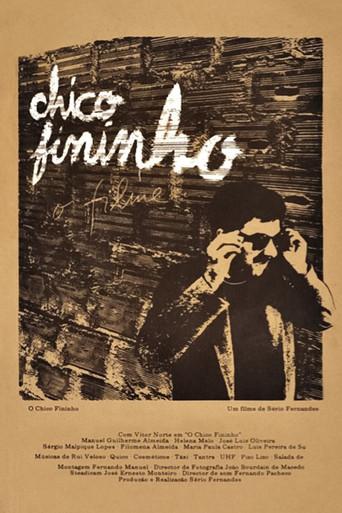
Porto (Portugal), beginning of the 80s. A film crew seeks to understand if there's really the figure of Chico Fininho, immortalized in the popular song of the same name. A bunch of people are interviewed taking us to Boavista - where we find him in a club. After a brief hesitation, the interview happens and we're taken to everyday situations, that can happen to any "freak" of the city...