
Overview
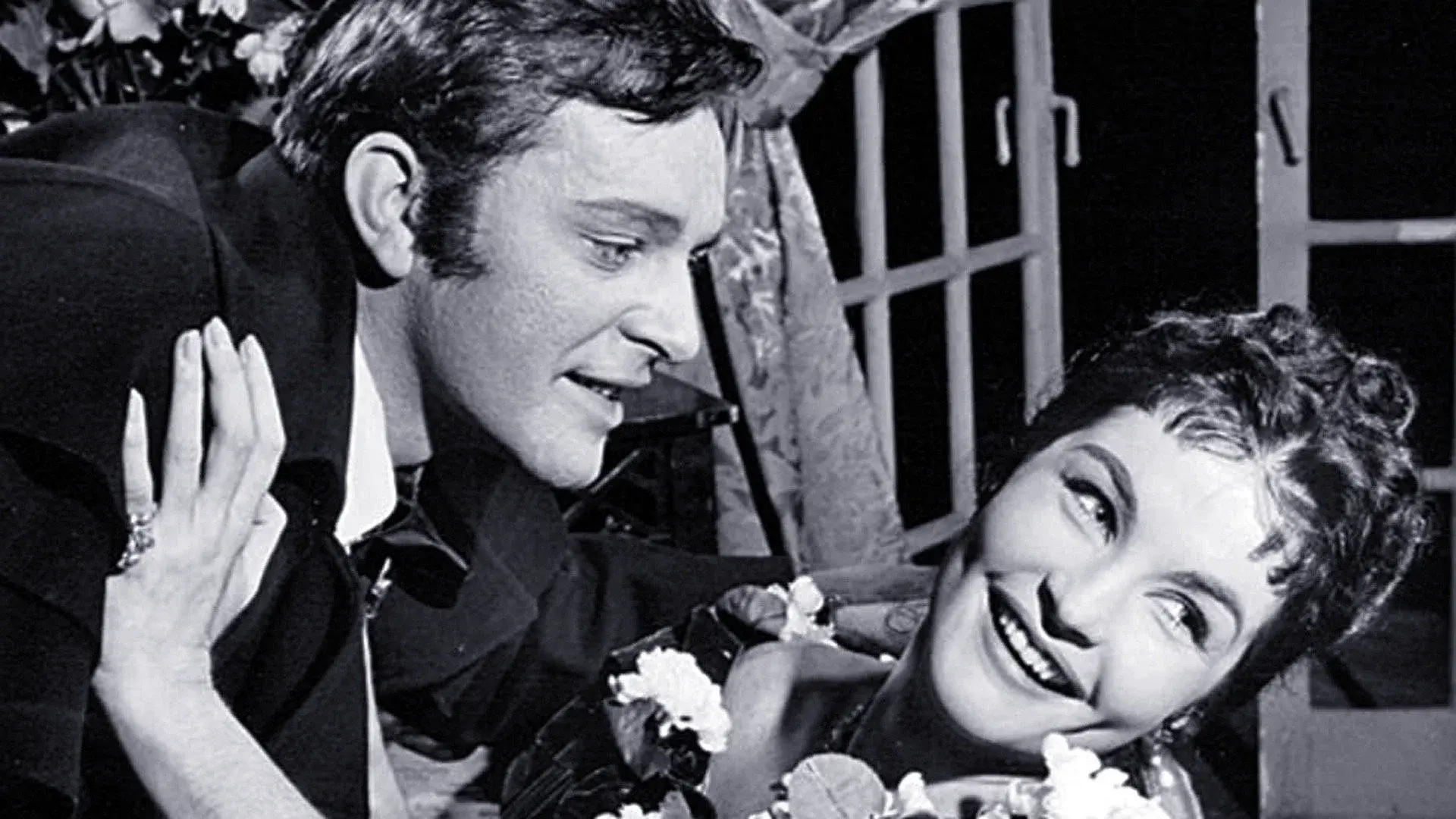
Young orphan Heathcliff is adopted by the wealthy Earnshaw family and moves into their estate, Wuthering Heights. Soon, the new resident falls for his compassionate foster sister, Cathy. The two share a remarkable bond that seems unbreakable until Cathy, feeling the pressure of social convention, suppresses her feelings and marries Edgar Linton, a man of means who befits her stature. Heathcliff vows to win her back. [Originally aired on CBS's DuPont Show of the Month.]
Top Cast

Richard Burton
Heathcliff

Rosemary Harris
Catherine Earnshaw

Denholm Elliott
Edgar Linton

Angela Thornton
Isabella Linton

Cathleen Nesbitt
Ellen Dean

Bernard Miles
Joseph

John Colicos
Hindley Earnshaw
Barry Jones
Mr. Earnshaw
Robert Flemyng
Dr. Kenneth

Michel Ray
Young Heathcliff

Patty Duke
Young Cathy
Key Film Crew
Production Stats
You May Also Like


Despite mixed emotions, Frederick Winterbourne tries to figure out the bright and bubbly Daisy Miller, only to be helped and hindered by false judgments from their fellow friends.
Daisy Miller

The Mermaid Princess of Dongting Lake had the misfortune of marrying ill, her husband being the depraved and tyrannical Prince of Jingchuan, who subjected her to relentless torment. By chance, she encountered the scholar Liu Yi, entrusting him with a blood-stained letter to seek aid from her father, the Dragon King. Ultimately rescued and returned to her maternal home, the Mermaid Princess and Liu Yi transcended the divide between mortal and immortal realms, uniting in a bond of true love.
The Mermaid Princess


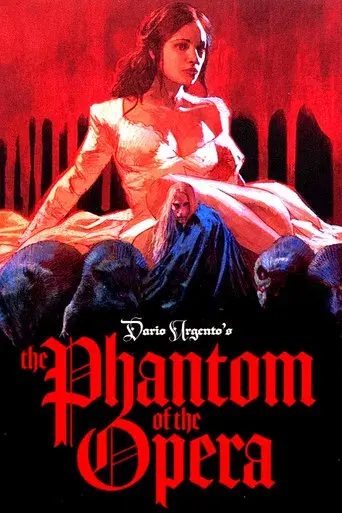
A series of terrifying accidents and brutal murders leave a bloody trail into the subterranean caverns of an Opera house. Below the theatre stalks a man raised by creatures of the underworld.
The Phantom of the Opera

Hak-ming heads the Ko Family, but he and his brothers, Hak-ting and Hak-on, and the second wife of the late Master Ko quarrel. Young Cousin Mui, who has tuberculosis, is forced by to marry an older woman. Kok-sun is guilty of being unable to stop the marriage. Sun and maid Chui-wan are wary of their feelings for each other due to class difference. Cousin Mui dies of illness. Hak-ting has his eyes on Wan. His wife, Wong, complains to their daughter, Shuk-ching, who cannot take it and commits suicide. Wong blames herself for her death. Undergone these tragedies, Cousin Kam's mother let Kam have a modern wedding with Kok-man. When Ming is ill, Ting and On want to sell the ancestral home. Hak-ming dies of angst. When the fifth uncle of Sun forces Wan to be his concubine, Wan tries to kill herself but is intercepted by Sun. Pressurised by people of the house over the issue of inheritance, Sun protests by declaring his love for Wan and leaves the family, with his mother, brother Man and Wan.
Autumn
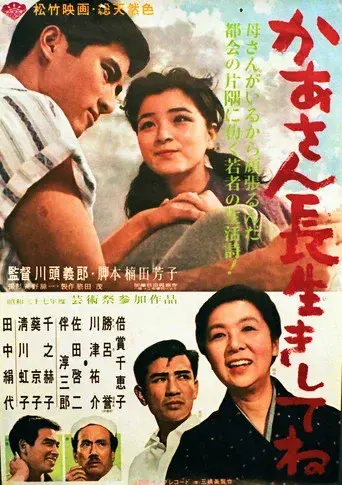
After finishing the course of junior high school, Kazuo comes up to Tokyo, leaving his mother alone in the unproductive northern district. He finds a job in a small laundry in downtown Tokyo and works hard till late at night. At a nearby restaurant a brother and sister are working, and Kazuo becomes friendly with the girl, Yoneko. Love blossoms between the two. However, Yoneko's brother objects to his sister marrying Kazuo.
Mama, I Need You!

A writer leaves his upper-class life and journeys with a woman claiming to be his sister, and her two friends.
Pola X
Adapted from the short story by Franz Kafka, The Judgment is a psychological drama exploring themes of alienation, memory, and the lines between fantasy and reality. The film follows Georg Bendemann, a young merchant living 1900s Prague, who is struggling to maintain balance in an ever changing world. As his situation deteriorates due to complicated familial relationships, we are compelled to question the very nature of what we are seeing.
The Judgment
Bus Money dons various disguises on public buses to protect the defenceless from the bullies and receives heroic praise. Money meets Tai Ngau, a righteous journalist, when they bear witness to the callous response of Manager Mo to the death of his servant Ah-kwai. Tai writes to redress grievances of the deceased. When visiting the family of orphans, he chances on his kindred spirit giving the eldest daughter Ah-yin a gift of gold. Money exploits the weakness of Mo and her connection with his son Sze-fu to swindle a fortune out of the lewd man for the benefits of the fatherless children. Her rage grows learning that Mo's friend Fong Hak-sang has pulled off a lucrative fraud on returned overseas Chinese and forces Ah-yin to pledge herself in paying off her father's debts. Money, who has all kinds of tricks up her sleeve, teams up with Tai and gives Mo and Fong their comeuppance before setting off on her next mission.
The Girl in the Bus
Industrialist Tam Kar-cheung knowingly puts the lives of his workers at risk so as to line his pocket with insurance payments. The chivalrous Bus Money gets into fisticuffs with Tam's chauffeur, Tam Biu, who bears a grudge against the assailant. When Money catches wind of Kar-cheung's vicious plot to set fire to a squatter area to clear the path for a property development project, she moves in and watches vigilantly for signs of arson. Soon, she saves Ah-hau, Biu's girlfriend and a young victim of drug rape, from her suicidal attempt by drowning. Money pursues fragments of clues which lead her to the victim's boss, Taipan Cheung who sucks up to his master Kar-cheung by drawing his prey to her trap. Money then organises squatter residences into fire brigade to guard against arson attacks and exposes Kar-cheung's evil. Realising he has been exploited for his blind loyalty, Biu teams up with Money to dispense justice.
The Witty Bus Girl
When accusations of misconduct unravel the career of her closest friend, the charming publisher Quin, Margot must decide whether loyalty, forgiveness or truth will define the end of their long, heady friendship.
This Is Pleasure
Ah Hing is made pregnant by her master Fan Chun-kit. Fan soon leaves for his studies overseas while Ah Hing suffers gross prosecution and is reduced to becoming a prostitute. In a momentary slip of a struggle, Ah Hing commits manslaughter. Now a qualified lawyer, Fan acquits Ah Hing of the charge, and intends to marry her to redeem his negligence in the past. Ah Hing, however, is determined to pursue an independent life.
Resurrection

A poor taxi driver offered a chance for a better financial future must weigh up the cost of walking away from what he most values. // In a world first omnibus collaboration between emerging Asian movie powerhouses, China, Korea and Australia, comes the classic adaptation of Loa She’s The Rickshaw Boy. Set in three locations, across three countries each thirty minute chapter tells the story of one man’s struggle for survival amidst the age of disruptive technology and explores the intimate relationship that has come to exist between man and machine and the evolution of that relationship.
On the Move
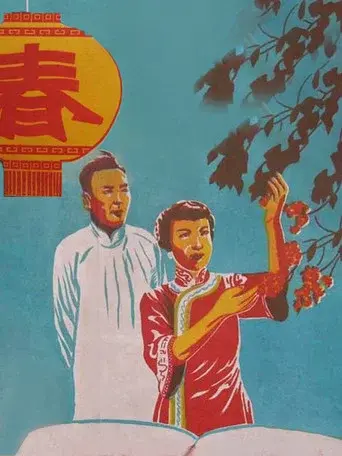
Ko Suk-ying is saddened over her arranged marriage as manipulated by her father Hak-ming. Ko Kok-sun's Cousin Chow Wai's spends the Mid-Autumn Festival before her marriage with the Kos. She has been in love with Sun. Sun finds out about her love for him when she is about to be married off, he is too weak to oppose to Wai's betrothal to another man. Sun's son, Hoi-sun, falls ill. Fearing the displeasure of his elders, Sun dares not consult a western doctor. Meanwhile, another dispute arises among members of the family over the ancestral land. When accused of being incompetent in his management, Sun takes the blame silently. Wai dies of grief while Hoi-sun becomes a victim of mistreatment. Sun is devastated at this double blow. Hak-ming instructs Sun to arrange for Ying's wedding. Knowing the kind of man Ying's fiancee is, Sun is reluctant. Not wanting to follow in Wai's footsteps, Ying fights for her own rights, and backed by an enlightened Sun, she leaves for a new start.
Spring

First film adaptation of Maria by Jorge Isaacs, which is currently missing. Made in Mexico
María

"Family" (1953), which launched the Union Film legacy, "Spring" (1953) and "Autumn" (1954) are adaptations of Ba Jin's highly regarded novel "Torrent Trilogy". In "Family", director Ng Wui skilfully condenses the voluminous first part of the novel into an emotionally powerful and intellectually focused story of youngsters struggling to survive oppression and repression in a feudalistic family. This well-received film quickly established the company's reputation.