

Key Film Crew
Production Stats
You May Also Like
On 15 May, 2006, double amputee Mark Inglis reached the summit of Mt Everest. It was a remarkable achievement and Inglis was feted by press and public alike. But only a few days later he was plunged into a storm of controversy when it was learned that he had passed an incapacitated climber, Englishman David Sharp, leaving him to a lonely end high in the Death Zone.
Dying for Everest

Six blind Tibetan teenagers climb the Lhakpa-Ri peak of Mount Everest, led by seven-summit blind mountain-climber Erik Weihenmayer.
Blindsight

Tourists line up at the foot of Mount Everest to climb the mythological mountain – and to tell everyone else about the feat. For the same reason, Mount Everest has become a graveyard full of the frozen corpses of fallen mountaineers. But the story of the world’s highest mountain also has another, overlooked side: the local one. For around the huge mountain between Nepal and Tibet lives a local population with their own worldview, which is very different from the one Western tourists arrive with. A world of mountain gods that demands respect for nature. To appease the angry mountain gods, the famous Nepalese mountaineer and national hero, Mingma Tsiri Sherpa, risks everything to return to Mount Everest one last time to retrieve a body and appease the sacred mountain.
Everest Dark

This feature-length documentary retraces the journey of 4 Canadians who set off to climb the perilous north side of Mount Everest without the use of oxygen or sherpas. The group's ordeal gives us a rare insight into the human condition under stress, and, while immobilized on the edge of the mountain by extreme weather, we share the tensions that afflict the group's solidarity - threatening the dream of attaining the summit itself.
Everest from Within
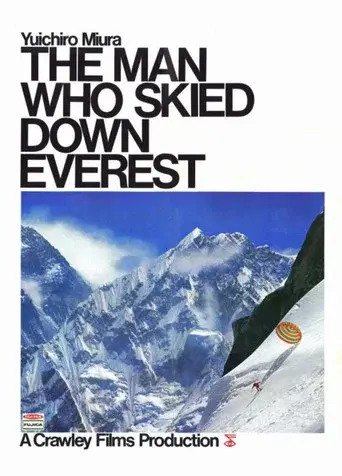
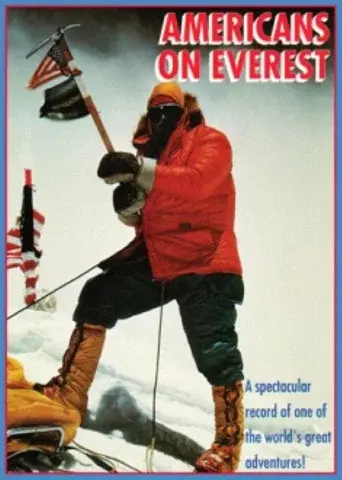
"In 1963, Swiss climber Norman Dyhrenfurth began 'a little war against a big mountain.' Leading 19 Americans, 32 Sherpas, and 909 porters carrying 27 tons of gear, Dyhrenfurth spearheaded the highly successful 1963 American Mount Everest Expedition for his adopted country. Jim Whittaker, accompanied by Nawang Gombu Sherpa made the first ascent by the Hillary-Tensing route. On May 22, Tom Hornbein and Willi Unsoeld made the first ascent by the unclimbed West Ridge. They descended by the South Col, making the first traverse of Everest. Orson Welles narrates the spectacular record, and the film includes the first ever filmed images from the summit."
Americans on Everest
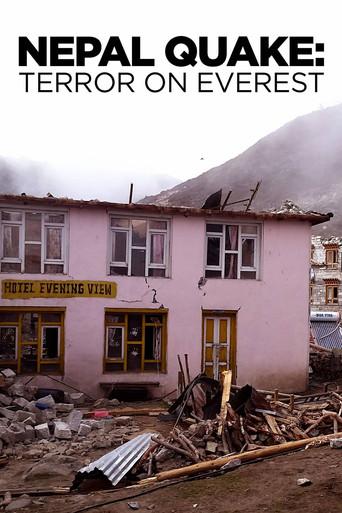
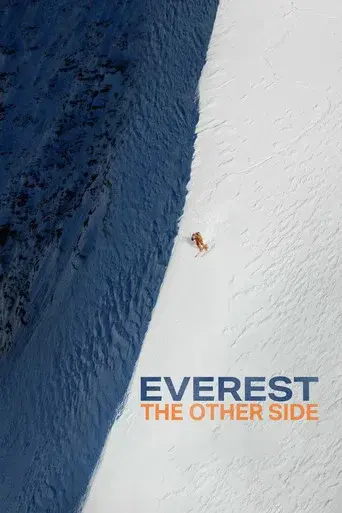
An intimate portrait of two people bound by love, ambition, and the pursuit of the impossible. Elite ski mountaineers Jim Morrison and Hilaree Nelson fell deeply in love while reaching the pinnacle of their sport. Their drive sharpened into a shared dream: to climb and ski the direct North Face of Mount Everest—the most difficult and dangerous climb on the mountain and the most coveted ski line on Earth—something only a handful have ever achieved, and no one has successfully skied down.
Everest: The Other Side

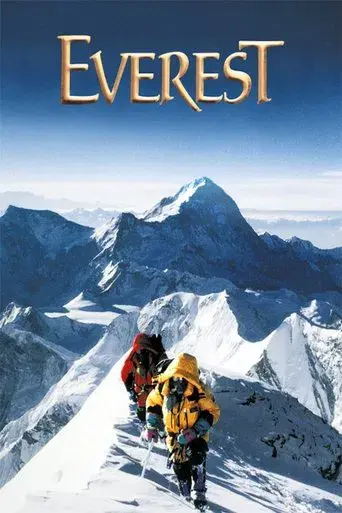
An international team of climbers ascends Mt. Everest in the spring of 1996. The film depicts their lengthy preparations for the climb, their trek to the summit, and their successful return to Base Camp. It also shows many of the challenges the group faced, including avalanches, lack of oxygen, treacherous ice walls, and a deadly blizzard.
Everest
In 1924, British climber George Mallory and his partner Andrew Irvine attempted to conquer Everest for the third time. They never returned. Could they have been the first to successfully climb the mountain before meeting their deaths? In 1999, German geologist Jochen Hemmleb discovered Mallory's body just below the summit, reigniting speculation. In 2010, he organized a new expedition to follow up on this sensational discovery. His goal: to find the base camp from which Mallory and Irvine set out to conquer the summit.
Erster auf dem Everest

As darkness fell on May 10, 1996, a fast moving storm of unimaginable ferocity trapped three climbing teams high on the slopes of Mount Everest. The climbers, exhausted from their summit climb, were soon lost in darkness, in a fierce blizzard, far from the safety of High Camp at 26,000 feet. World-renowned climber and filmmaker David Breashears, who aided the rescue efforts back in 1996, now returns to Everest to tell the fuller story of what really happened on that legendary climb. Through remarkably intimate interviews with the climbers and Sherpas many who have never spoken before on American television Breashears sheds new light on the worst climbing tragedy in Mount Everest s history.
Storm Over Everest

Ueli Steck (Switzerland), Simone Moro (Italy) and Jon Griffith (GB) are not like 95% of the climbers on Everest: they don't use oxygen, altimeters (improperly called Sherpas), or fixed ropes. In 2013, the trio aims to repeat the arduous Western Spur. The Sherpas have the mission to equip the mountain with fixed ropes on this famous day, up to Camp 3: ropes without which customers of commercial expeditions could not climb Everest. An argument ensued, insults were hurled from both sides. The confrontation at Camp 2 degenerated: a Sherpa water bottle physically attacked the trio of Europeans. Blows and stones were thrown and threats led the trio to flee the mountain. The Réel Rock film crew, which is part of the climbing team, films this chaos without complacency.
High Tension

To understand the difficulties of an ascent to over eight thousand metres, it is enough to remember the almost 300 victims these peaks have claimed. The Swiss alpinist Ehrart Loretan, the third alpinist in the world to have climbed all 14 8,000, and the Austrian alpinist Kurt Diemgerger cover the whole history of the conquest of the world’s 8,000, from the fifties to the present day, together with other alpinists and film directors who have climbed them. They talk about their experienced when they ventured into the death zone.
