Overview
At 7:14 am on 30 June 1908, the largest explosion recorded in human history to date reverberated throughout our planet. The force of the explosion was two thousand times that of the Hiroshima bomb. A woodland area the size of Luxembourg was eradicated in the Siberian taiga. This incident is recorded in history books as the Tunguska catastrophe. To this day, internationally renowned scientists of various disciplines argue about the causes of this disastrous explosion. The documentary discusses the latest and most controversial insights of these leading scientists. It identifies the reasons why Tunguska has evolved into a phenomenon and points out the curious results produced by this mythical event in culture and economy.
Top Cast

Amartscha
Self
Mark Boslough
Self
Christoph Brenneisen
Self
Valentina Bykova
Self
Luca Gasperini
Self
Leonid Alekseyevich Kulik
Self (archive footage)
Wolfgang Kundt
Self
Juri Lawbin
Self
Giuseppe Longo
Self
Benny Peiser
Self
Gottlieb Polzer
Self
Wasilij Wlasow
Self
Key Film Crew
Production Stats
You May Also Like

A medium-length documentary commissioned by the Cuenca City Council. The documentary shows an honest, sincere, although sometimes mere tourist portrait, of the lands of Cuenca and its people, without artifice or imposture, with feeling and authenticity and at the same time with marked coldness.
Cuenca

The carnage in Sarajevo provides the focus of this French documentary which seeks to call attention to the terrible conflict in the hopes of finally ending it. The film is divided into five parts. Each part covers a time frame ranging from April 4, 1992, the beginning of the war, to the present. The major issues that occur are three-fold. It depicts the systematic genocide of Bosnians, the silence of Western countries, and the determination of the Bosnians to resist. They refuse to be seen as victims, even though the filmmakers portray them so. Also included are the origins and political aspects of the war. It offers interviews with participants. It also reveals how the U.S. State Department censored reports about Serbian death camps.
Bosnia!

The film portraits the stage previous to the outbreak of the Mexican Revolution, from the end of Porfirio Díaz´ government, the social volatility, the ephemeral government of Madero and the presence of the working class in the figures of Villa and Zapata, until the signing if the Constitution of 1917. All of this through moving images, filmed during those events mainly by the Alva brothers, filmmakers of that time. Those images let us perceive the contradictory and shuddered glance of the people of that period.
The History in the Gaze
Filmed to praise the work of the Spanish Ministry of Housing in solving the problem of shanty towns in Bilbao, it was made to be viewed by General Franco and not for public screening or distribution through the NO-DO newsreel. Although the short film was commissioned by the Ministry of Housing, director Jorge Grau produced a subtly critical work.
Ocharcoaga


A day in the life of Mr. Istvan and Ms. Magdi, neighbors for many years, is narrated by the building of Budapest where both live. The walls surrounding them reveal their small passions, stories and routines.
Walls
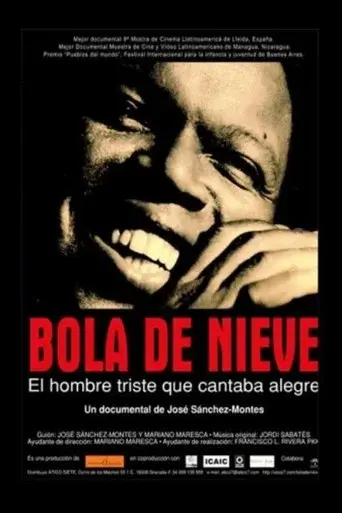
Documentarian Jose Sanchez-Montes turns his attention towards the late Cuban musician Ignacio Villa, known throughout the world as Bola de Nieve (Snowball), with this 2003 biographical documentary entitled simply Bola de Nieve. A master pianist, Bola de Nieve was a mainstay through the middle portion of the 20th century, with his music almost omnipresent in South America cinema throughout those formative decades. With Bola de Nieve's famous statement "I'm a sad person, but my songs sound happy" in mind, Sanchez-Montes also looks at the influence of the musician's African heritage and homosexuality upon Bola de Nieve's unique musical style.
Bola de Nieve

Denise Crosby takes a first look at the huge fans of "Star Trek" from around America and how the series has affected and shaped their lives.
Trekkies



In 2021, an extreme heatwave gave rise to huge wildfires in the vast subarctic forests of Sakha, a northeastern republic in Siberia. The village of Shologon lies in this taiga landscape, shrouded in orange smoke and black ash. The forest is burning and the flames are approaching fast.