Quartier Lacan
Overview
A documentary about Jacques Lacan and his influence on the main tendencies of modern psychoanalysis. It begins with a series of interviews with psychoanalysts who knew Lacan, and then presents an overview of Lacanian theory and practice that explores what actually happens in psychoanalysis.
Top Cast

Jacques Lacan
Self (archive footage)

Serge Leclaire
Self
Moustapha Safouan
Self
Jean Clavreul
Self
Charles Melman
Self
Maud Mannoni
Self
Key Film Crew
Production Stats
You May Also Like
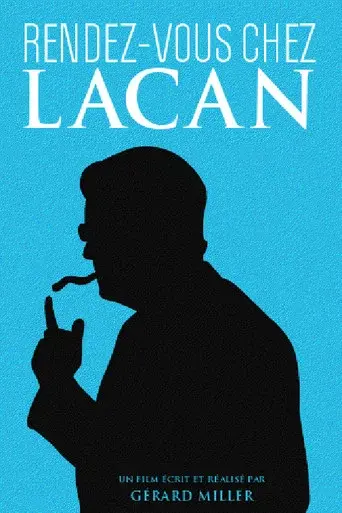
Do you know Lacan, which many consider as the greatest psychoanalyst since Freud? Beyond the myth, the legends and sometimes, the curses, this film by Gérard Miller allows us to discover his work and his personality, through the testimony of his patients, his students, and also his relatives. Born with the XXth century into an upper-middle-class Catholic family, a psychiatrist by training, with an encyclopaedic knowledge of culture, a friend of Picasso, Levi-Strauss and Sartre, Lacan was a great theoretician, an outstanding practitioner, and he remains the most modern, the most challenging and even the most sulphurous of psychoanalysts. The director Gerard Miller met Lacan thanks to his brother, Jacques-Alain, the most faithful of his students, who married his daughter Judith. Their close and intense relationship makes this film exceptional.
Rendez-vous chez Lacan


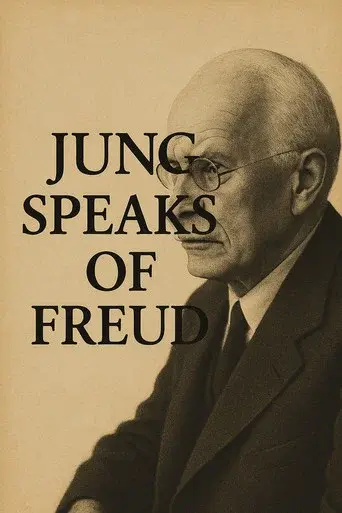
Carl Gustav Jung interviewed on the subject of 'Sigmund Freud': how Jung met him, how he was influenced by him and where he disagreed with him. Jung talks about word association, Freudian slips, the unconscious, the Oedipus complex, the ego, archetypes, falling in love and more.
Jung Speaks of Freud

Acclaimed author Gary Lachman looks at renowned psychoanalyst C.G. Jung's work from an esoteric viewpoint, drawing parallells to the disciplines of mysticism and occultism.
The Hermetic Jung

This compelling film represents a rare record of an original genius. In Jung on Film, the pioneering psychologist tells us about his collaboration with Sigmund Freud, about the insights he gained from listening to his patients' dreams, and about the fascinating turns his own life has taken. Dr. Richard I. Evans, a Presidential Medal of Freedom nominee, interviews Jung, giving us a unique understanding of Jung's many complex theories, while depicting Jung as a sensitive and highly personable human being.
Jung On Film
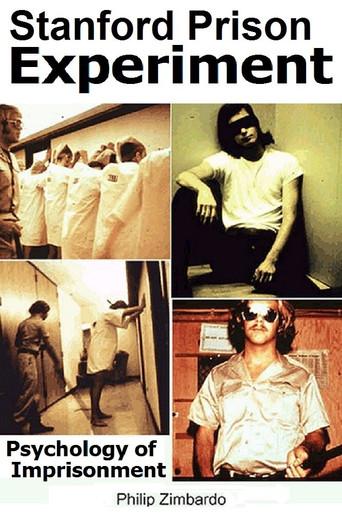

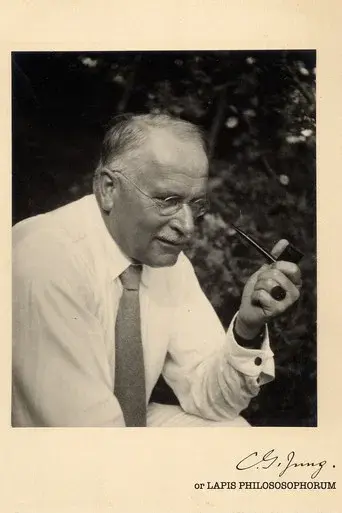
Made for Italian national television, Ellis Donda’s Il Corpo Rubato (The Stolen Body) is an experimental documentary on psychoanalisis in 70s/80s Italy, its analytical practices and forms of suggestion.
The Stolen Body

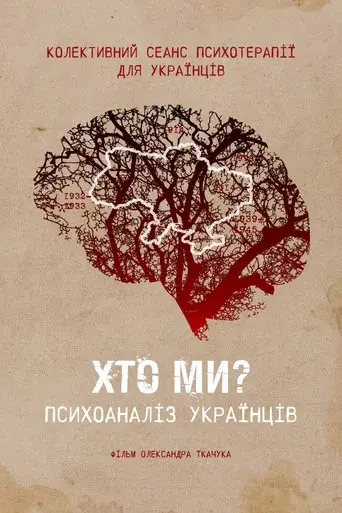

For the first time, filmed by psychoanalyst Gérard Miller, famous and ordinary patients speak in a documentary about their “first session” of analysis—the one that sets the course for a personal journey that may last for years. Among them are Jacques Weber, Charles Berling, Marc-Olivier Fogiel, Marie Darrieussecq, and Carla Bruni-Sarkozy—who is the only wife of a sitting head of state to speak candidly about why and how she has been in analysis for the past eight years. But why did all these “analysands” go to see a psychoanalyst? What happened during their first session? Why did they continue? And why did some, like Karl Lagerfeld or Claude Chabrol, become critics of Freudian theory? The inside of the consulting room, where everyone dreams of being a fly on the wall and hearing what is said, but also… everything that goes on around, before, and after.
La première séance
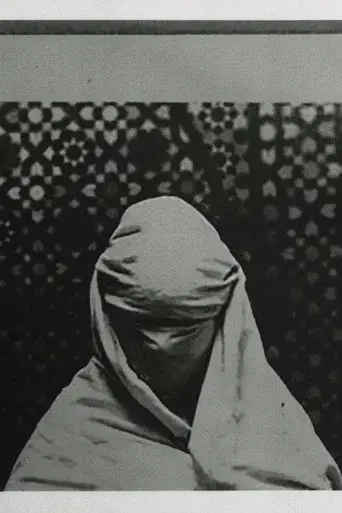
A visual and psychological investigation of the French psychiatrist and photographer Gaëtan Gatian de Clérambault (1872–1934), who took thousands of images in Morocco of veiled Islamic women, and sometimes men, through which he sought to explore his psychoanalytic ideas about covering and fantasy. Through a digital re-imagining of his death — a suicide in front of a mirror —, followed by assessments of clinicians and academics, The Fold explores de Clérambault’s significance as a historical figure while also looking more broadly at the way we understand images. The interviews are filmed within a setting inspired by the house of mirrors in Orson Welles’s The Lady from Shanghai (1947) and draw on the aesthetic of film noir, a style of cinema that commonly features a crime-centred narrative and morally ambiguous male protagonists.