Overview
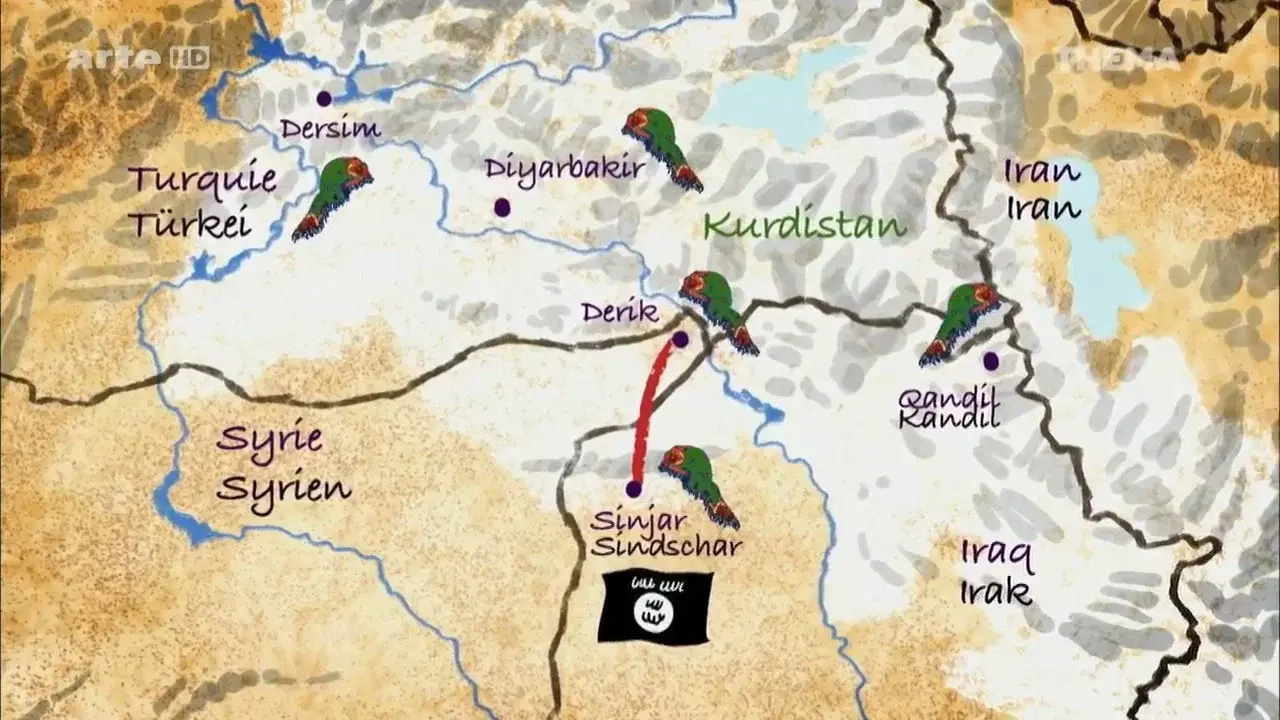
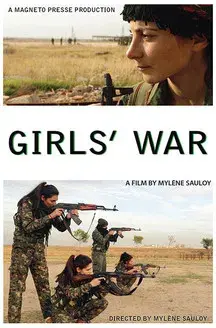
As the forces of ISIS and Assad tear through villages and society in Syria and Northern Iraq, a group of brave and idealistic women are taking up arms against them—and winning inspiring victories. Members of “The Free Women’s Party” come from Paris, Turkish Kurdistan, and other parts of the world. Their dream: To create a Democratic Syria, and a society based on gender equality. Guns in hand, these women are carrying on a movement with roots that run 40 years deep in the Kurdish Workers’ Party (PKK) in Turkey. GIRL’S WAR honors the legacy of Sakine Cansiz, co-founder of the PKK who was assassinated in Paris in 2013, and reflects on the sacrifices made by all of the women in the movement, who have endured jail, rape, war, and persecution in their quest to liberate their lives and sisters from male dominance. With scenes of solidarity, strength, and love amongst these brave women soldiers, GIRL'S WAR is a surprising story of Middle Eastern feminism on the front lines.
Top Cast

Sakine Cansız (Sara)
herself

Aysel Doğan
herself

Gültan Kışanak
herself
Nurhayat Altun
herself

Ayla Akat
herself

Pelda
herself

Mizgîn
herself

Doktor Medya
herself
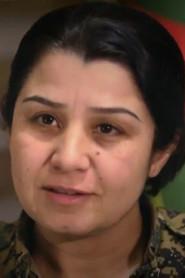
Nasrin Abdallah
herself

Abdullah Öcalan
himself

Leyla Zana
herself
Key Film Crew
Production Stats
You May Also Like

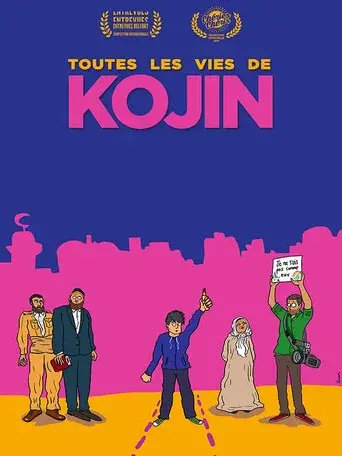
In a first-person documentary, Diako Yazdani, a political refugee in France, returns to see his family in Iraqi Kurdistan and introduces them to a 23-year-old gay man from Kojin who seeks to exist in a society where he seems unable to find its place. With humor and poetry, the director delivers a moving portrait where the meetings of each other invite to a universal reflection on the difference.
The Many Lives of Kojin
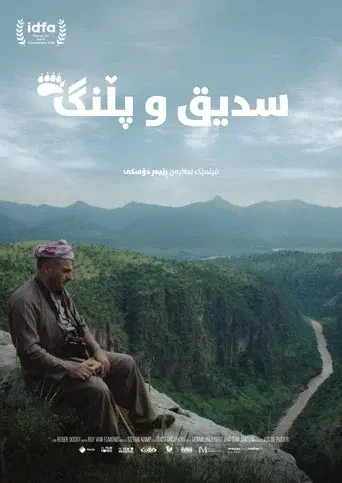
If Sidik manages to spot a leopard in his beloved mountains of Kurdistan, the area can be declared a protected nature reserve. Will that finally bring peace?
Sidik and the Panther


When Danish filmmaker Lea Glob first portrayed Apolonia Sokol in 2009, she appeared to be leading a storybook life. The talented Apolonia was born in an underground theater in Paris and grew up in an artists’ community—the ultimate bohemian existence. In her 20s, she studied at the Beaux-Arts de Paris, one of the most prestigious art academies in Europe. Over the years, Lea Glob kept returning to film the charismatic Apolonia and a special bond developed between the two young women.
Apolonia, Apolonia
Are we alone in the universe? This question has been preoccupying humanity for decades. Today, people don’t believe in extraterrestrial life. But there are witnesses from different countries, having interesting experiences. This documentary focuses on stories of a group of people from Turkey who had those kind of experiences.
Visitors at the Door
A chronicle which provides a rare window into the international perception of the Iraq War, courtesy of Al Jazeera, the Arab world's most popular news outlet. Roundly criticized by Cabinet members and Pentagon officials for reporting with a pro-Iraqi bias, and strongly condemned for frequently airing civilian causalities as well as footage of American POWs, the station has revealed (and continues to show the world) everything about the Iraq War that the Bush administration did not want it to see.
Control Room


For the past 12 years, journalist Paul Moreira has travelled extensively in Iraq. In this film, he goes in search of the men he filmed back in 2003 at the very beginning of the American occupation. Through their stories, and by tracing the roots of ISIS to the arrival of Abu Mousab Al-Zarqawi and America's handling of the resistance, he tells the story of how Iraq became such a fractured nation.
Birth of a Monster

In a contemplative coming of age portrait, PINBALL follows Yosef, a spirited athlete, in Louisville, Kentucky as he dives into the memories of his journey from Iraq to America and what it means to chase his dreams in the shadow of a war that displaced his family from their Iraqi homeland.
PINBALL
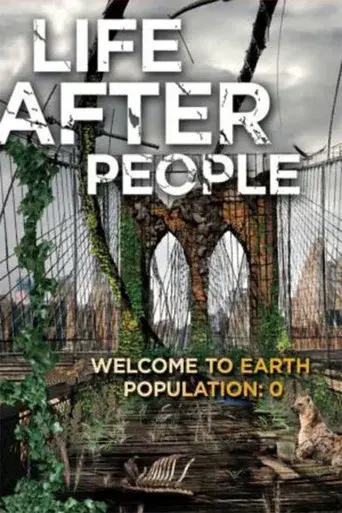
In this special documentary that inspired a two-season television series, scientists and other experts speculate about what the Earth, animal life, and plant life might be like if, suddenly, humanity no longer existed, as well as the effect humanity's disappearance might have on the artificial aspects of civilization.
Life After People

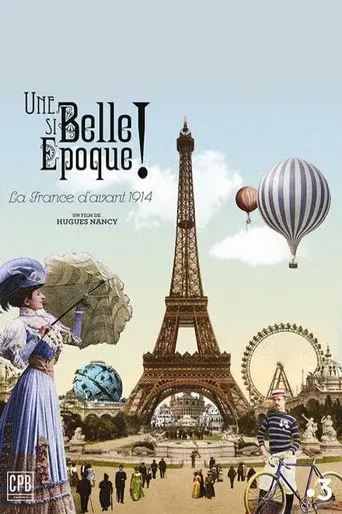
In 1900, the eyes of the whole world are on Paris. The World's Fair welcomed 50 million amazed visitors, and the city celebrated itself in a glamorous era. This period went down in history as the "Belle Époque." Elaborately restored and colorized historical photographs bring to life the exciting life in Paris between the end of the 19th century and the beginning of World War I in 1914. Bicycles, cars, airplanes, moving pictures, newly founded film studios, revolutionary composers and painters, avant-garde ballet performances, fashion houses, summer resorts on the Atlantic coast – life was intoxicating. People celebrate in the variety shows, cabarets, and revue theaters of Paris. Moulin Rouge, Folies Bergères, Bal Tabarin—in Paris, the nights are long and life is too short to sleep through. It is a dance on the volcano, given the political developments in the world.
Paris 1900
Johan van der Keuken went against the grain in 1980: from Amsterdam (on April 30 with the coronation riots and squatting actions) via Paris, southern France and Italy to Egypt. He made his personal travelogue in three parts for VPRO television. Later, he fused the three parts into one long movie.
The Way South

Iran, January 16th, 1979. Shah Mohammad Reza Pahlavi flees after being overthrown. Ayatollah Khomeini returns to Tehran and proclaims the Islamic Republic on April 1st, 1979. In the same year, Saddam Hussein seizes power in Iraq and, after several border skirmishes, attacks Iran on September 22nd, 1980, initiating a cruel war that will last eight years. Since its outbreak, correspondent Saeid Sadeghi documented it from its beginning to its bitter end.