Overview
In Gansu Province, northwest China, lie the remains of countless prisoners abandoned in the Gobi Desert sixty years ago. Designated as ultra-rightists in the Communist Party’s Anti-Rightist campaign of 1957, they starved to death in the reeducation camps. The film invites us to meet the survivors of the camps to find out firsthand who these persons were, the hardships they were forced to endure and what became their destiny.
Key Film Crew
Production Stats
You May Also Like


As the Communist Party of China celebrates its 100th anniversary, this documentary looks back at the party’s history, from the 1920’s, to the Civil War, the Great Leap Forward, the Great Famine, the Cultural Revolution and the reforms by Mao Zedong and Deng Xiaoping. Did the Great Famine cost more than 15 million lives? How does the Cultural Revolution continue to shape Chinese politics today? What was capitalism like after Mao’s death? Through rare and never-before-seen historical footage, expert interviews and eyewitness accounts of the Great Famine, Tiananmen incident, and the Cultural Revolution, get to know how one party has so profoundly shaped China.
100 Years


More than two decades after it left our screens, BBC Two’s iconic and much-loved music documentary series, Rock Family Trees, is back for a one-off special. The iconic music documentary series returns to examine the real story behind the birth of Britpop and how a handful of like-minded musicians, struggling to find an authentic voice, would pave the way for a revolution in British music. It is an intricately connected story of three of the biggest bands of the 1990s – Suede, Elastica and Blur – and how, for a brief moment in the middle of that decade, they changed British music forever, kickstarting a movement that still reverberates to this day.
Rock Family Trees

Born underground, on the heels of the Civil Rights Movement and the Stonewall Riots, disco’s nascent popularity saw the spectacular takeover of the dancefloor, the airwaves and burgeoning fashion trends that reflected the joy and freedom inherent to the genre. Co-opted and exploited through references like John Travolta’s strut and shiny Swedish tracksuits, disco eventually reaches the mainstream, losing its original flair and purpose rooted in radical politics and social change.
Disco's Revenge

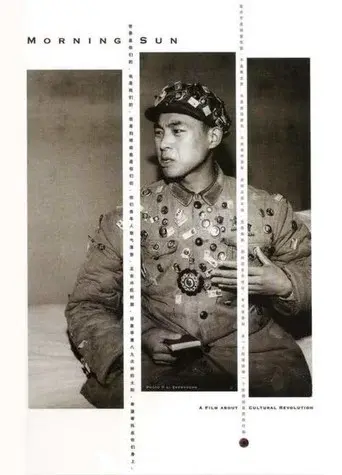
The film Morning Sun attempts in the space of a two-hour documentary film to create an inner history of the Great Proletarian Cultural Revolution (c.1964-1976). It provides a multi-perspective view of a tumultuous period as seen through the eyes—and reflected in the hearts and minds—of members of the high-school generation that was born around the time of the founding of the People’s Republic of China in 1949, and that came of age in the 1960s. Others join them in creating in the film’s conversation about the period and the psycho-emotional topography of high-Maoist China, as well as the enduring legacy of that period.
Morning Sun

In 1946, Heidi is entrusted to a Swiss family by her father. He will never come back for her. Today, François Yang questions his mother about her past. What follows is a journey to China, a quest to reconstruct memory. Through contact with her brothers and sister, Heidi measures the extent of the drama experienced by her family that remained in China, persecuted by the Communist Party.
Heidi in China

Chinese-Australian artist Jiawei Shen's plans to create an epic work depicting his homeland's tumultuous recent history.
Welcome to Babel




Kekaiulu Hula Studio follows the Proclaimed Hula Halau of the same name, showcasing their twist on what the real reason for hula is and what life as a dancer in the halau is really like. Something previously unseen in the public eye.