

The Penalty
Overview
Three extraordinary people embark on journeys of recovery, discovery and rebellion and find themselves centre stage in the biggest capital punishment crisis in modern memory. The Penalty unearths an America where grieving families, botched executions and wrongful convictions force us to question what we think we know about the death penalty.
Key Film Crew
Production Stats
You May Also Like

Documentary about the first human to donate his body to science so that it could be studied in the form of a 3D database of the entire anatomy that is available to view online. Convicted killer Joseph Paul Jernigan donated his body to science shortly before he was executed in 1993 and this documentary examines what took place after his death by lethal injection.
The Virtual Corpse
One night in November 1976, after his car breaks down on a road outside Dallas, Randall Dale Adams accepts a ride from teenager David Harris. Harris is driving a stolen vehicle and, later that night, when Dallas police officer Robert Wood pulls the car over to check its headlights, he is shot and killed. A jury believes Adams is the killer, but stylized reenactments and interviews with key figures, conflicting testimonies and evidence are presented to argue that Adams was framed by a corrupt justice system, ultimately leading to his exoneration.
The Thin Blue Line


A film about convicted drug smuggler Myuran Sukumaran, who became an accomplished artist before he was executed by firing squad in Indonesia in April 2015.
Guilty
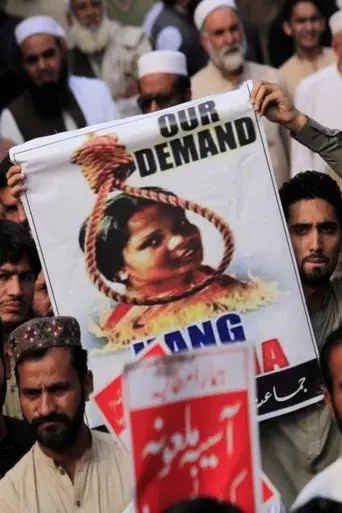
Depicts the case of religious persecution suffered by the Christian Pakistani Asia Bibi (Aasiya Noreen), falsely accused of blasphemy in 2010 by a Pakistani court and was sentenced to death by hanging. In October 2018, the Supreme Court of Pakistan acquitted her based on insufficient evidence, though she was not allowed to leave Pakistan until the verdict was reviewed. She was held under armed guard and was not able to leave the country until 7 May 2019; she arrived in Canada the next day.
Freedom for Asia Bibi

We do not know when and how we will die. Death Row inmates do. Werner Herzog embarks on a dialogue with Death Row inmates, asks questions about life and death and looks deep into these individuals, their stories, their crimes.
Into the Abyss

On June 3, 1973, a man was murdered in a busy intersection of San Francisco’s Chinatown as part of an ongoing gang war. Chol Soo Lee, a 20-year-old Korean immigrant who had previous run-ins with the law, was arrested and convicted based on flimsy evidence and the eyewitness accounts of white tourists who couldn’t distinguish between Asian features. Sentenced to life in prison, Chol Soo Lee would spend years fighting to survive behind bars before journalist K.W. Lee took an interest in his case. The intrepid reporter’s investigation would galvanize a first-of-its-kind pan-Asian American grassroots movement to fight for Chol Soo Lee’s freedom, ultimately inspiring a new generation of social justice activists.
Free Chol Soo Lee

A camera crew follows Edward Earl Johnson, a man falsely convicted of rape and murder, during his last 14 days on death row. Everyone involved is interviewed, Johnson himself, his family, the warden, prison guards and other inmates. We also witness the futile attempts by his attorney to save his life.
Fourteen Days in May

The Guillotine examines the fascinating and bizarre history of the "national razor" that started out strictly for execution and then became a source of entertainment and amusement. In Scotland they called it "the Maiden," in England "the Halifax Gibbet," and in France "the Machine," "the Widow," and "the Guillotine." It existed for hundreds of years, but found its home in France during the French Revolution and the Reign of Terror when nearly 20,000 men, women and children died beneath its blade. Through dramatic reenactments and archival documentation of famous executions, the program explores the early technology of the guillotine and its bloodstained career throughout Europe.
The Guillotine
Today, the ritual of giving the last supper to the condemned person has been detached from its origin, and can be perceived to be as absurd as the punishment it accompanies. Mats Bigert & Lars Bergström's film “The Last Supper” focuses on this discrepancy between historical “meaning” and contemporary use of a tradition that has lost its connection with the past. The main character is the former death row chef Brian Price, who reconstructs one of the 200 final meals that he prepared during his time as inmate in Huntsville State Prison, Texas.
Last Supper


This documentary explores two horrific stories. With haunting interviews with the killers, plus emotional exchanges with the daughters.
My Dad's on Death Row

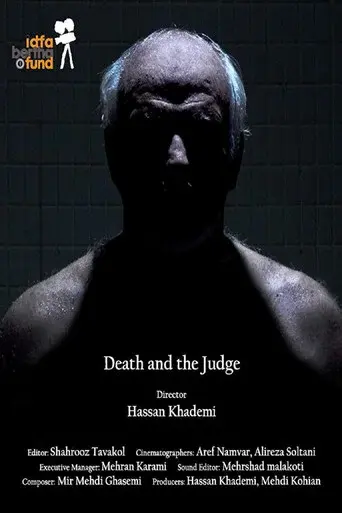
The documentary, " Death and the Judge", revolves around Iran's most famous criminal judge, Azizmohammadi. He served as a criminal judge for 45 years and issued about 4500 death sentences; a record in not only Iran, but also the world. This documentary looks into his personal and professional life as he is followed within his home with his family, in the court of law, and in his retirement days. The ultimate purpose of the documentary is to deduce the role of death in the judge's life as he either takes life away from criminals or death comes to his loved ones. During his retirement, he is once again given the choice between the life and death of a person, despite no longer being a judge.