The Experimental City
Overview
In the 1960s, frustrated by the growing problem of urban pollution, Athelstan Spilhaus, a visionary scientist and futurist comic strip writer, assembled a team of experts to develop a bold experiment: the Minnesota Experimental City (MXC). MXC would be the city of the future, a domed metropolis for 250,000 pioneering residents, built from scratch and using cutting-edge technology to prevent urban sprawl and pollution. Things didn’t quite go as planned, as explored in Chad Friedrichs’ fascinating look back at the would-be city of tomorrow.
Key Film Crew
Production Stats
You May Also Like

Ladies of good families and social standing come to have their afternoon tea with their daughters who will someday follow in the same tradition. A charming portrait of a time that is slowly disappearing.
Les dames du 9e

A turn of the 20th Century office block at Portage and Main. What was once Winnipeg's most prestigious commercial address has become a catch-all for the marginalized and history's leftovers. A snapshot of a fading era, now gone for good.
The McIntyre Block

Poème Électronique is an 8-minute piece of electronic music by composer Edgard Varèse, written for the Philips Pavilion at the 1958 Brussels World’s Fair. The Philips corporation commissioned Le Corbusier to design the pavilion, which was intended as a showcase of their engineering progress. The pavilion was shaped like a stomach, with a narrow entrance and exit on either side of a large central space. As the audience entered and exited the pavilion, the electronic composition Concret PH by Iannis Xenakis (who also acted as Le Corbusier's architectural assistant for the pavilion's design) was heard. Poème électronique was synchronized to a film of black and white photographs selected by Le Corbusier which touched on vague themes of human existence.
Electronic Poem

Through a series of animated art boards depicting a decaying Venice, the film unfolds like a set of postcards, capturing the mythical city's final moments of fragility. Blending archival footage with contemporary observations, and anchored by the story of the 1902 collapse of St Mark's Campanile, Venezia Diorama invites us to reflect on a city slowly eroding, yet suspended in time.
Venezia Diorama
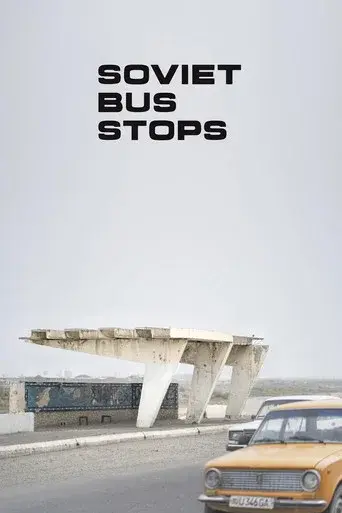
“There’s a bus stop I want to photograph.” This may sound like a parody of an esoteric festival film, but Canadian Christopher Herwig’s photography project is entirely in earnest, and likely you will be won over by his passion for this unusual subject within the first five minutes. Soviet architecture of the 1960s and 70s was by and large utilitarian, regimented, and mass-produced. Yet the bus stops Herwig discovers on his journeys criss-crossing the vast former Soviet Bloc are something else entirely: whimsical, eccentric, flamboyantly artistic, audacious, colourful. They speak of individualism and locality, concepts anathema to the Communist doctrine. Herwig wants to know how this came to pass and tracks down some of the original unsung designers, but above all he wants to capture these exceptional roadside way stations on film before they disappear.
Soviet Bus Stops
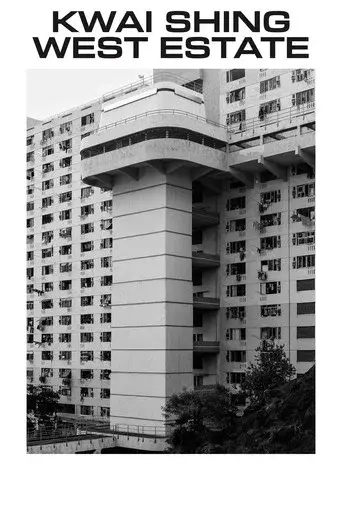
A homage to the social housing architecture that is so atypical of Hong Kong - especially the Kwai Shing West Estate. About half of the population lives in such building complexes, where one experiences a strong sense of loneliness. The neighborhoods are the scene of modern living conditions, but also of social protests, which have been punishable by life imprisonment in Hong Kong since 2020 due to a new law.
Kwai Shing West Estate


An exploration of architecture in the context of climate change, resource scarcity, circular strategies, real estate speculations and refugees crisis, framed within the context of the second edition of the Sharjah Architecture Triennial.
Beyond Eternity
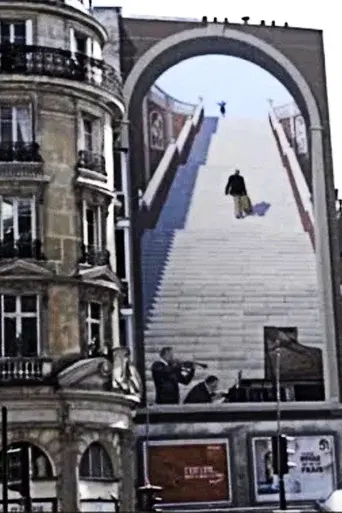
A look at contemporary Paris through the lens of theories and ideologies of the past two centuries, with a particular focus on the utopian socialist ideas of Charles Fourier.
Paris ou l’utopie perdue


Big Time gets up close with Danish architectural prodigy Bjarke Ingels over a period of six years while he is struggling to complete his largest projects yet, the Manhattan skyscraper W57 and Two World Trade Center.