They Heard Voices
Overview
THEY HEARD VOICES is a documentary film exploring the Hearing Voices Movement, chronic psychosis, and the schizophrenia label. The film is a series of wide-ranging interviews with voice hearers, medical historians, anthropologists and psychiatrists from Britain and America, presenting different people’s views. Is schizophrenia hard science or an arbitrary, catch-all term with no real meaning? What does it mean for those experiencing psychosis?
Top Cast

Erin Emiru
Self
Rai Waddingham
Self
Kevin Healey
Self
Mark Roininen
Self
Angela Woods
Self
Edward Shorter
Self
Key Film Crew
Production Stats
You May Also Like


A mother embarks on a journey of acceptance and joy while supporting her child's gender transition in this heartfelt portrayal of single parenting and navigating the complexities surrounding gender and consent.
Into Light
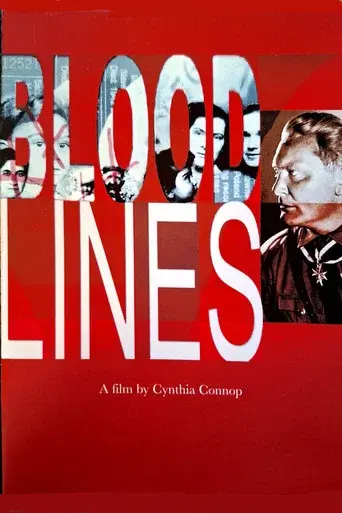
A moving meditation on guilt and reconciliation, Bloodlines explores the unwritten cost of war and genocide on future generations - of both victims and perpetrators. As Bettina Goering, grandniece of Nazi war criminal Herman Goering, searches for a way to come to terms with her heritage, she meets Ruth Rich, a painter and daughter of Holocaust survivors. At a time when seemingly irreconcilable divisions between groups are tearing the world apart, this deeply hopeful film is a beautiful testament to the power of dialogue and post-conflict reconciliation.
Bloodlines
This documentary attempts to understand why so many comedians experience mental health issues, a condition that stands in stark contrast to their profession. Anxiety, depression, suicidal thoughts: these are the heavy subjects they dare to tackle on stage. Cathy Gauthier, Coco Belliveau, Jean-François Mercier, Mario Jean, Maude Landry, Preach and Simon Gouache testify.
Le clown est triste

Stéphane and Alizée, two rock-climbers looking for a breakthrough, spend their winter in Catalonia—the perfect place for climbing hard. Their projects lie in the sector called “El Pati” (the playground). Success, more than a physical achievement, seems to be a state of mind.
The Big Boys' Playground
"Wolfe" is an intimate confessional from Nick, who learned through puberty that the imaginary friend in his head was real, and violent.
Wolfe
Produced in 1967, this black and white film is an inmate's view of Daytop, a drug treatment centre on Staten Island, New York, where addicts learn to get along without drugs. Uncompromising, often brutal group therapy sessions are designed to shake loose the excuses a victim makes for himself. The people and situations shown are authentic; only one actor was employed. The results obtained at Daytop are regarded by some psychiatrists as a breakthrough.
The Circle
Cranes and Voices follows, on one side, people who hear voices and share their daily lives, and on the other, a collective of tenants who investigate their neighbourhood through its noises, its vibrations and its construction sites. The film moves through apartments, streets, meetings and moments of sound creation, where voices, urban noises and recorded materials are transformed into collective sound compositions and spaces for exchange. Sound appears here as an ambivalent force, at once invasive and generative, shaping the way we inhabit the city, other people and ourselves. Cranes and Voices invites us to pay attention to these singular listening experiences, to hear what they reveal about the housing crisis, about how mental health is viewed and about the ways we organise our shared spaces.
Cranes and Voices

In the world of computer games, there are players earning fight money as a PRO. They are sponsored by digital tool companies or beverage companies, and tour around the world to earn money in tournaments. This film goes over the days of Pro Gamers in Japan, USA, France and Taiwan.
Living the Game
Filmmaker Jonathan Caouette's documentary on growing up with his schizophrenic mother -- a mixture of snapshots, Super-8, answering machine messages, video diaries, early short films, and more -- culled from 19 years of his life.
Tarnation
The filmmakers' 21-year-old daughter journeys from locked-down psych wards and diagnostic labels toward expansive worlds of creativity, connection, and greater meaning. Featuring insights from trauma experts and others, the film challenges the widespread idea that mental illness should be understood purely in biological terms, revealing the myriad ways that madness has meaning beyond brain chemistry.
Drunk on Too Much Life
In Their Hands follows the psychotherapy of vulnerable people, sometimes destroyed by acts of torture.Their speech deals with an inhuman past: they want to stop the pain, rule out the folly and protect their family from violence in them, be understood and recognized - these are the issues that drive them.
Sous la main de l'autre
The life of the Nobel Prize-winning mathematician and schizophrenic John Nash — the inspiration for the feature film A Beautiful Mind — is a powerful exploration of how genius and madness can become intertwined.