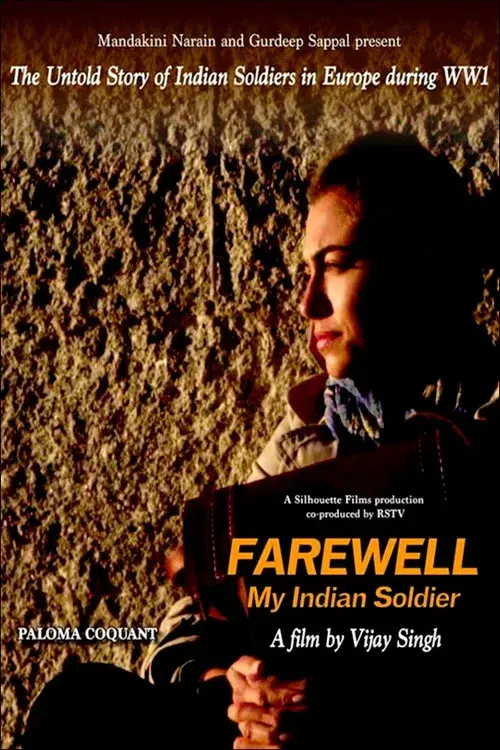
Farewell, My Indian Soldier
Original Title: “Mademoiselle France pleure”
“The untold story of Indian soldiers in Europe during WWI”
Overview
A young woman researches the hidden story of Indian soldiers who came to fight in France and Belgium during the World War I. The presence of these 140,000 soldiers in Europe is a virtually unknown fact of history.
Top Cast

Paloma Coquant
Narrator (voice) / Granddaughter

Monique Soupart
Herself - Real Granddaughter of an Unknown Indian Soldier and a French Woman
Maurice Bood
Himself
Lt. Gen. Raj Sujlana
Himself
Dominiek Dendooven
Himself
Jaimal Johan
Himself
Vedica Kant
Herself
Dominique Faivre
Himself
Santanu Das
Himself
Key Film Crew
Production Stats
You May Also Like

Phoolan is a documentary film about the extraordinary life of a village girl, gang-rape survivor, bandit leader, and finally parliamentarian. This is the story of one woman’s fight against incredible odds for justice and dignity. Known as India’s Bandit Queen, Phoolan Devi is considered by many to be one of the most extraordinary and controversial women of our time.
Phoolan
Tehran, Iran, August 19, 1953. A group of Iranian conspirators who, with the approval of the deposed tyrant Mohammad Reza Pahlavi, have conspired with agents of the British MI6 and the US CIA, manage to put an end to the democratic government led by Mohammad Mosaddegh, a dramatic event that will begin the tragic era of coups d'état that, orchestrated by the CIA, will take place, over the following decades, in dozens of countries around the world.
Coup 53
At Arlington National Cemetery during the Vietnam era, veteran sergeant Clell Hazard trains young soldiers while mourning those lost in combat. Unable to return to war himself, he mentors Jackie Willow—the idealistic son of a fallen comrade—hoping to prepare him for the realities of Vietnam and the cost of duty.
Gardens of Stone

The Little Ballet Troupe of Bombay performs a "puppet ballet" of the Hindu epic, the Ramayana.
The Ramayana
According to the official history of Afghanistan, ruthless destruction has always prevailed over art and creation; but there is another tale to be told, the forgotten account of a diverse and progressive country, seen through the lens of innovative filmmakers, a story that survives thanks to a few brave Afghans, a small but very passionate group that secretly fought to save a huge film archive that was constantly menaced by war and religious fanaticism.
The Forbidden Reel

'Our Day' badges and flags being sold in aid of wounded WWI soldiers are shown in this Topical Budget film.
For the Wounded

At the end of the Great War, a soldier burdened with informing a mother of her son's death, faces an impossible decision... Tell her a noble lie, or the horrible truth?
The Hero

This portait of life on the tea plantations is decidedly rosy – clearly, there are no exploited workers here. However, the film provides an intriguing overview of tea production – from the planting of tea seeds to the final shipping of the precious leaves across the globe.
Gardens of the Orient

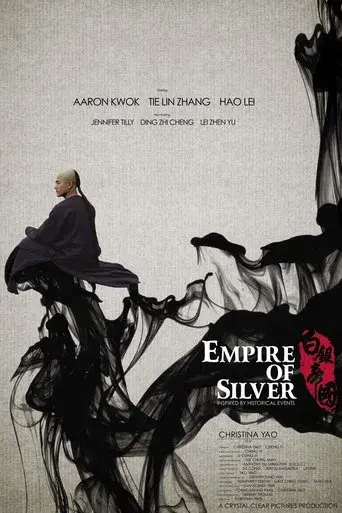
In 1899, Lord Kang must decide which of his three sons will take over his family's Chinese banking empire. When circumstances dictate that he appoint his unreliable youngest son, family bonds are pushed to the limit as father and son clash in a climate of political turmoil. Winner of the Special Jury Award at the 2009 Shanghai International Film Festival.
Empire of Silver

Vaastu Marabu documents the theory and practice of the Vaastu tradition of Indian art, architecture, craft and design. One of the foremost shilpis (designer-builder-sculpter) of India, Shri. V. Ganapati Sthapati of Mammallapuram, meditates on his art and his occupation. The film shows the process of making stone idols at Mammallapuram, near Madras, of casting bronzes in Kumbakonam, and of building stone temples at Kamudhi, near Madurai and at Ratnagiri, near Vellore. It illustrates the continuity of the tradition and reveals a technology that is ancient, yet still relevant today. The film explores the process of translating inner experience into art, and invites us to experience the naked beauty of the form while understanding the metaphysical message. The art of the Vishwakarma has given form and expression to all denominations of metaphysical thought in India. The film also probes the underlying scientific and mathematical principles.
Vaastu Marabu
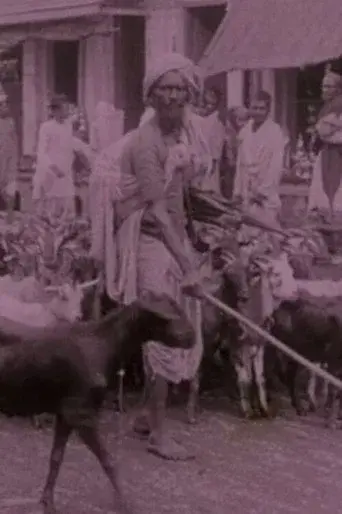

The film show the day to day running of the Titaghur Jute company, which is in Bengal on the banks of the river Hooghly. Opening shot 360 degree pan of industrial buildings. 7000 Indian workers are employed, mostly women and children. There parks for the children to play. We follow the process from jute to cloth women working at looms in the factory (very dark), shots of power plant. Schools and workers accommodations. Shots of trains and boats, loading.