Sawt Echaâb
Overview
“La Voix du Peuple,” composed of archival photographs by René Vauthier and others, exposes the root causes of the armed conflict of the Algerian resistance. Participating in a war of real images against French colonial propaganda, these images aimed to show the images that the occupier had censored or distorted, by showing the extortions of the French occupation army: torture, arrests and arbitrary executions, napalm bombings, roundabout fires, erasing entire villages from the map, etc. This is what the French media described as a “pacification campaign”.
Key Film Crew
Production Stats
You May Also Like

The Desert Rocker is an intimate, witty and profound portrait of the extraordinary Hasna El Becharia, a pioneer Gnawa artist. The first musician to break through the social barrier of this culture, she empowers and inspires women of all ages by reclaiming a musical tradition reserved for men for centuries . A singularly talented artist, she leads women to redefine their roles and challenge cultural norms , one musical performance at a time.
The Desert Rocker

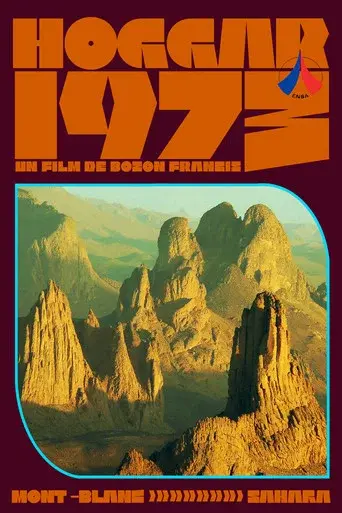
In 1973, 6 guides from the National Ski and Mountaineering School (ENSA), including Charles Daubas and Walter Cecchinel, left by truck from Chamonix to Tamanrasset in the desert in Algeria with the aim of climbing some peaks of the Atakor massif including Adaouda and Tizouyag where they do the first of "La Voie de l'ENSA".
Hoggar 1973

TSR documentary on the 1979 expedition to Algeria in the Atakor massif (Hoggar desert), organized by Geneva mountaineer Michel Vaucher and Jean-Blaise Fellay. The climbers make a dozen ascents including the famous summit of Adaouda (which means "finger" in Tamasheq, the Tuareg dialect), by several routes. Then a new route on the peaks of the southern Tezoulegs. They discover the volcanic geological characteristics of the Atakor massif and meet the nomadic inhabitants of the region, the Tuaregs, who are increasingly settling in the town of Tamanrasset.
Hoggar Expedition 79
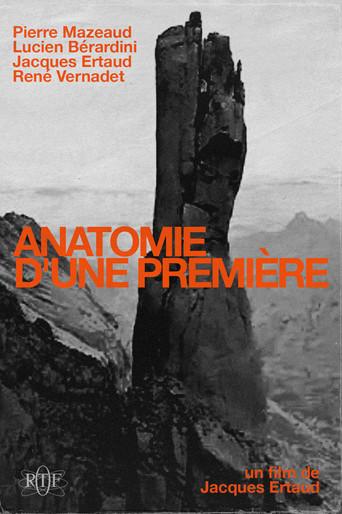
In February 1966, Pierre Mazeaud and Lucien Berardini traveled to the Atakor massif, in the Hoggar mountain range of the Sahara in southern Algeria. There, they attempted a challenging first ascent: the Takouba spur, one of the peaks adjacent to Garet El Djenoun, a legendary mountain in the Hoggar massif, first climbed by Roger Frison-Roche and Raymond Coche in 1935. The documentary, superbly filmed by Jacques Ertaud, won the Grand Prize at the Trento International Mountain Film Festival in 1966.
Anatomy of a First

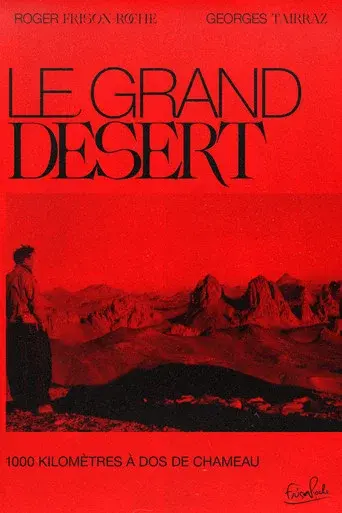
In 1950, the explorer Roger Frison-Roche made a crossing of more than a thousand kilometers on the back of a camel with the photographer Georges Tairraz II, in the heart of the Sahara, from Hoggar then Djanet in Algeria to Ghat in Libya. From their journey they brought back a large number of color films and documents. Among thousands of photos, they selected 47 images which reflect the various aspects of these immense spaces which occupy a third of Africa in the book "The Great Desert". “The Great Desert, 1000 kilometers on camelback” is the eponymous 85-minute documentary of this epic, released in 1950.
Le Grand Désert
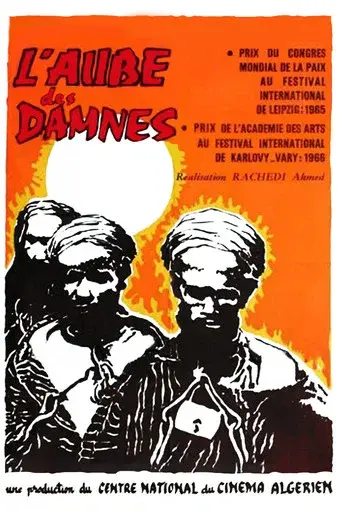
This excellent feature-length documentary - the story of the imperialist colonization of Africa - is a film about death. Its most shocking sequences derive from the captured French film archives in Algeria containing - unbelievably - masses of French-shot documentary footage of their tortures, massacres and executions of Algerians. The real death of children, passers-by, resistance fighters, one after the other, becomes unbearable. Rather than be blatant propaganda, the film convinces entirely by its visual evidence, constituting an object lesson for revolutionary cinema.
Dawn of the Damned
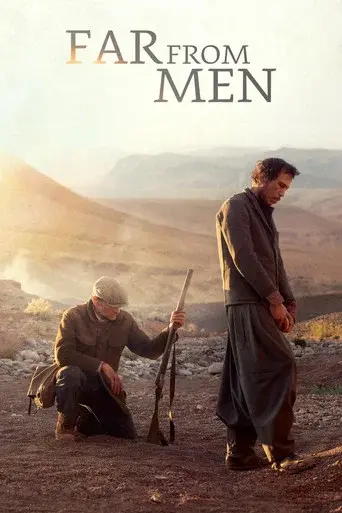
A French teacher in a small Algerian village during the Algerian War forms an unexpected bond with a dissident who is ordered to be turned in to the authorities.
Far from Men
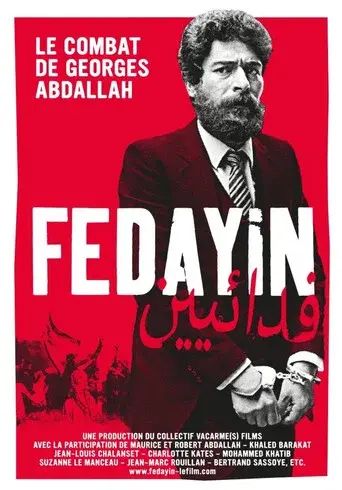
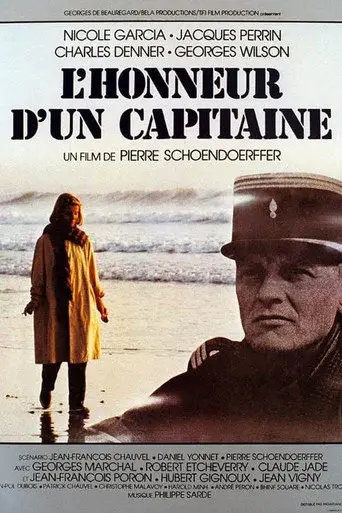
During a televised debate on the Algerian war in the early 1980s, Professor Paulet denounced the methods of Captain Caron, killed in action in 1957. The widow of the captain, Patricia, decided to file a defamation suit.
A Captain's Honor
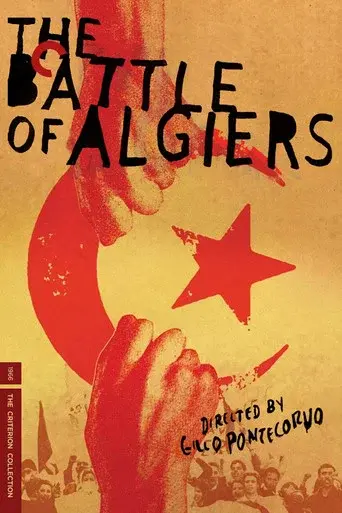
Made just three years after the end of the French-Algerian War (1954-1962), Gillo Pontecorvo's The Battle Of Algiers instantly ignited discussions of this complex historical period. Using the film as a point of reference, this 2004 documentary attempts to reconstruct the Algerian experience of the battle for independence.
Remembering History

In the midst of the Algerian war for independence, a group of fighters is trapped in the mountains, surrounded by the colonial army. Cut off from their allies, they have only one hope: to transmit a vital message to save their unit. But crossing enemy lines is a suicide mission. Their only chance lies with an unexpected messenger: a courageous dog named Messaoud. Carrying the letter attached to his collar, he embarks on a perilous crossing, braving the hostile nature and the dangers of war. But when he is captured by the enemy, his courage and instinct become his only weapons. Prisoner, hunted, he must risk everything to escape and accomplish his mission before it is too late. Sacrifice, bravery and hope mingle in this breathtaking odyssey where the humblest of heroes can change the course of history. The Unknown Hero, a moving film which won first prize at the Arab World Festival in 2017.
The Unknown Hero

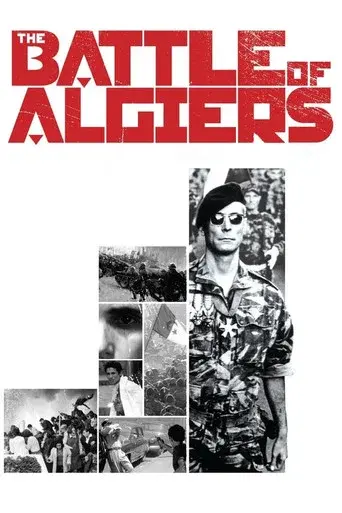
Former petty criminal Ali la Pointe becomes a commander of the Algerian Front de Liberation Nationale, directing a guerilla insurgency against the colonial French occupation. Paratrooper commander Colonel Phillippe Mathieu, a veteran of World War II and the First Indochina War, is sent to Algeria to reinforce efforts to squelch the uprisings.
The Battle of Algiers
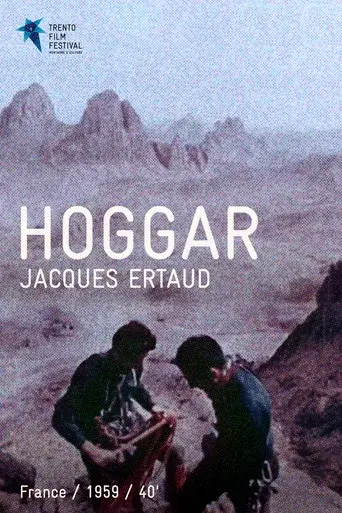
A 1959 documentary about climbing in the Hoggar Mountains of Algeria. For the first time, a mountain expedition was organized for 60 young aspiring climbers, accompanied by renowned mountaineers such as Lionel Terray, Lucien Bérardini, Maurice Herzog, and Jean-Paul Gardinier. In two weeks, dozens of new routes, often extremely difficult, were established. Jacques Ertaud's camera followed the climbers through all the challenging sections of the first ascent of the south spur of Assekrem.