

Overview
A small film crew, of three expatriates of Norrbotten and a dog, get stone-city-anxiety and decides to build a cottage in a pine tree outside Harads, Boden, Norrbotten, Sweden.
Top Cast

Jonas Selberg Augustsén

Göran Greider

Stefan Edman
Anja Hirdman
Cay Bond
Martin Lönnebo
Owe Wikström
Key Film Crew
Production Stats
You May Also Like


Deep in the Bolivian Amazon, infant spider monkeys Ñoqui, Cesar, and Ness have been rescued from hunters and the illegal pet trade. But returning to the jungle without their mothers is no easy task. Arrested Autonomy follows their uncertain journey as they attempt to reclaim their place in the wild, questioning whether a second chance at true freedom is possible when that freedom must be brokered by humans.
Arrested Autonomy


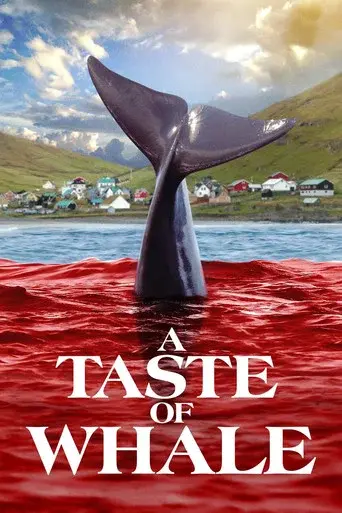
In the Faroe Islands, hundreds of pilot whales are slaughtered each year in a hunt known as the “Grind.” This gruesome tradition has drawn outrage from activists, most notably the international conservation group Sea Shepherd, who routinely sail to the islands to try to block whaling boats. Yet the Faroese are equally determined to maintain their tradition, defending the practice as more sustainable and less cruel than getting meat from slaughterhouses. Director Vincent Kelner spends time with both Faroese hunters and Sea Shepherd crusaders, building to a nuanced look at a disturbing event with much larger implications for the way humans relate to other creatures.
A Taste of Whale


Haida Gwaii, an archipelago off the west coast of Canada, is home to Skil Jaadee and her family. They live in harmony with nature and have made it their mission to save their language and preserve their history.
The Haida in Canada

Hannes is an old man who has grown apart from his children. Recently retired when his wife gets ill he tries to reconcile with them and to atone for his cold demeanor in the past.
Volcano

Whether political, sociological or social questions. In one's own life and that of others. Living, eating, loving. In art and philosophy. Everywhere man asks the question of "naturalness". How do I behave naturally? Do I have to behave naturally? What is natural? What is nature? This question occupies the most diverse people, have the most varied traits and characteristics. Man and woman as natural order or structures created by man? Meat consumption as natural predator behavior or factory farming? Nature-related living and urban planning? The topic covers all questions of human life. In this short film, this question should be discussed abstractly. Not by specific subject-relatedness, but by the juxtaposition of subjective ideas about the abstract nature of nature from the perspective of a Western white man.
Chaos
An educational film intended for children from 6 to 8 years of age. ‘We Grew A Frog, 1970’ tells the story of two schoolchildren, Lynne and Martin, who collect frog spawn from the village pond, take it to school, and there, in a tank, watch the spawn grow into frogs. The film shows in close-up the developmental stages of the spawn-to-frog process. This educational film features the pupils of Whatfield School in Suffolk. Headteacher, Gwen Dunn wrote and told the story.
We Grew A Frog
O child, I know it can be bad. O child, sometimes you're be sad. O child, it can be true. O child, sometimes it can be all new. Here comes the sun.
The Eighth Cage


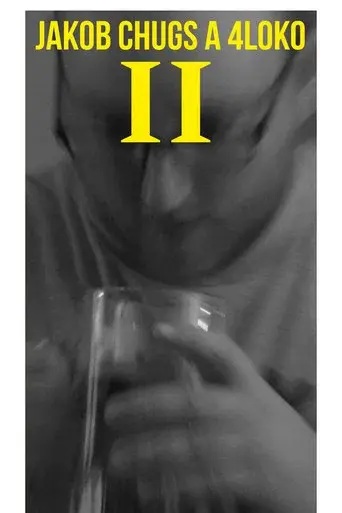
Jakob returns to his white whale in an attempt to rectify his past failures, ultimately realizing the powerful depths of what human beings are capable of.
Jakob Chugs a 4Loko 2

The members of the Ballet Rambert seen through their daily activities, including backstage, during rehearsals and performances, as well as in class and home settings.
Dancers

An 18-minute long single-channel video which uses CNN footage cut so that each word is spoken by a different newsperson. The pieces literally asks the viewers questions about media authenticity and give CNN a distinct voice
CNN Concatenated
The Angelmakers is a 2005 documentary that provides insight into the epidemic of arsenic murders by women, known as The Angel Makers of Nagyrév, in 1929. The film is shot on location in the rural Hungarian village of Nagyrév, alternating between portraits of the surrounding landscape and first-hand narrations by the elderly inhabitants.