
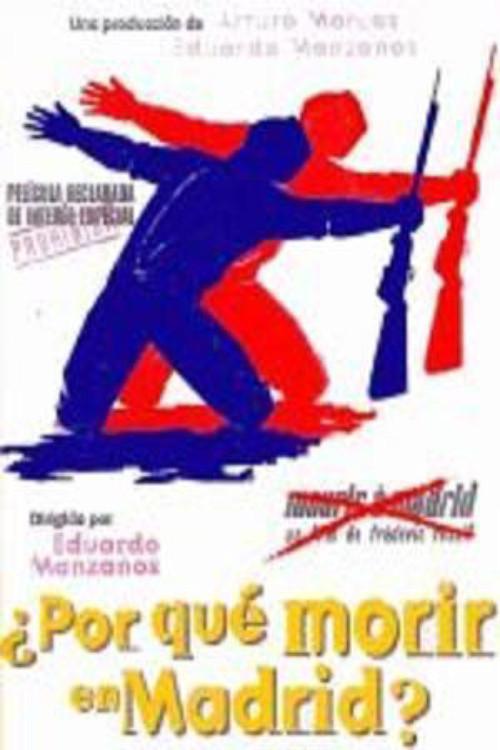
¿Por qué morir en Madrid?
Overview
No overview summary available for this movie.
Key Film Crew
Production Stats
You May Also Like

During the 30s, the young Catalan teacher Antoni Benaiges takes office at a rural school in northern Spain. Antoni has a simple project: he wants to teach his pupils to write and to be free through the use of the printing press. But his dream ends very soon. An individual and collective story in memory of the victims of the Franco's repression.
The Portraitist


Commissioned to prepare Allied troops for the liberation of Europe, the film uses a blend of staged narratives and historical footage to promote solidarity and dispel the myth that France was a nation of willing collaborators.
A Salute to France
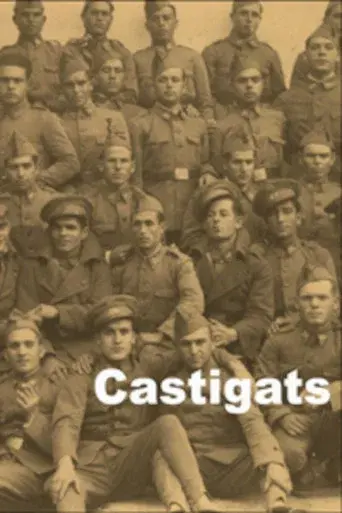
It symbolizes the experience of people without any political involvement who suffered repression in Franco's Spain.
Castigats
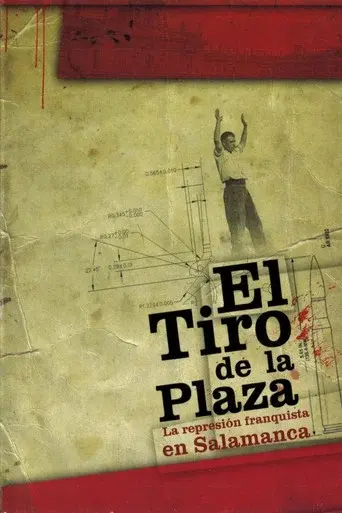
Documentary that narrates a key moment in our history: the Franco coup d'état, the cruel repression that was carried out and the attempts at resistance in the Charra province. Many people are convinced that Salamanca surrendered with open arms to the coup plotters; However, nothing could be further from the truth. In Salamanca there was repression and there were attempts at resistance; There were arrests and there were tortures, there were shootings and there were disappearances. In Salamanca there was also harsh repression that manifested itself in all its forms.
El tiro de la plaza

At the start of 1939 an exodus of nearly 500,000 Spanish Republicans, soldiers and civilians together, fleeing Franco's troops crossed the border to France. Louis Llech, a Perpignan based shopkeeper and enlightened amateur cineaste, owned a 16mm camera. Together with his friend Isambert, he filmed this extraordinary migration. Fascinated by the military aspect of this Retirada, he favoured shots of parades, of crowds, like those showing military equipment. He nonetheless also showed civilian distress, without insisting on its picturesque aspects, focussing more on images of the uninterrupted flow of refugees.
L'Exode d'un peuple

A short film on Republican efforts to improve education standards during the Spanish Civil War.
Spanish A.B.C.

Spin doctors spread misinformation and confusion among American citizens to delay progress on such important issues as global climate change.
Merchants of Doubt
Contrasting radical mobs, anarchy, and 1960s counterculture with footage of American manufacturing and innovation, this film celebrates the concept of American exceptionalism and argues that anti-Vietnam War protesters were influenced by communism, atheism, and immorality. Set mostly in a university library, this political debate between a medical student, his 1770s ancestor, and a history professor is a sequel to the 1972 National Education Program film, Brink of Disaster! Two additional characters appear in this drama: a 19th-century steamboat captain, and the student’s grandfather - an early 20th-century automobile worker. The National Education Program at Harding College in Searcy, Arkansas created a variety of widely-distributed anti-communism films from the mid-1940s to the early 1970s.
Tragedy or Hope

A student is held up in the library while a riot rages outside. As SDS protesters head to burn the library down, he has to fend them off with his baseball bat. This film opens with actual footage of civil disturbances in the 1960s, and moves on to images of historical American figures.
Brink of Disaster!

It was the biggest escape in the history of the Berlin Wall: in one historic night of October 1964, 57 East-Berliners try their luck through a tunnel into West Berlin. Just before the last few reach the other side, the East German border guards notice the escape and open fire. Remarkably, all the refugees and their escape agents make it out of the tunnel unscathed, but one border guard is dead: 21-year-old officer Egon Schultz.
A Hero's Death


La doble vida del faquir (The magicians) returns to the scene of a school in the Catalan town of Sant Julià de Vilatorta where, in 1937, in the midst of civil war, a film-maker in hiding and a group of orphaned children dressed up as sultans and explorers shot an exotic adventure film. The films protagonists relive those childhood days when they were able to switch their school smocks for oriental turbans, while reality imposed its own fancy dress ball with military uniforms and priests dressed in civilian garb.
