
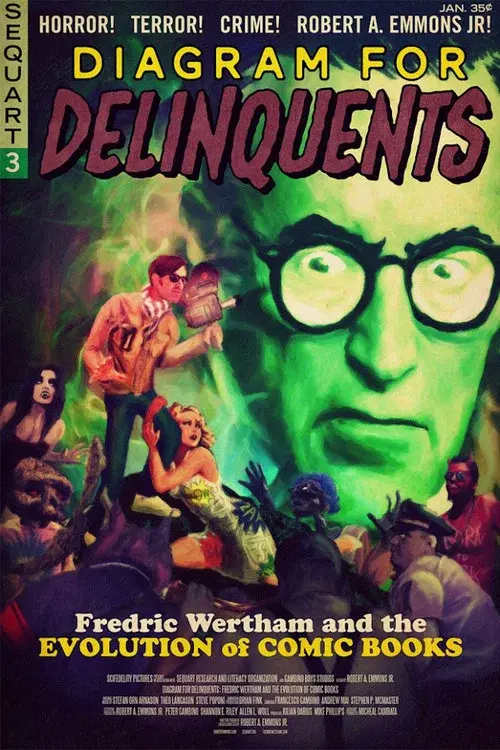
Diagram for Delinquents
Overview
In 1950, America was in a state of panic. Juvenile delinquency was destroying the very fabric of society. Ninety percent of all children were reading comic books. In 1954, psychiatrist Dr. Fredric Wertham wrote a scathing indictment of comics called Seduction of the Innocent. Its central premise: Comic books were the leading contributing factor to juvenile delinquency. That same year, Dr. Wertham testified at special hearings on comic books at the Senate Subcommittee to Investigate Juvenile Delinquency in the United States. Comics were on trial. Diagram for Delinquents captures the zeitgeist of late 1940s and early 1950s America and investigates how the funny books found themselves on the fire. Using expert and comic book insider interviews, never seen before historical photographs and films, and animation, DIAGRAM goes further than any previous comic book documentary to explore and understand the controversial figure at the center of this American tale: Fredric Wertham.
Top Cast

Brian Azzarello
Himself

Matt Fraction
Himself

Paul Levitz
Himself

Roy Thomas
Himself

Al Feldstein
Himself
Key Film Crew
Production Stats
You May Also Like


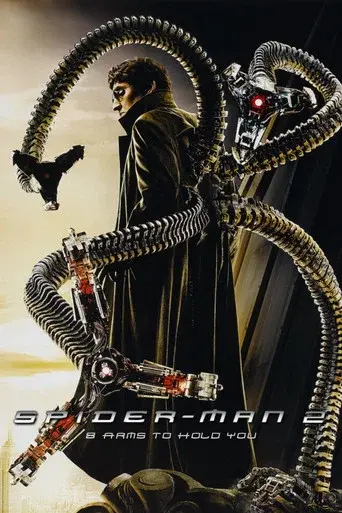
An "Ock-umentary" exploring the character of Doc Ock and the way he as well as his tentacles were brought to life on the silver screen.
8 Arms to Hold You
The history of Bruguera, the most important comic publisher in Spain between the 1940s and the 1980s. How the characters created by great writers and pencilers became Spanish archetypes and how their strips persist nowadays as a portrait of Spain and its people. The daily life of the creators and the founding family, the Brugueras. The world in which hundreds of vivid colorful paper beings lived and still live, in the memory of millions, in the smile of everyone.
Històries de Bruguera

OBAIDA, a short film by Matthew Cassel, explores a Palestinian child’s experience of Israeli military arrest. Each year, some 700 Palestinian children undergo military detention in a system where ill-treatment is widespread and institutionalized. For these young detainees, few rights are guaranteed, even on paper. After release, the experience of detention continues to shape and mark former child prisoners’ path forward.
Obaida
Documentary film that follows Silvana Castro, a woman who works at the National Congress Library in Argentina where the books that were forbidden during the military dictatorship are kept. After the exhibition of the books is suspended, she'll try to open it again.
Los prohibidos

A documentary about the cultural effect of film censorship, focusing on the tumultuous times of the teens and early 1920s in America.
Censored!

On January 31, 1857, the French writer Gustave Flaubert (1821-80) took his place in the dock for contempt of public morality and religion. The accused, the real one, is, through him, Emma Bovary, heroine with a thousand faces and a thousand desires, guilty without doubt of an unforgivable desire to live.
The Emma Bovary Trial

Possessed of an incredible artistic talent, Steve Rude is "The Dude," an eccentric personality as colorful as his comic book art. Filmmaker Ian Fischer (Magritte Moment) presents Rude's rise through the comic book world and difficult transition from comic book shops to art gallery walls, made all the more challenging by Rude's battles with mental illness.
Rude Dude

Between 1933 and 1945 roughly 1200 films were made in Germany, of which 300 were banned by the Allied forces. Today, around 40 films, called "Vorbehaltsfilme", are locked away from the public with an uncertain future. Should they be re-released, destroyed, or continue to be neglected? Verbotene Filme takes a closer look at some of these forbidden films.
Forbidden Films

With documentary cartoonist Derf Backderf, a poignant look back at the story of ‘My Friend Dahmer’, an investigative graphic novel exploring existential issues. The author sets out to explore his adolescence, which was overshadowed by Jeffrey Dahmer, a former high school friend who went on to become a serial killer.