

Ten Days That Shook the World
Overview
An epic presentation of the turbulent days leading to the Russian Revolution. Based on the classic work by John Reed, this important documentary makes use of rare footage and little-known information, stirringly narrated by Orson Welles.
Top Cast
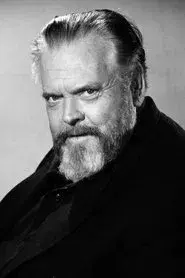
Orson Welles
Narrator
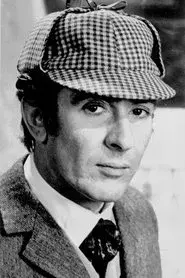
Robert Stephens
Lenin
Key Film Crew
Production Stats
You May Also Like
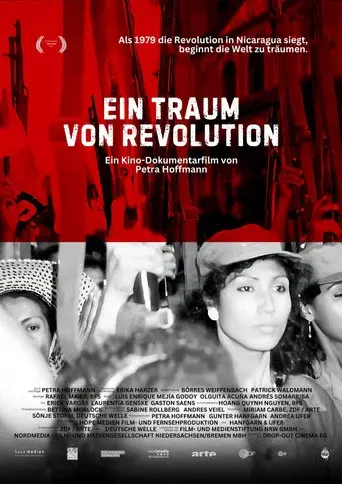
When the revolution in Nicaragua won its victory nearly 40 years ago, the world began to dream. A young generation was taking the reins in a country of grand utopias. From West Germany alone, 15,000 “brigadists” travelled to help rebuild the war-torn country: liberals, greens, unionists, social democrats, leftists and church representatives harvested coffee and cotton, built schools, kindergartens and hospital wards. No movement has mobilised so many people. What became of the hopes and dreams of the revolutionaries and their supporters?
Ein Traum von Revolution

Everyone knows the story of Paul Revere and his famous midnight ride to warn colonial forces of the British approach. But history books don't tell of the man who sent Revere on his mission: Joseph Warren, America's least remembered founding father. Uncover the forgotten history of Warren and stories of other unsung heroes in our fight for independence in The American Revolution.
The American Revolution


The hippie movement that captivated hundreds of thousands of young people in the West had a profound impact on the other side of the Iron Curtain. Within the Soviet system, a colorful crowd of artists, musicians, freaks, vagabonds and other long-haired drop-outs created their own system, which connected those who believed in peace, love, and freedom for their bodies and souls. More than 40 years later, a group of eccentric hippies from Estonia take a road trip to Moscow where the hippies still gather annually on the 1st of June for celebration that is related to the tragic event in 1971, when thousands of Soviet hippies were arrested by the KGB. The journey through time and dimensions goes deep into the psychedelic underground world in which these people strived for freedom.
Soviet Hippies

Starting in 1881 this film shows the personal battle between Lenin's Ulyanov family and the royal Romanovs that eventually led to the Russian revolution.
The Russian Revolution
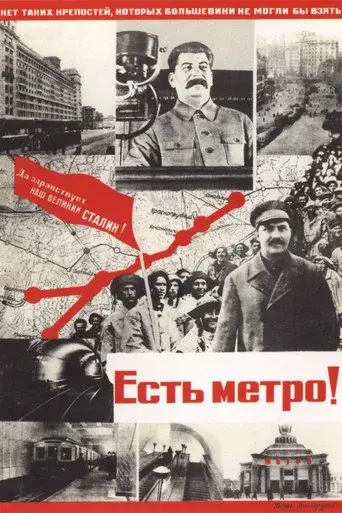
Early documentary about the Moscow metro: the early project, the development and the people working on it.
There is the Metro!

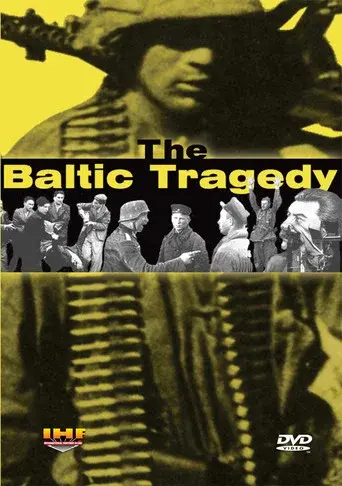
Special care has been taken by International Historic Films to assemble this monumental documentary, which tells the story of what is left for a people after its land has been ravaged by war. Situated between the powerful antagonists Germany and the Soviet Union, the Baltic nations of Latvia, Lithuania, and Estonia bore witness to some of the most ferocious land battles of the Second World War.
The Baltic Tragedy

Oľga Ondreičková is one of the exceptional figures of the first generation of Slovak architects. Her work is characterized by pragmatism, simplicity, and monumentality. Her husband is architect Pavel Ondreička, with whom she collaborated on several projects, as well as on the design of furniture, interiors, and artistic decorations. At the height of her career, Oľga Ondreičková led her own project team, which was rare for a woman at that time.
Icons - Oľga Ondreičková

A chronicle of the civil uprising against the regime of Ukrainian president Viktor Yanukovych that took place in Kyiv in the winter of 2013/14. The film follows the progress of the revolution: from peaceful rallies, half a million strong in the Maidan square, to the bloody street battles between protesters and riot police.
Maidan

Street art, creativity and revolution collide in this beautifully shot film about art’s ability to create change. The story opens on the politically charged Thailand/Burma border at the first school teaching street art as a form of non-violent struggle. The film follows two young girls (Romi & Yi-Yi) who have escaped 50 years of civil war in Burma to pursue an arts education in Thailand. Under the threat of imprisonment and torture, the girls use spray paint and stencils to create images in public spaces to let people know the truth behind Burma's transition toward "artificial democracy." Eighty-two hundred miles away, artist Shepard Fairey is painting a 30’ mural of a Burmese monk for the same reasons and in support of the students' struggle in Burma. As these stories are inter-cut, the film connects these seemingly unrelated characters around the concept of using art as a weapon for change.
Art as a Weapon

These are strange times indeed. While they continue to command so much attention in the mainstream media, the 'battles' between old and new modes of distribution, between the pirate and the institution of copyright, seem to many of us already lost and won. We know who the victors are. Why then say any more?
Steal This Film II

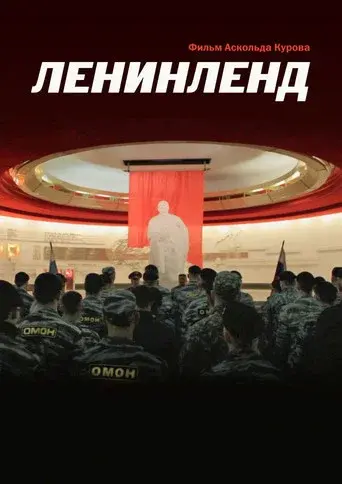
At the peak of Perestroika, in 1987, in the village of Gorki, where Lenin spent his last years, after a long construction, the last and most grandiose museum of the Leader was opened. Soon after the opening, the ideology changed, and the flow of pilgrims gradually dried up. Despite this, the museum still works and the management is looking for ways to attract visitors. Faithful to the Lenin keepers of the museum as they can resist the onset of commercialization. The film tells about the modern life of this amazing museum-reserve and its employees.