Good Morning, Mr. Orwell
Overview
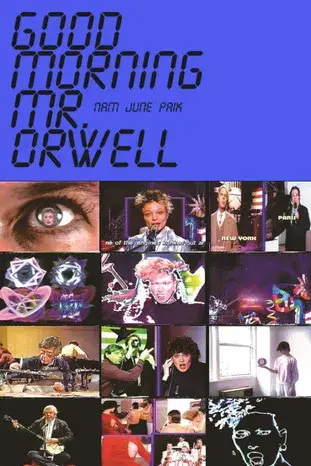
In his book "1984", George Orwell saw the television of the future as a control instrument in the hands of Big Brother. Right at the start of the much-anticipated Orwellian year, Paik and Co. were keen to demonstrate satellite TV's ability to serve positive ends-- Namely, the intercontinental exchange of culture, combining both highbrow and entertainment elements. A live broadcast shared between WNET TV in New York and the Centre Pompidou in Paris, linked up with broadcasters in Germany and South Korea, reached a worldwide audience of over 10 or even 25 million (including the later repeat transmissions).
Top Cast
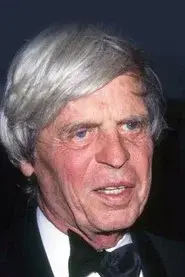
George Plimpton
Self - Host

Claude Villers
Self - Co-Host
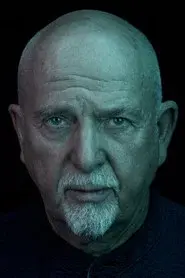
Peter Gabriel
Self

Laurie Anderson
Self

Joseph Beuys
Self
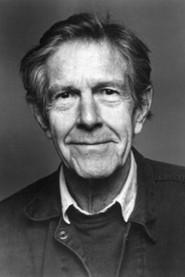
John Cage
Self

Robert Combas
Self
Merce Cunningham
Self
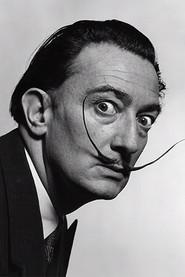
Salvador Dalí
Self (archive footage)
Teddy Dibble
Self
Leslie Fuller
Self
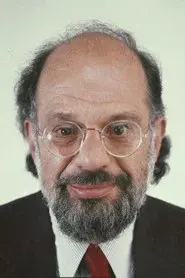
Allen Ginsberg
Self
Key Film Crew
Production Stats
You May Also Like

After a failed engagement, heartbroken art critic Kseniia finds herself embroiled in intrigue related to a Gauguin – but it might lead her to true love.
When Will You Marry?
World-famous pop group the Spice Girls zip around London in their luxurious double-decker tour bus having various adventures and performing for their fans.
Spice World
A black comedy set in the 1960s in a small Netherlands community, populated by a cast of eccentrics, all of whom hold a range of sexual obsessions and frustrated desires.
The Northerners

School girl Annabel is hassled by her mother, and Mrs. Andrews is annoyed with her daughter, Annabel. They both think that the other has an easy life. On a normal Friday morning, both complain about each other and wish they could have the easy life of their daughter/mother for just one day and their wishes come true as a bit of magic puts Annabel in Mrs. Andrews' body and vice versa. They both have a Freaky Friday.
Freaky Friday
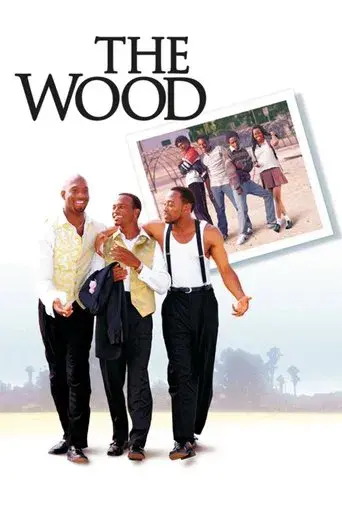
In the panicky, uncertain hours before his wedding, a groom with prenuptial jitters and his two best friends reminisce about growing up together in the middle-class African-American neighborhood of Inglewood, California. Flashing back to the twenty-something trio's childhood exploits, the memories capture the mood and nostalgia of the '80s era.
The Wood

An evening among friends turns into an emotional battlefield when a couple's tension leads everyone to question the strength of their bonds.
The Batrachians

A short, silent, experimental film created by avant-garde created by Ukranian-born artist, Anna Malina.
The Stolen Moon
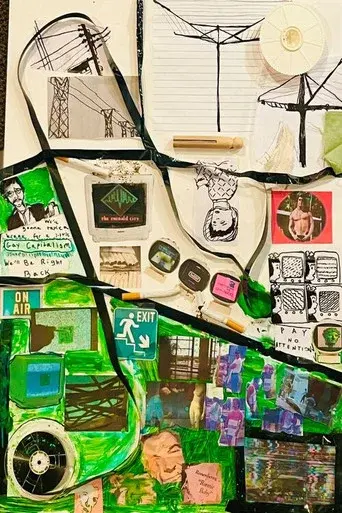
A continuously running two-channel installation, presented on 9" and 13" CRT monitors atop pedestals and overlooked by a green Kit-Cat clock. The smaller CRT bears a painted green square and is framed by a pair of crossed silver opera gloves, at whose intersection rests a vintage push-puppet of two boxers sharing a single red stand. Together, the two monitors display distinct video collages interweaving footage from Emerald Square Mall and the strike during its 1989 construction with remixed interferences from Channel J's Emerald City TV (1976–1979), Huge Video's Heat in the Night (1989), Genet's Un Chant d'Amour (1950), various cigarette commercials, The Wizard of Oz (1939), and a performance of a mylar-clad entity wrapping one of the televisions in videotape. The work has most frequently circulated publicly through its primary video channel.
Emerald ▣
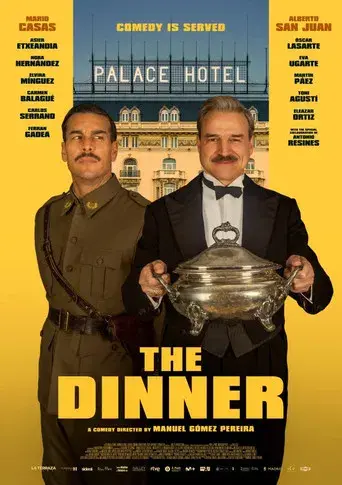
Spain, April 15, 1939. With the Civil War concluded, and with the intention of celebrating his victory, General Franco attends a dinner with his generals at the Palace Hotel.
The Dinner

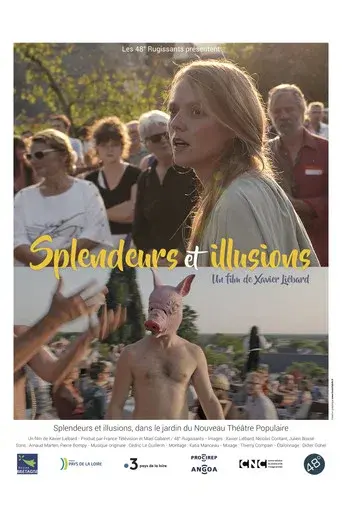
In the Garden of the New People's Theater Overview They wanted to create a theater that reflected their own vision, a freer theater, closer to its audience. So they built a wooden stage under the benevolent shade of a twisted church steeple, in the garden of a small village in Maine-et-Loire, Fontaine-Guérin. And the dream of a New People's Theater took shape amidst the fields. This is the story of a generation of actors in their thirties who have grown old together and who, ten years later, are realizing the audacity and fragility of their dream. For its tenth season, the company tackles Balzac's *Human Comedy* and plunges us into the torments and illusions of their lives as artists through the outlandish tale of Lucien de Rumbempré, a young poet who dreams of going to Paris. How can an artist avoid losing their soul? Therein lies the inner conflict. Xavier Liébard Director, Writer
Splendeurs et Illusions
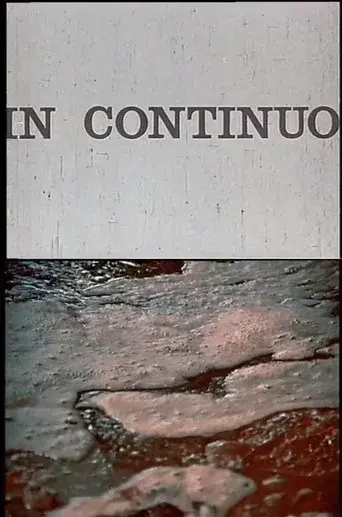
"In continuo" uses slaughterhouse imagery to present the warlike nature of man, first depicting the cleaning and mechanical preparations for the slaughterhouse and then the killing, however, the animal slaughter itself isn’t shown.