

Overview
"Huangyangchuan, Gansu province, China. It's an arid mountain area with poor roads. Ma Bingcheng is well-respected local doctor, so many patients (most of them farmers) come to see him every day. In his small clinic, people chat with each other about their lives, local conditions, or the people they know. The clinic seems to open up like a microcosm, the information and experiences of different people intertwine, revealing the conditions of typical Chinese farmers, and the typical fates of both young and old--"
Key Film Crew
Production Stats
You May Also Like
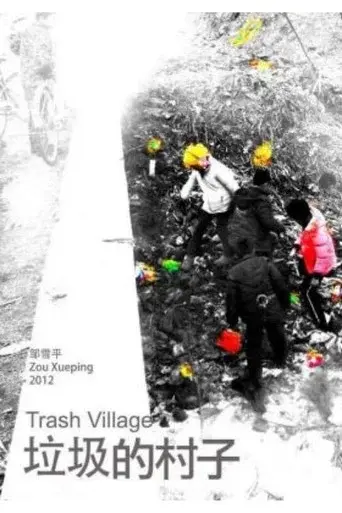
This is the fourth film in my Zoujiacun series within the Folk Memory Project. In 2013, I came back to my village and faced the trash all over the village. The children and I tried to improve the environment of our village. This was a tough fight against the trash and ideas of villagers. I felt like that the trash was in my heart. The 95-year-old grandma Sha and her 49-year-old son Xizhu, their lonely solitary life is also in this film. This film is about the progress that I fight with myself.
Trash Village
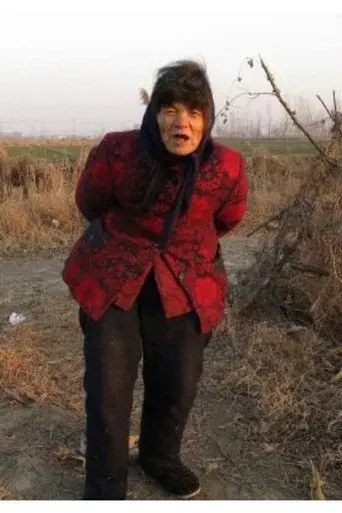
This is my fifth time coming back to my own village, where I was born and brought up. After I graduated from college, when I was staying in my village, I was always suspected and judged by the village people. Xizhu grandpa was called ‘fool’ by other villagers, and Zengxiang aunty was looked down by others. They come into my life, and I stayed with them. Their naïve and strange thought made think about my village in a new way. In this quite ‘normal’ village, who are normal people? In those normal people’s eyes, am I another fool of this village?
Foolish Village
In the autumn of 2010, the poet Xiaozhao set off from Beijing and took a national tour of his personal poem collection "My Hope is on the Road" printed at a print shop. All the way up and down, full of ambition. Photographer Zhuang Ruijie went to Guangdong halfway to shoot. He recorded a trip to Guangzhou, Shenzhen, Chengdu, Shaanxi Shanyang, Huashan, Zhongnanshan, Xi'an and returned to Beijing for about 15 days.
Bridges Burned

This film mainly records the story of two adolescent children receiving primary education of Peking Opera in Shanghai Opera School in a documentary form. As they are in their adolescence, they gradually form their own plans and ideals for the future. On this unusual learning path, they face the problem of choice between reality and ideals, and gradually learn to accept and grow up.
Cutting My Teeth
"Mazu" or "The Sea God" has been the most important religious belief of ordinary people in my hometown for four hundred years. Along the coast of China and even in the Nanyang region, there is at least one temple dedicated to Mazu in various seaside cities-this geographical and historical distribution coincides with the contemporary economic or industrial area of Chinese society. It is frustrating that rapid economic development has led to global warming. The factories located on the coast of southern China from all over the world will eventually cause flooding and inundate these temples dedicated to Mazu. This is indeed a very ironic discovery for our civilization, "We", not only Chinese or all human beings, now or in the past, how can we Chinese avoid this upcoming tragedy?
Way of Fortune

The documentary Building Archeology (jiànzhú kǎo) (2011) considers the more recent past. It’s made up of three vignettes about different buildings in Beijing: a museum, an abandoned hospital, and a detention center. The latter two vignettes are especially interesting. In the second, a woman wanders around the ruins of a hospital built in a week to deal with the 2003 SARS outbreak. The third concerns a former prisoner, tracing out a map of the detention center where he was held in 2011.
Building Archaeology

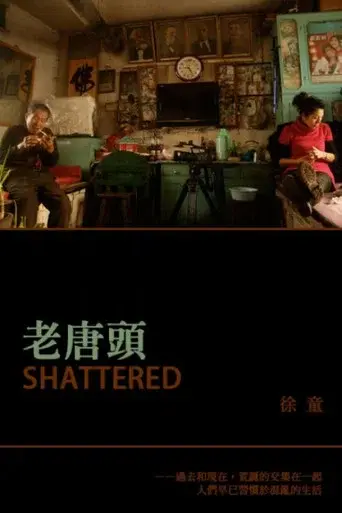
A microcosm of China past and present flows through Xu Tong’s intimate docu “Shattered,” in which the maverick indie filmmaker continues to refine his techniques and concerns shown in his previous “Wheat Harvest” and “Fortune Teller.”
Shattered


The story of a girl attempted suicide for love and finally returned to religion.
WHO IS MY LORD
This story is about the group's marvellous life without money.The film tell this story from six points of view: the screenwriter, the recording, the photography, the art, the performer and the director.
MAGUEY
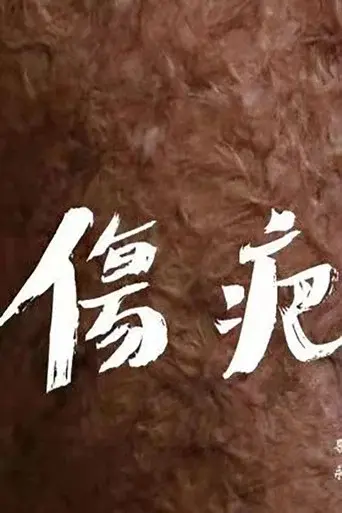
Scars, which are unfortunate or unexpected results, are also signs of healing. This new connective tissue replaces the process of injured tissues, and at the same time it becomes a metaphor for the pain and frustration of life: the sadness of the body, the union of pain... In short, scars have become a proof, a proof of existence, a proof of alive, a proof of pain, and a proof of a certain age. Beginning in 1949, in this vast land, these various scars, these healing marks, patterns, sad shapes, bring personal memories, collective pains, the marks of history, and come together Gaze, the meaning of the record. This film is the first part of the "Scar" project, the story of 110 Chinese scars.
SCAR
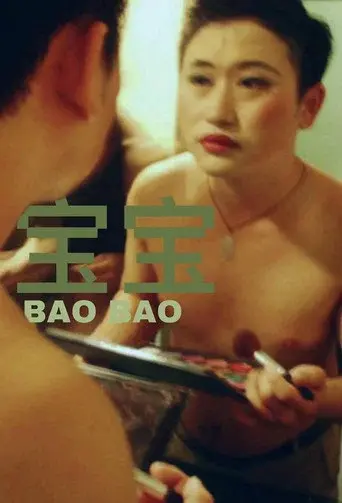
The baby is a temporary floating population. He works diligently, from a small restaurant owner to a tea shop manager to a bar manager. This film records the survival state of children centered and gay comrades: trivial, messy, boring, and entertaining themselves. The camera calmly captures every bit of their daily life for more than two years, and as time goes by, the changes the baby presents are more ordinary. The film calmly explains the relationship between "comrades" and "society", and the various small details interpenetrated in the film also metaphorically reflect the changes of today's society
Baby

This film is about the story of the main character and his younger brother, the younger brother saw the comic book of the main character, in his brain, he had a fight of animal chess related to memory. The younger brother belongs to the green party, the elder brother belongs to the orange party, at last the elder brother lost and the younger brother won in his consciousness, the younger brother took the elder brother to see the future elder brother in the heart of the younger brother.
CYPRIDINA
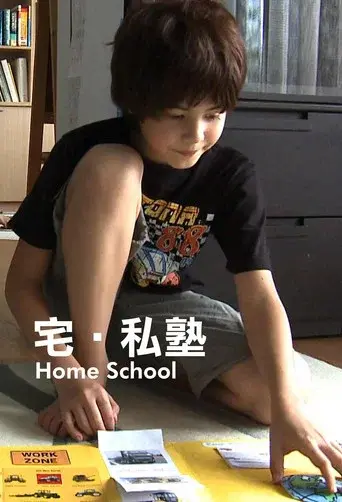
Here is only one chance in life, and the way of education has a profound impact on the future of children; letting children go to school at home is a challenge and an experiment that does not allow failure... This film visits four families who have completely different backgrounds but also choose to teach themselves. Through the sharing of experiences between their children and their parents, it presents the appearance of the phenomenon of self-study in Taiwan today. Is the pursuit of the happy growth of one's own children contradictory to the hope that the children will become a dragon and a phoenix? What kind of learning environment should we prepare for children? How do families with different backgrounds and children with different qualifications choose appropriate education methods? What is best for children?