
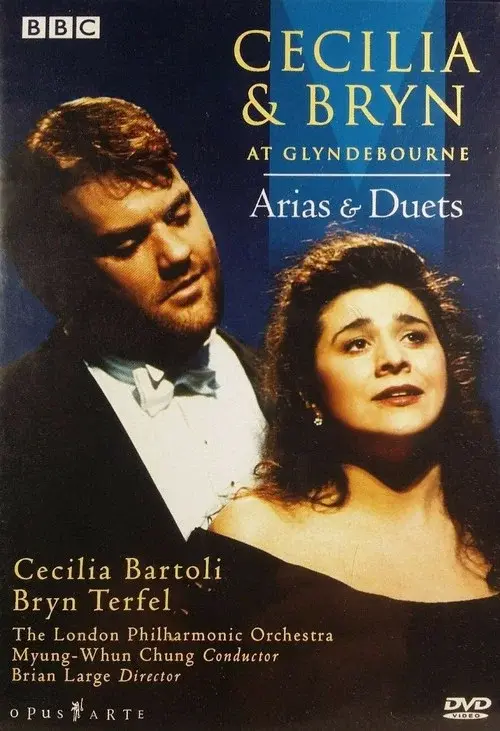
Cecilia & Bryn at Glyndebourne
Overview
The celebrated mezzo-soprano Cecilia Bartoli joins Bryn Terfel for a recital of arias and duets recorded at Glyndebourne Opera House in 1999. The programme features favourite pieces from Mozart, Rossini and Donizetti, with the London Philharmonic Orchestra conducted by Myung-Whun Chung.
Top Cast

Cecilia Bartoli
Self - Mezzo-Soprano
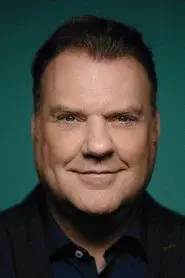
Bryn Terfel
Self - Baryton

Myung-Whun Chung
Self - Conductor

London Philharmonic Orchestra
Orchestra
Key Film Crew
Production Stats
You May Also Like
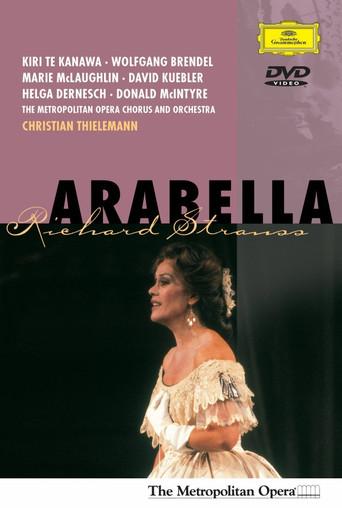
Arabella, Op. 79, is a lyric comedy or opera in three acts by Richard Strauss to a German libretto by Hugo von Hofmannsthal, their sixth and last operatic collaboration.
Arabella
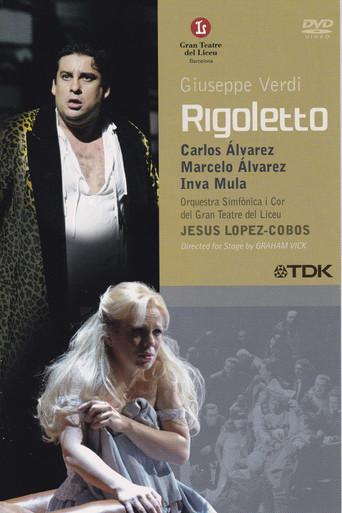
In Rigoletto, the deformed figure of the hunchbacked jester at the Mantuan court acts as a foil to his cynical and powerful master, an unscrupulous philanderer contrasted with his cruel and unforgiving fool. Rigoletto encourages and welcomes the Duke's conquests, pitilessly mocking his victims until he discovers that the Duke has abducted the one person he genuinely loves, his own daughter. As a result, the character of the court jester is transformed into a tragic figure who, in spite of his evident immorality and malice, allows us to sense the devotion he feels for his daughter and his horror at being destroyed by the same despotic world as that which he himself has helped to create.
Rigoletto

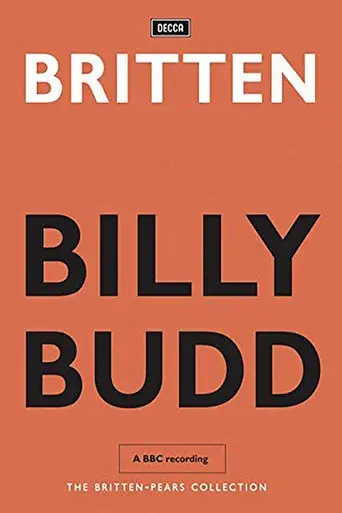
A version of Benjamin Britten's opera based on the Melville story. Will the virtuous young sailor Billy Budd be hanged for murder?
Billy Budd
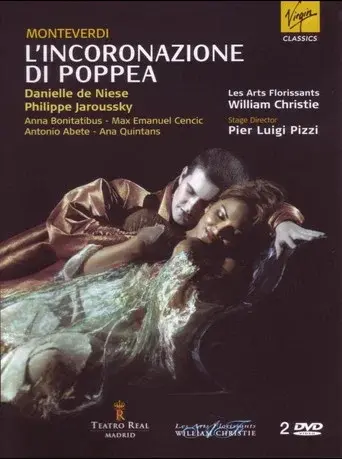
Based on a revolutionary play supposedly written by the Eternal President of the Democratic People's Republic, Kim Il-sung, and rumored to have been co-directed by Kim Jong-il. This revolutionary work is also popular among the Chinese, especially those who lived through the Cultural Revolution, and have fond memories of revolutionary antics.
Sea of Blood
The operatic version of the famous story about a governess who fears her two charges are possessed.
The Turn of the Screw

The great Georg Solti conducts a spectacular studio production of this masterpiece of 20th century opera. Two internationally celebrated Hungarian opera stars perform Bartók's darkly psychological parable with searing dramatic intensity.
Bluebeard's Castle
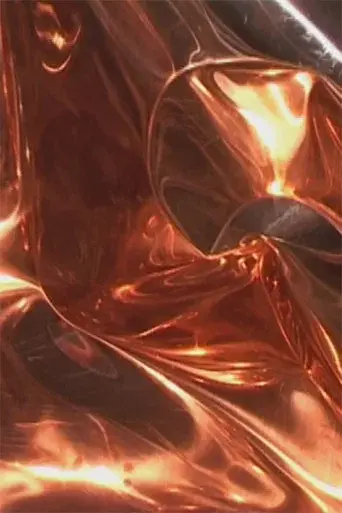
Shortly before his death, Romitelli together with his friend Paolo Pachini and the poetess Kenka Lèkovich, resurrected the dream of a total scenic art (a furnace of sensations, they called it, an_ initiation rite_) in the manner of the Futurists: rhythms and gleams of light striking metals (for the video part), poems in iron and chrome singing of fusion with matter (Kenka Lekovich), acoustic/electric music highly amplified, filtered, spatialised, in as artificial a manner as possible. An Index of Metals bears vigorous witness to this determination to go beyond: sizzling orchestration, electric and psychedelic; a voice which plays on effects, murmurs with reverb, cackles into a megaphone, screams like a pop star; and an electric guitar score of a kind that no ‘serious’ composer has ever written, sliding across an infinite range of tones with a lightness of touch and blurring of contours.
An Index of Metals
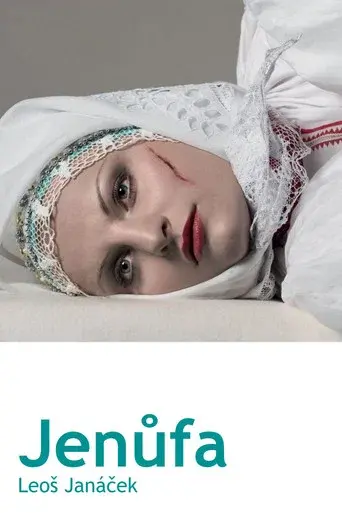
When a beautiful young woman in rural Moravia becomes unexpectedly pregnant, she learns that love is sometimes only skin-deep. Janáček took Gabriela Preissová's grim tale of infanticide and redemption, and condensed it into a masterful, spine-chilling drama. The tragic plight of the protagonists is presented with unsentimental realism that cannot help but trigger a response of deep compassion. Premiered at the National Theatre in the composer's hometown of Brno 115 years ago, the opera took him nine years to complete and is the first in which his distinctive voice can clearly be heard.
Jenůfa

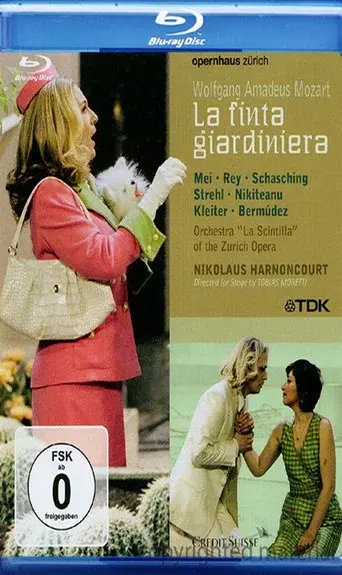
The Zurich Opera gathered a superb cast for this production: Italian soprano Eva Mei sings the Countess Violante, known as Sandrina, the feigned gardener of the title. Spanish soprano Isabel Rey is her opponent Arminda, and Arminda's former lover, the melancholy Cavaliere Ramiro, is sung by Romanian mezzo Liliana Nikiteanu. Moretti's staging presents the action in a modern villa in a hierarchical world of the rich and famous.
La Finta Giardiniera
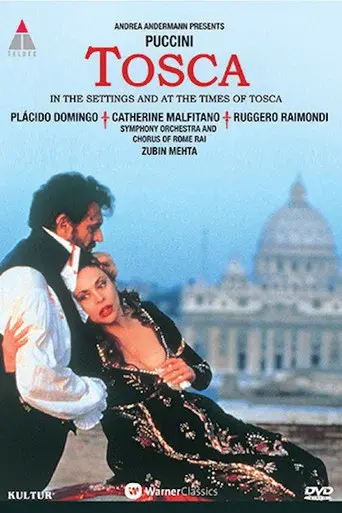
This live version of Puccini s superbly dramatic opera was recorded in Rome in the exact locations and at the precise times of day as Puccini had written into his score. The action opens in Rome's beautiful 16th-century church of Sant Andrea della Valle, where Cavaradossi (Plácido Domingo) is innocently painting, moves to the Farnese Palace where Tosca (Catherine Malfitano) dramatically stabs the lustful Scarpia (Ruggero Raimondi), and finally to the battlements of the Castle Sant Angelo at dawn the following day where Cavaradossi is cruelly killed, and Tosca takes her own life.
Tosca
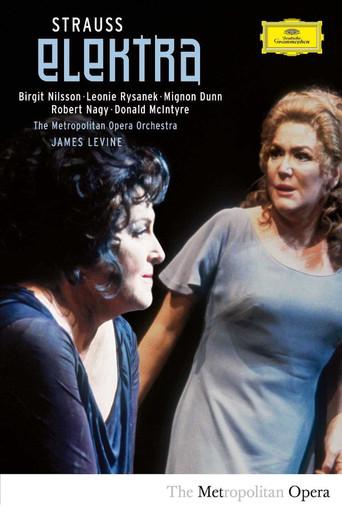
It's hard to imagine confirmed Straussians not wanting this starry Metropolitan Opera performance of Elektra. Strauss and his librettist, Hugo von Hofmannstahl, transformed Sophocles' take on Homer's tale into a harrowing opera noir. Elektra lives for one reason, to kill her mother, Klytämnestra, and her stepfather, Aegisth, the murderers of her father, Agamemnon. In contrast to Elektra's vengeful obsession, her sister Chrysothemis desires to get on with life. When their long-missing brother, Orestes, returns to do the deed, Elektra celebrates with a dance of death and, her sole purpose in life fulfilled, dies. Strauss joined the hermetic plot to music of the utmost opulence, violent and yearning by turns, evoking the cardinal principles of Greek tragedy - pity and terror.
Strauss: Elektra

This highly acclaimed production of Strauss Salome from the Festspielhaus Baden-Baden is staged by German director Nikolaus Lenhoff. Starring Angela Denoke as a brilliant Salome, who is joined by a great ensemble of soloists, Kim Begley, Doris Soffel and Alan Held. Performing with great aplomb , the Deutsches Sinfonie Orchester Berlin, conducted by Stefan Soltez, was also enthusiastically celebrated by critics and audience.
Strauss R: Salome
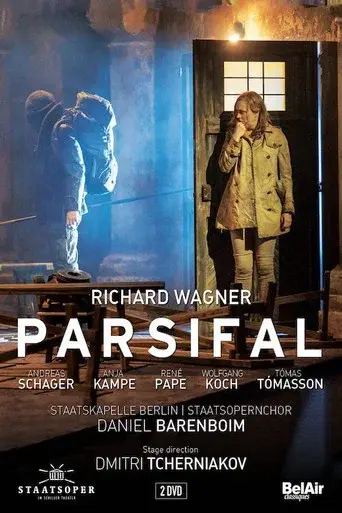
Wagner’s mystic masterpiece Parsifal at the Staatsoper Berlin, staged by Dmitri Tcherniakov and conducted by Daniel Barenboim. Wagner’s last opera, Parsifal is a medieval epic story marked by Christian, Buddhist and esoteric references. It is about redemption and renewal, but this new production by Russian director Dmitri Tcherniakov adds a jarring note : revenge. This “Festival Play for the Consecration of the Stage” is similar to a Medieval epic, a blend of metaphysical dreams and esoteric battles with constant spiritual references. This new production is directed by Dmitri Tcherniakov, conducted by Daniel Barenboim and sung by an international cast of excellent singers: Andreas Schager, Anja Kampe, Wolfgang Koch, René Pape, Tomas Tómasson and Matthias Hölle.