

Overview
Theater director Falke, dressed as a bat, ends up in prison after a merry carnival night. Director Frank only releases him after some time. Falke decides to take revenge on his friend Gabriel von Eisenstein, to whom he owes the whole affair. The annual masked ball at Prince Orlofsky's provides the opportunity. Falke stages a game of mistaken identity in which Eisenstein does not recognize his own wife and courts her, while maid Adele appears as the countess. Eisenstein is duped, Falke has taken his revenge.
Top Cast

Marte Harell
Rosalinde Eisenstein

Johannes Heesters
Herbert Eisenstein
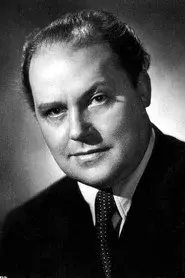
Will Dohm
Theaterdirektor Michael Falke

Dorit Kreysler
Adele

Willy Fritsch
Gefängnisdirektor Frank
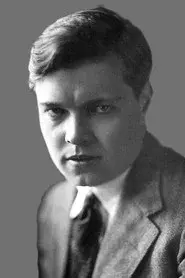
Hans Brausewetter
Tenor Alfred Melzer
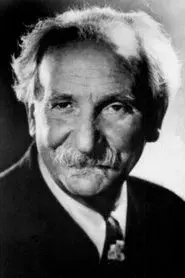
Joseph Egger
Frosch
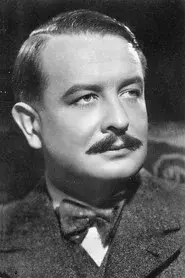
Siegfried Breuer
Prinz Orlowsky

Heinz Salfner
Inspektor
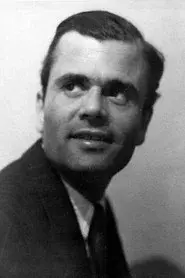
Franz Böheim
Office writer I.T. prison

Hermine Ziegler
Mimi Stelzer
Cook at Eisensteins
Key Film Crew
Production Stats
You May Also Like
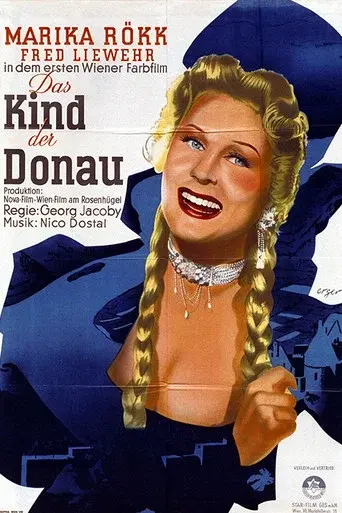
Marika is a cheerful girl who lives on the Danube aboard an old barge she inherited from her father. She works as a waitress in her aunt's inn, entertaining the guests with singing and dancing. Her greatest dream is to save enough money to repair the old barge and sail down the Danube. One day, she meets three young artists, Georg, Oskar, and Christoph, who all fall in love with her. Together, they put on an open-air revue and raise the necessary money. And with Georg, Marika is lucky in love.
Child of the Danube
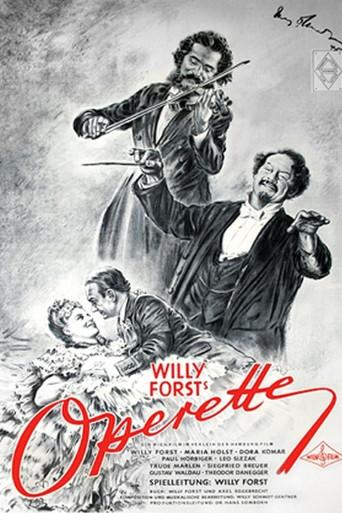
A musician is offered a job in Vienna as stage director, but his disagreements with the aristocratic opera manager end in abrupt firing in spite of a mutual attraction. He's quickly engaged by another theatre and becomes famous for his lavish stage productions and fine acting, which begins their golden age with Suppé and Strauss.
Operette

A musical film based on biographical facts about Clara Wieck's love for composer Robert Schumann (1810-1856), her marriage against her will, Schumann's triumph, and his tragic end due to mental illness. The film is beautiful and entertaining, full of noble spirit and beautiful words about art and love, which only conflict in a theoretical context; not least thanks to its solid cast, this film is quite serious and far from kitsch. Completed in 1944, during World War II, the film was rejected by the Nazi leadership, but was eventually released and enjoyed success with an audience already weary of war.
Träumerei

Two small children and a ship's cook survive a shipwreck and find safety on an idyllic tropical island. Soon, however, the cook dies and the young boy and girl are left on their own. Days become years and Emmeline and Richard make a home for themselves surrounded by exotic creatures and nature's beauty. But will they ever see civilization again?
The Blue Lagoon
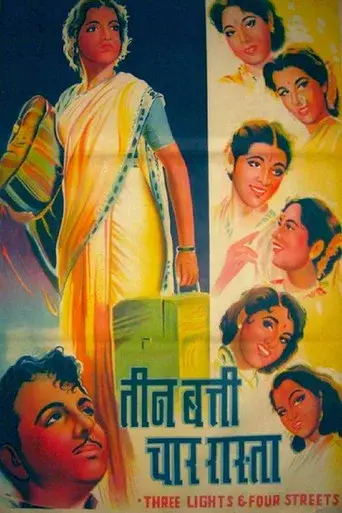
Ramesh, the youngest son of a well-to-do family, falls in love with a woman he hears singing on the radio -- even though he's never seen her. When he finds out his mystery woman is Ksama, a servant in his parents' house, everything is thrown into turmoil. Will Ramesh accept Ksama? Will they get married? Love may just conquer all in this classic Bollywood melodrama.
Teen Batti Char Raasta
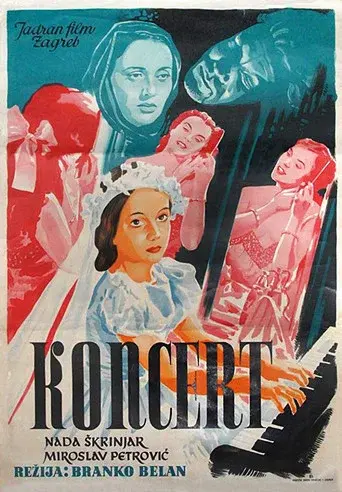
Celebrating the end of World War II and liberation of their city, a group of students is set on holding a cultural evening. They invite Ema, a reclusive piano teacher from the same building, to play for them. Ema declines, but starts reminscing back on her own life and the historical events that have seemingly overshadowed it.
The Concert

This time the "amici" (friends) are just four: Necchi, Meandri, Mascetti and Sassaroli. Nevertheless they are older they still love to spend their time mainly organizing irresistible jokes to everyone in every kind of situation. Mascetti is hospitalized in a geriatric clinic. Of course the place become immediately the main stage for all their jokes. After some jokes they decided to place an ultimate incredible and farcical joke to the clinic guests.
My Friends Act III
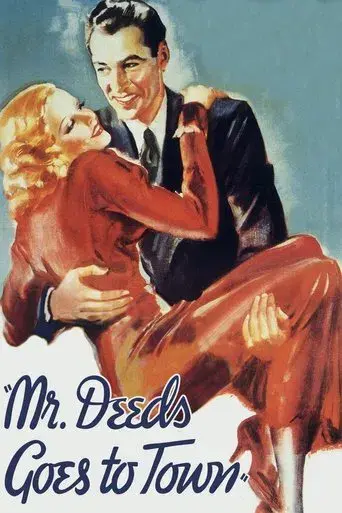
Longfellow Deeds lives in a small town, leading a small town kind of life. When a relative dies and leaves Deeds a fortune, Longfellow moves to the big city where he becomes an instant target for everyone. Deeds outwits them all until Babe Bennett comes along. When small-town boy meets big-city girl anything can, and does, happen.
Mr. Deeds Goes to Town

On the Spring of 1945 the Jackson circus is heading towards the border with the clown Peti and Aida, the elephant. They have to play for the Hungarian Fascists, while Peti is hiding the Jew Annuska and Sanyika.
Keep Your Chin Up!

When Prince Ahmad is blinded and cast out of Bagdad by the nefarious Jaffar, he joins forces with the scrappy thief Abu to win back his royal place, as well as the heart of a beautiful princess.
The Thief of Bagdad
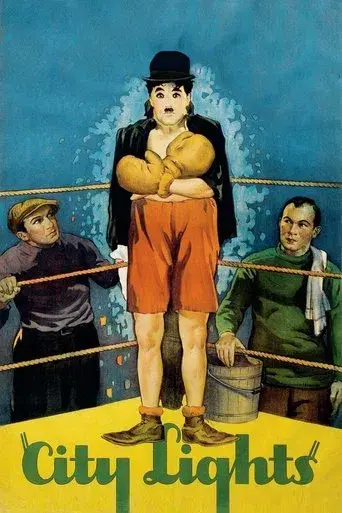
A tramp falls in love with a beautiful blind flower girl. His on-and-off friendship with a wealthy man allows him to be the girl's benefactor and suitor.
City Lights

He was known as Anatole Litvak during his Hollywood directorial career, but he was still Anatole Litwak when he helmed the German musical Das Lied Einer Nacht (The Song of Night). Famed Polish tenor Jan Kiepura stars as famed Italian tenor Ferraro. Escaping from his tyrannical manager, Ferraro switches identities with a young tourist (Fritz Schulz) and goes off on an unscheduled Swiss holiday. Still travelling incognito, our hero falls in love with a winsome mountain girl (Magda Schneider). Alas, both his romance -- and his freedom -- are placed in jeopardy when it turns out that the charming young fellow with whom Ferraro traded identities was actually a notorious swindler. Anatole Litvak also directed the English-language version of Das Lied Einer Nacht, Be Mine Tonight
The Song of Night

A traditional chinese story about a girl, Zhu Yingtai, daughter of the noble Mr. Zhu, who goes to Hangzhou to study, dressed as a boy. There, she meets a student, Liang Shanbo, with whom she becomes good friends. They go to school together for the following years, and Zhu gradually falls in love with Liang.
The Butterfly Lovers

During the French Revolution, a surprising company shares a coach, trying to catch up something - the time itself, perhaps.
That Night of Varennes



Diederich Heßling is scared of everything and everyone. But as he grows up, he comes to realize that he has to offer his services to the powers-that-be if he wants to wield power himself. His life motto now runs: bow to those at the top and tread on those below. In this way, he always succeeds: as a student in a duel-fighting student fraternity and as a businessman in a paper factory. He cajoles the obese district administrative president Von Wulkow and wins his favor. He slanders his financial rivals and hatches a plot with the social democrats in the town council. On his honeymoon with his rich wife Guste, he finally finds a chance to do his beloved Kaiser a favor. And when a memorial to the Kaiser is unveiled in the town where Diederich lives and works, he delivers the address. He stands behind the lectern in the pouring rain, saluting his Kaiser. The crowd is dispersed. Everything is laid in ruins...
The Kaiser's Lackey

We have linguists, we have literary men, we have newspapers, actors, musicians, but we have no national opera!", lamented the champions of national revival in the middle of the last century. Hungarian music culture at home is limited to the performance of works by foreign composers. And the public demands Hungarian opera, and such a challenge is not easy to meet. So let's see who is up to the task!