

Umsonst Gelebt: Walter Schwarze
Overview
“This film is part of a series of films on gay men who survived the Nazi era. I met Walter Schwarze when he was already in his eighties. My camera recorded his first public account of his five-year incarceration as a homosexual at Sachsenhausen concentration camp. He was in his fifties when he met Ali in his hometown of Leipzig; the two men became partners and remained close until his demise. And yet, Walter told me, he felt he had lived in vain because he had not had the good fortune of today's gays, who are able to grow up in freedom. Walter Schwarze died of cancer on May 10, 1998.” Rosa von Praunheim
Top Cast

Walter Schwarze
Himself
Key Film Crew
Production Stats
You May Also Like

A Brazilian production that follows an amateur soccer team entirely consisting of homosexual players." Some gay soccer players got together for fun and founded a team which became so popular that it started a movement all across Brazil.
Soccer Boys
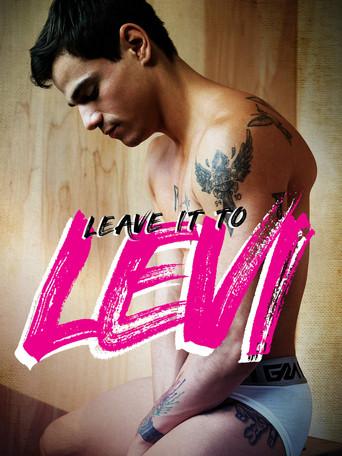
In 2014, Luke was a small-town boy growing up in Ohio. The only son and adopted child of a single mother, he dropped out of college and moved to New York to become a gay porn star: Levi Karter.
Leave It to Levi

Outrage kiss-in at Bow Street police station in London, with a demonstration against homophobic government bills clause 25/28.
Kiss 25 Goodbye
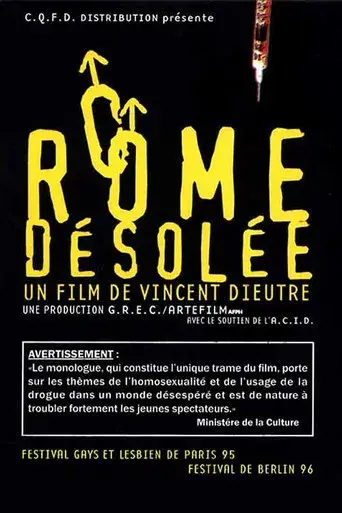
Chronicles of a male homosexual drug addict in 1980's in voice-over with long take scenes from Rome, television snippets of news of Gulf War and commercials.
Desolate Rome

The Polish city of Łódź was under Nazi occupation for nearly the entirety of WWII. The segregation of the Jewish population into the ghetto, and the subsequent horrors are vividly chronicled via newsreels and photographs. The narration is taken almost entirely from journals and diaries of those who lived–and died–through the course of the occupation, with the number of different narrators diminishing as the film progresses, symbolic of the death of each narrator.
Łódź Ghetto
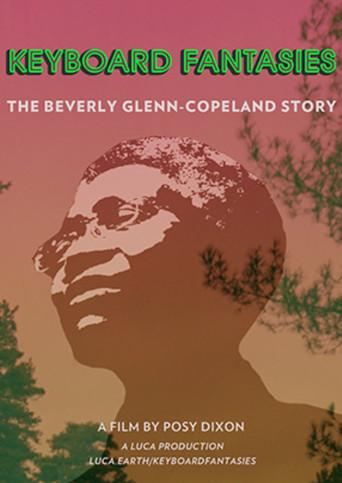
As a sci-fi obsessed woman living in near isolation, Beverly Glenn-Copeland wrote and self-released Keyboard Fantasies in Huntsville, Ontario back in 1986. Recorded in an Atari-powered home-studio, the cassette featured seven tracks of a curious folk-electronica hybrid, a sound realized far before its time. Three decades on, the musician – now Glenn Copeland – began to receive emails from people across the world, thanking him for the music they’d recently discovered.
Keyboard Fantasies


Filmmaker Peter Hegedus embarks on the challenging journey to make Sorella's Story, an immersive 360° film set on the beaches of Latvia in December 1941, when thousands of Jewish Women and children perished at the hands of Nazi collaborators. Along the way Peter teams up with Jewish-Australian 90-year-old Ethel Davies whose family was also killed in the same massacre.
In Their Name
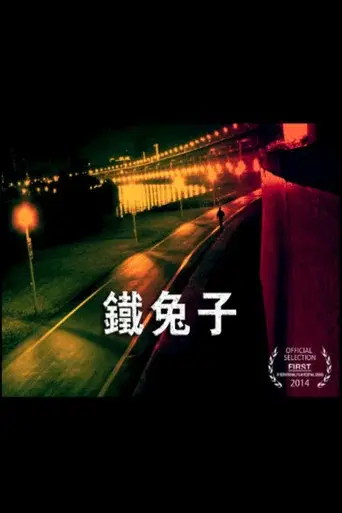
In this film, the idea of the iron rabbit is used as a metaphor for bisexuals’ situation. Something that looks like a rabbit is not necessarily a rabbit. When a straight couple appears, people often consider them to be ordinary heterosexuals. And when two gay people get together, people simply think of them as homosexuals. In this instinctive view, which holds that people are either homo or hetero, bisexuals seem to fade out. This film is a real reflection of the lives of bisexual people in Taiwan. We hope that through the film, people can understand more about bisexuals.
To Live Invisibly
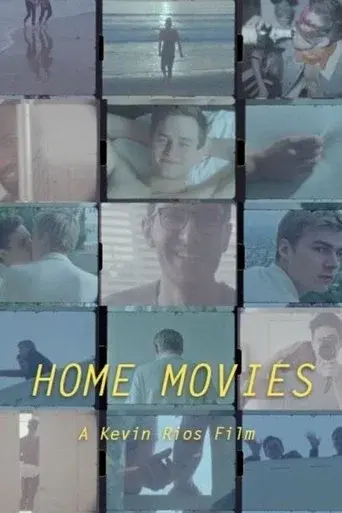
In this home movie collection of gay men, memory serves as an act of hope, power, and above all, resilience.
Home Movies
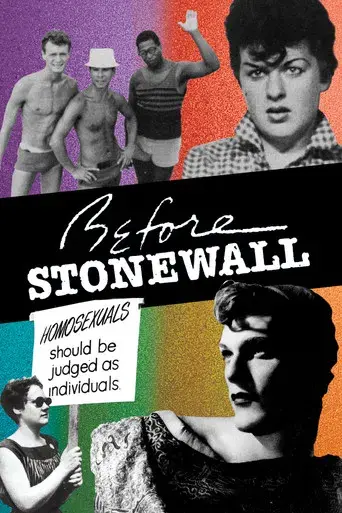
New York City's Stonewall Inn is regarded by many as the site of gay and lesbian liberation since it was at this bar that drag queens fought back against police June 27-28, 1969. This documentary uses extensive archival film, movie clips and personal recollections to construct an audiovisual history of the gay community before the Stonewall riots.
Before Stonewall

Exuberant, eye-opening movie that serves up a dazzling hundred-year history of the role of gay men and lesbians have had on the silver screen. Film contains fabulous footage from 120 films showing the changing face of cinema sexuality, from cruel stereotypes to covert love to the activist triumphs of the 1990s.
The Celluloid Closet
A 16mm anthology of experimental super 8 films by Derek Jarman, Michael Kostiff, Cerith Wyn Evans and John Maybury, with framing footage by Tim Burke of Brion Gysin using a dream machine. Jarman's contribution is a version of his 1977 Art and the Pose (aka Arty the Pose), refilmed at 3fps, with a musical soundtrack. Jarman planned The Dream Machine as a commemoration of William Burroughs and Gysin's 1982 visit to the UK, and received initial funding from the Arts Council in 1983, then rethought the project as a portmanteau film featuring Gysin alone. The production remained in limbo until 1986, when James Mackay obtained completion funding from the British Film Institute. (Since this film was released on VHS accompanied by Jarman's Broken English: Three Songs by Marianne Faithfull, T.G.: Psychic Rally in Heaven and Pirate Tape under the umbrella title The Dream Machine, synopses of this film have often muddled up its details with those of the earlier films. )