Señores coroneles, señores generales
Overview
A plea against the government of General Hugo Banzer (1971-1978) and specifically against the Bolivian military during the seven-year dictatorship. Includes interviews with prominent politicians, union leaders, and former CIA agents, as well as with Régis Debray, advisor to President Mitterrand.
Top Cast

Régis Debray
Self

Hugo Banzer
Self

Philip Agee
Self
Key Film Crew
Production Stats
You May Also Like
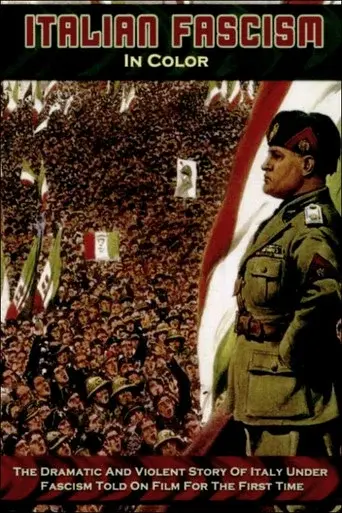
After the World War I, Mussolini's perspective on life is severely altered; once a willful socialist reformer, now obsessed with the idea of power, he founds the National Fascist Party in 1921 and assumes political power in 1922, becoming the Duce, dictator of Italy. His success encourages Hitler to take power in Germany in 1933, opening the dark road to World War II. (Originally released as a two-part miniseries. Includes colorized archival footage.)
Fascism in Colour

The Falklands War began on April 2, 1982, with the Argentine landing on the islands ordered by Leopoldo Fortunato Galtieri, and culminated with the cessation of hostilities between Argentina and the United Kingdom of Great Britain on June 14, 1982. Through dynamic editing and the use of archival materials, the documentary considers the war as part of our recent past, but also opens up multiple questions and reflections on contemporary society and the future projection of what such a conflict generates for us Argentines.
Con amigos así

Four lucid grandmothers tell their story forgotten by history: the militancy and resistance of the young women of the leftist youth against the dictatorship of Marcos Pérez Jiménez.
The Girls

A film about dreams and ambitions in the Belarus through the eyes of the younger generation. An insight into the recent history of Belarus and the growing movement for change in 'Europe's last dictatorship'.
Belarusian Dream
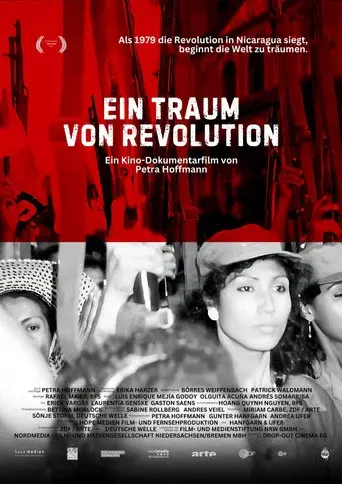
When the revolution in Nicaragua won its victory nearly 40 years ago, the world began to dream. A young generation was taking the reins in a country of grand utopias. From West Germany alone, 15,000 “brigadists” travelled to help rebuild the war-torn country: liberals, greens, unionists, social democrats, leftists and church representatives harvested coffee and cotton, built schools, kindergartens and hospital wards. No movement has mobilised so many people. What became of the hopes and dreams of the revolutionaries and their supporters?
Ein Traum von Revolution
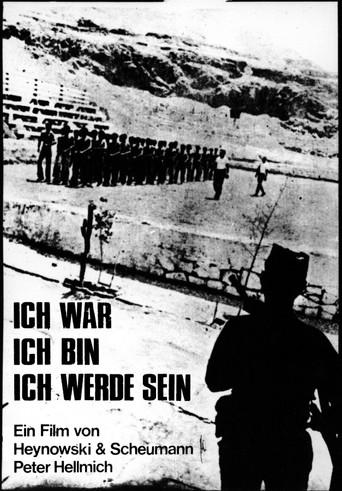
In the spring of 1974, a camera team from Studio H&S succeeded against the explicit orders of the Junta’s Chancellery, entered into two large concentration camps in the north of the country - Chacabuco and Pisagua - leaving with filmed sequences and sound recordings.
I Was, I Am, I Will Be
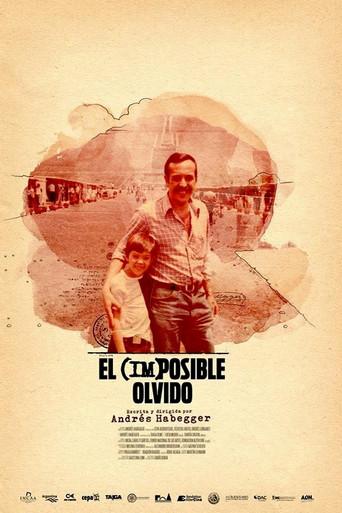
Argentine filmmaker Andrés Habegger embarks on a deeply personal journey in this documentary, seeking to recover memories and information about his father, Norberto Habegger, a journalist and Montonero activist who disappeared in Brazil in 1978 during a joint operation between the Argentine and Brazilian military. Traveling to places that were part of his life and revisiting old photos and his childhood diaries, the director fills in the gaps in a family history that was interrupted.
El (im)posible olvido


A documentary made with homemade videos of the spanish exiled due to the dictatorship in Spain from 1939 to 1977.
Exile Diaries
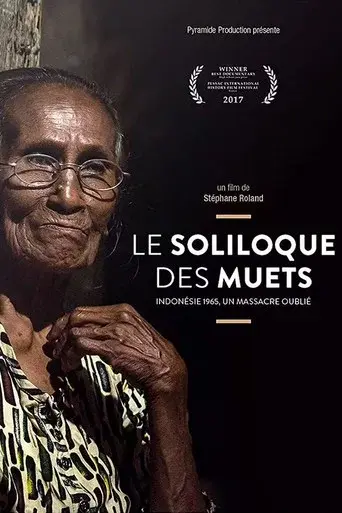

Journalist Dermi Azevedo has never stopped fighting for human rights and now, three decades after the end of the military dictatorship in Brazil, he's witnessing the return of those same practices.
Stunned, I Remain Alert

The long fight over the land, which demolished the wall between master and serf, continues to divide Peru to this day. But the 1969 agrarian reform marked a before and after in the country's story - a profound change that Peruvian cinema reflected and encapsulated, creating great imagination we continue to discover today. 50 years after the social experiments of the revolution, we ask ourselves whether Peru really messed up or not with Juan Velasco Alvarado.
Revolution and Land


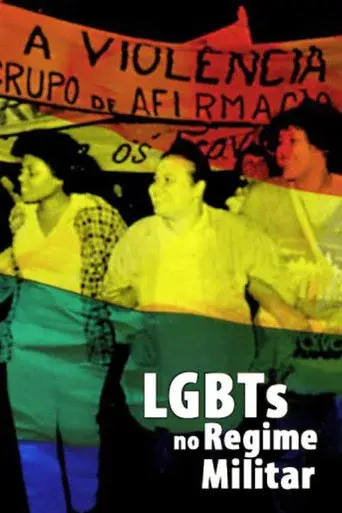
In 1980, the first march of gays, lesbians and transvestites took place in Brazil in protest against the constant police operations that took place in São Paulo, which aimed to repress these groups. Based on Renan Quinalha's doctoral thesis, “Against morality and good customs: the sexual politics of the Brazilian dictatorship (1964-1988)”, carried out by the Institute of International Relations, a series of four 5 minute videos about the birth of the LGBT movement during the Military Regime.