

Overview
On June 29, 1941 thousands of Jews were herded into a courtyard in Iasi, Romania and were massacred by German and Romanian soldiers. Many of the Jacobovicis of Romania died that day. Canadian filmmaker Simcha Jacobovici goes back to the land of his forebears and explores issues of memory - his and Romania's. Charging the Rhino is a documentary about the Romanian Holocaust. Romanian fascists shot filmmaker Simcha Jacobovici’s father, Joseph, during WWII. Romanian communists shot his cousin, Sasha, during the Cold War. Through their stories the film explores the devastating history of fascism and communism in Romania and the life-altering affect it had on the psyche of those who endured Romania’s unimaginable.
Top Cast

Simcha Jacobovici
Self

Sara Jacobovici
Self
Serban Suru
Self
George Voicu
Self
Itzhak Schwarz-Kara
Self
Lya Benjamin
Self
Ioan Constantinecu
Self
Key Film Crew
Production Stats
You May Also Like
A more experimental aproach to labor protection films. In the line of Săucan's style, the soundtrack is as important as the image, the threatening music, full of shrillness, composed by Ion Dumitrescu potentiating the visual construction that mixes - in a montage reminiscent of the Soviet avant-garde school of the 1920s - all kinds of shooting techniques and frame combinations.
Open files

Made on the occasion of March 8, it presents a series of brief portraits of women, from various professional fields, of different ages and even of different ethnicities, pointing out the benefits that the communist organization had brought to their daily lives. A special emphasis is placed on their status as mothers and on the role of nurseries and socialist kindergartens not only in making their lives easier, but also in giving them the time they need to build a career. Another concern of the filmmaker, starting from the concrete case of one of the protagonists, is to highlight the differences between the happy present and the not-too-distant past in which someone with her social status should have dedicated herself exclusively to raising children, in hygienic and extremely difficult lives.
Women of Today

Hamburg, Germany, 1939. Getting a passage aboard the passenger liner St. Louis seems to be the last hope of salvation for more than nine hundred German Jews who, desperate to escape the atrocious persecution to which they are subjected by the Nazi regime, intend to emigrate to Cuba.
St. Louis

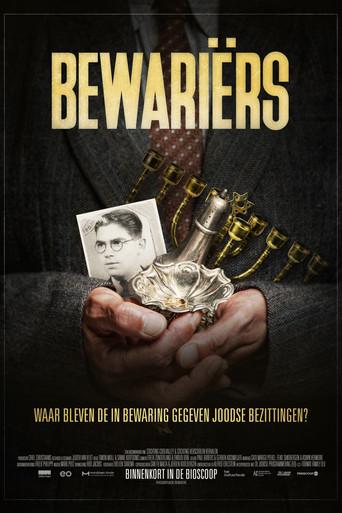
This documentary tells three stories about Jewish properties stored during the Second World War, their Jewish owners and their non-Jewish custodians.
Custaryans
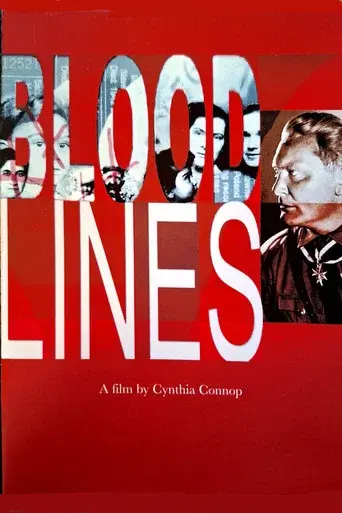
A moving meditation on guilt and reconciliation, Bloodlines explores the unwritten cost of war and genocide on future generations - of both victims and perpetrators. As Bettina Goering, grandniece of Nazi war criminal Herman Goering, searches for a way to come to terms with her heritage, she meets Ruth Rich, a painter and daughter of Holocaust survivors. At a time when seemingly irreconcilable divisions between groups are tearing the world apart, this deeply hopeful film is a beautiful testament to the power of dialogue and post-conflict reconciliation.
Bloodlines

At the beginning of the 70s, Sahia Studio produced a number of social investigations commissioned by the Central Committee of the Romanian Communist Party, intended to expose the so-called "social parasitism". The decision was taken after the theses of July 1971, which provide that "one of the main objectives of political work, especially among the youth, is the firm fight against the tendencies of parasitism, of an easy life, without work, the cultivation of responsibility and the duty to work , in the service of the country, the people, the socialist society". The most famous films, made with the competition of the Ministry of the Interior and the Ministry of Justice, are Să treacă vara and Iarna unor pierde vară
Winter of a slacker
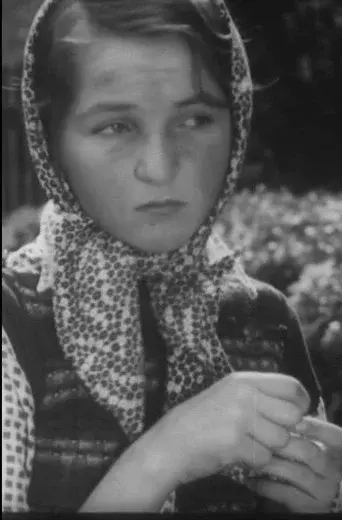
The film's protagonists are the orphaned children taken into custody by the state and institutionalized at Children's House no. 6 from Bucharest. For Mészáros, the concern for the situation of children left orphaned during the Second World War is autobiographical: the director directly experienced the absence of parents in her own childhood.
Let All Children Smile

Filmmaker Peter Hegedus embarks on the challenging journey to make Sorella's Story, an immersive 360° film set on the beaches of Latvia in December 1941, when thousands of Jewish Women and children perished at the hands of Nazi collaborators. Along the way Peter teams up with Jewish-Australian 90-year-old Ethel Davies whose family was also killed in the same massacre.
In Their Name



In 1944 Rudolf Breslauer documented the everyday life in the Westerbork transit camp on film, commissioned by the German camp commander Albert Gemmeker. The Westerbork Film was never completed, but much of the raw footage is preserved.
Westerborkfilm


The first woman rabbi in the world, Regina Jonas, comes to light, courtesy of Rachel Weisz – who plays her – and her father George Weisz, who was the executive producer for this poetic and beautiful documentary. The daughter of an Orthodox Jewish peddler, Jonas was ordained in Berlin in 1935. During the Nazi era and the war, her sermons and her unparalleled devotion brought encouragement to the persecuted German Jews. Regina Jonas was murdered in Auschwitz in 1944. The only surviving photo of Jonas serves as a leitmotif for the film, showing a determined young woman gazing at the camera with self-confidence.