Verbier Festival 2021 - Behzod Abduraimov
Overview
A piano prodigy in the grandest tradition welcomes you to a high-flying recital, live from the 2021 Verbier Festival! Uzbek pianist Behzod Abduraimov interprets a demanding program that begins in the Baroque era with two spirited sonatas from Italian composer Domenico Scarlatti, and continues with the eight movements of Schumann’s epic Kreisleriana. The concert ends with Rachmaninov’s dazzling Variations on a Theme by Corelli, whose theme itself draws inspiration from La Folia, one of Europe’s earliest known melodies.
Top Cast

Behzod Abduraimov
Self - piano
Key Film Crew
Production Stats
You May Also Like


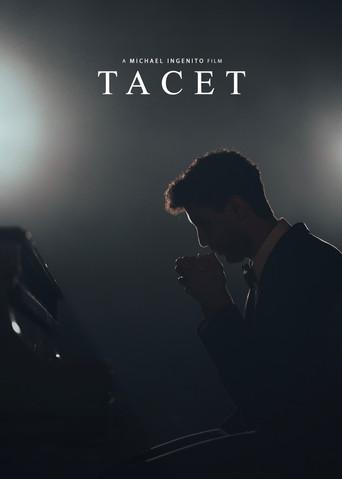
An aspiring classical pianist loses his hearing and, with the help of those closest to him, must find the strength to play again. . .
Tacet

Based on the famous Gustav Holst musical suite, Ken Russell's musical delight takes viewers on a magnificent journey of the planets of the Solar System.
The Planets
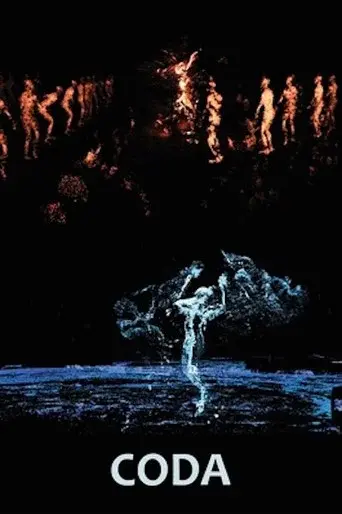
This short animation draws on advanced digital technologies to offer a new vision of dance in cinema. With motion capture (MoCap) and particle processing, designers Denis Poulin and Martine Époque create virtual dancers free of their morphological appearance. In this balletic and hypnotic film, dynamic traces carry the motion of the real dancers behind the on-screen movements. Addressing environmental themes by way of metaphor, CODA is a fused universe where space and time collide, deploy, and dissolve. In this technically and formally innovative film, luminous bodies in the infinite space of the cosmos transform and evolve to the rhythms of Stravinsky’s Rite of Spring.
CODA
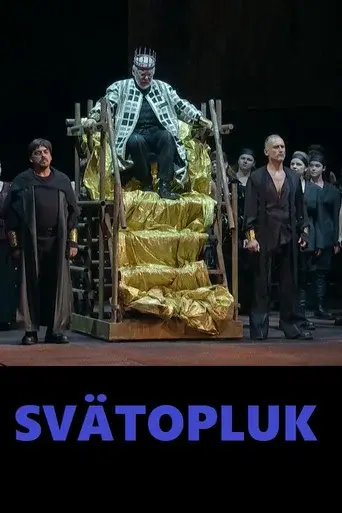
Eugen Suchoň's opera Svätopluk returns to the stage of the Slovak National Theatre Opera in 2023. Since 1960, when it had its world premiere, this is the fifth production of this musical drama at the Slovak National Theatre. It returns as an eloquent witness of Slovak operatic history, as a bearer of a message, as an impulse for reflection and reassessment of historical attitudes in a broader context.
Svätopluk

Anton Bruckner’s 6th Symphony was written between 1879 and 1881: a very happy time in his life. Unlike most of Bruckner’s symphonies, the 6th was not revised. Of all his works, this one seems to come from a single source of inspiration. Bruckner himself called it his “boldest” symphony – probably due to its extreme degree of motivic, rhythmic and harmonic originality. This live recording of the seldom-performed 6th Symphony is the next instalment of the acclaimed Bruckner cycle by the Staatskapelle Berlin and Daniel Barenboim. Anton Bruckner Symphony No. 6 in A major (original version) Daniel Barenboim, Conductor Staatskapelle Berlin Recorded live at the Philharmonie Berlin, 22 June 2010
Bruckner: Symphony No. 6
“Clarity was one thing that made this performance a marvel. Another was the flexibility of Barenboim’s speeds…. The flexibility of Barenboim’s tempi meant that Bruckner’s charm – an often overlooked aspect of his genius – shone through, especially in the genial Trio.” (The Telegraph) Bruckner’s 8th is the last symphony completed by the Austrian composer. Many of his contemporaries regarded the symphony as “the pinnacle of 19th century music”. Even today, this monumental work fascinates listeners with its virtuoso orchestral technique, its immensity of sound, and its inexhaustible richness of detail. Symphony No. 8 in C minor (second version 1887-90, Robert Haas Edition) Daniel Barenboim, Conductor Staatskapelle Berlin Recorded live at the Philharmonie Berlin, 26 June 2010
Bruckner: Symphony No. 8

An enterprising producer believes he has hit upon a winning concept: a program of original animated shorts set to classical music. Undeterred by warnings that this has already been done by an American named 'Prisney,' he rallies an orchestra of geriatric women, a bullish conductor, and an animator that he keeps locked in the dungeon. What could go wrong?
Allegro non troppo

In Anton Bruckner’s 7th Symphony, the listener encounters a music characterized by great spaciousness and profound solemnity, a music which speaks of grief and lamentation, but also of their transcendence. With its monumental architecture and intensity of sound, the symphony has moved listeners ever since its triumphal premiere in 1884. The Guardian calls Daniel Barenboim’s London interpretation “Tremendous … Barenboim and the Staatskapelle seem to have this work in their systems, and the overall impression was of music unfolding organically at its own pace rather than of a work being self-consciously interpreted or led.” Anton Bruckner Symphony No. 7 in E major (original version) Daniel Barenboim, conductor Staatskapelle Berlin Recorded live at the Philharmonie Berlin, 25 June 2010