

Overview
A documentary film about the origins of the Basque trikitixa. It reflects how the small accordion brought by one of the Italian workers who came to build the Madrid-Paris railway tunnels in 1859, starting from Zumarraga, has become a symbol of contemporary Basque music.
Top Cast

Juan Bautista Busca
Self

Bernardo Atxaga
Self
Toti Martínez de Lezea
Self
Kepa Junkera
Self
Fermin Muguruza
Self
Garikoitz Mendizábal
Self
Key Film Crew
Production Stats
You May Also Like

The story of Nisar Ahmed Khan, told through his children and the people he served, a spiritual guide whose followers still visit his tomb on his birth and death anniversaries. And alongside how his family spends a few days at the village keeping his traditions alive.
Ghuza da Sher
An ethnographic documentary which looks at the relationship between music and work in predominantly rural cultures. It depicts the lives of fisherman, shepherds and farmers and their relationship with music. The film also describes Basque ancestral instruments, with special emphasis on the origin and history of ‘bertsolarism’ (Basque verse singing) as a form of oral communication.
Euskal herri-musika

As a sci-fi obsessed woman living in near isolation, Beverly Glenn-Copeland wrote and self-released Keyboard Fantasies in Huntsville, Ontario back in 1986. Recorded in an Atari-powered home-studio, the cassette featured seven tracks of a curious folk-electronica hybrid, a sound realized far before its time. Three decades on, the musician – now Glenn Copeland – began to receive emails from people across the world, thanking him for the music they’d recently discovered.
Keyboard Fantasies


During a decade rife with paranoia, in the middle of the McCarthy era, Music Inn was a bold experiment. Halfway between the Second World War and The Civil Rights Movement, Phil and Stephanie Barber created an oasis in the Berkshire Hills in Western Massachusetts where aspiring musicians came to learn from the very best. Students and faculty, young and old, rich and poor, white, black, and brown convened together and learned from each other. Defying the surrounding environment, Music Inn harbored a racial and cultural harmony where music was all that mattered.
Music Inn
A single female voice sings of waiting in her garden for her ‘dark-eyed sailor’ to return from war, bearing the other half of their token, a gimmel ring. Three veterans pass on the road as she waits, and she asks them: “When you were fighting in distant lands, did you think of the home you left?” In reply the veterans relate their recollections. The garden images in the accompanying film represent ‘home’, but also stand for a more general possibility of redemption, of the potential of the past to return at any time, disguised and changed, to renew the present: “Each moment of time is a garden gate,” the song goes, “Through it my love may walk.”
Broken Token
In this interview, conducted for the Criterion Collection in 2014, Elijah Wald, who collaborated with folksinger Dave Van Ronk on his memoir, The Mayor of MacDougal Street, discusses the people and places central to New York's Greenwich Village folk scene of the late fifties and early sixties - a scene transformed by the arrival of Bob Dylan.
Before the Flood

An analysis of the controversy over the participation of women in the Irun and Hondarribia festivity known as Alarde. It is divided into three parts: in the first part, the history, structure, and characteristics of the Alarde are explained; in the second part, the beginning of the conflict and its development in the 1990s; and in the third part, the present situation, reflecting on the present and future of the festival.
Alardearen seme-alabak
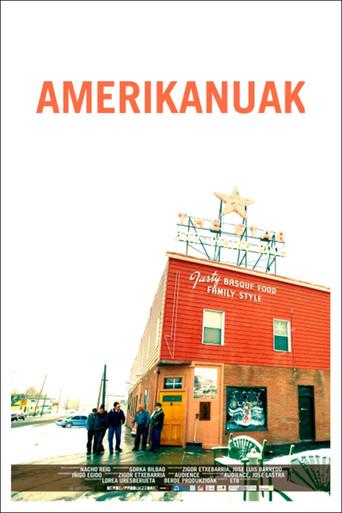
A documentary about Basque inmigrants who went to USA looking for work and a better future. Basically, Amerikanuak talks about feeling homesick, about struggling in a different country to make a decent living and about being part of a comunity.
Amerikanuak


An old Brazilian musician, Rato Branco, seeks out the old masters of the 8-bass sanfona in the backlands of Bahia to recover the secrets and traditional touches of the Pé de Bode, as this sanfona is known in northeastern Brazil. The film recounts the friendship between the master Rato Branco and the great musicians of the sertão, revealing the musical memory of this region.
