

Overview
The Umbrella Movement was a wave of street protests that took place in Hong Kong from September to December 2014 as a reaction to oppressive practices of the Chinese government against the citizens of Hong Kong dissatisfied with planned changes in the electoral system. In her feature film debut, To Liu captured the citizens of the western part of Kowloon, Mong Kok, whose protests might not have been as visible as those of the leading activists, but were no less important. The documentary rhythmized by opening entries and darkening of the scene, much like the director’s first film, follows two characters, a master and an apprentice.
Key Film Crew
Production Stats
You May Also Like
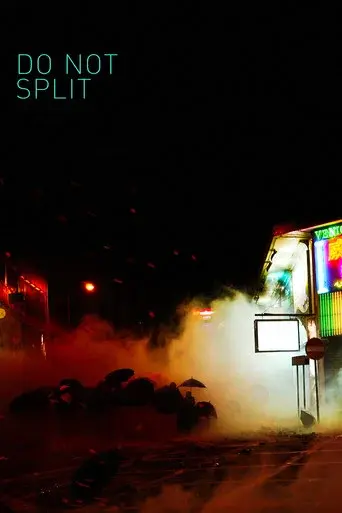
The story of the 2019 Hong Kong protests, told through a series of demonstrations by local protestors that escalate into conflict when highly armed police appear on the scene.
Do Not Split

I made June when I didn’t have any inspiration to create a feature film. The documentary is about the rarely known stories in the social movement in June. At first the clips of videos were kept for sorting out my feelings, but after being edited, they were made into a documentary and became a record of history. Six scenes and voices were used to tell what happened during that month.
June

The Real Story of Fake Democracy. Filmed over three years in five countries, FREEDOM FOR THE WOLF is an epic investigation into the new regime of illiberal democracy. From the young students of Hong Kong, to a rapper in post-Arab Spring Tunisia and the viral comedians of Bollywood, we discover how people from every corner of the globe are fighting the same struggle. They are fighting against elected leaders who trample on human rights, minorities, and their political opponents.
Freedom for the Wolf
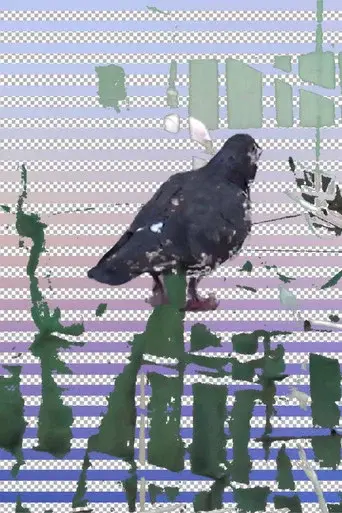
Tugging Diary documents a footbridge over a year between August 2019 to January 2021. Due to social unrest and the uncertainty of various immediate happenings, both the internet and physical spaces act as critical communication platforms of its own during this period. As such, information can be circulated in the community more widely and rapidly outside of the existing mainstream media. As time goes by, these materials are continuously altered, some were renewed, while the others were removed, covered with paint, or overlaid by other information.
Tugging Diary
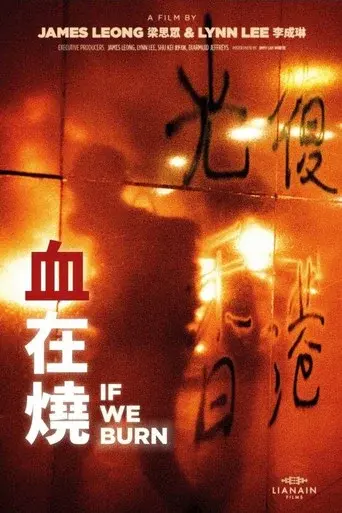
Hundreds of thousands − perhaps even millions − of protestors have taken to the streets of Hong Kong since early June. Sparked initially by the government's plans for a controversial extradition bill, the movement has now transformed into a broader push for greater freedoms and democracy, with anger over police brutality fuelling a cycle of violence. The protests are Hong Kong's biggest challenge to Beijing since its return to China in 1997. If We Burn looks at the movement through the eyes of Hong Kongers whose fates, like their city's future, now hang in the balance.
If We Burn

Throughout Hong Kong’s history, Hongkongers have fought for freedom and democracy but have yet to succeed. In 2019, a controversial extradition bill was introduced that would allow Hongkongers to be tried in mainland China. This decision spurred massive protests, riots, and resistance against heavy-handed Chinese rule over the City-State. Award-winning director Kiwi Chow documents the events to tell the story of the movement, with both a macro view of its historical context and footage and interviews from protestors on the front lines.
Revolution of Our Times

Young people are protesting on the streets of Hong Kong in order to bring about change. Air soaked with tear gas, the dark uniforms and loud commands of the police officers in the colourful umbrella sea of the protesters. In the midst of the action, the film documents a brand new protest movement.
Comrades
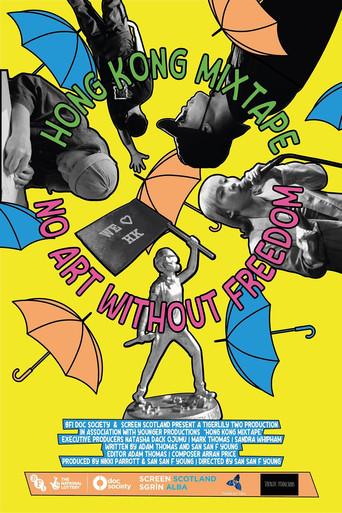
Political engagement spawned the wildest of wonderlands for Hong Kong’s creativity – but as a new law annihilates freedom of expression overnight, underground artists and creatives find themselves targets, and their works disappeared. Together we race to preserve the creative uprising amid China’s crackdown.
Hong Kong Mixtape

At the forefront of most of Hong Kong's demonstrations, 'frontliners' (aka 'the valiant', yung mo in Cantonese) are the black-clad, masked, often armed youth willing to use violence against the HK government and its heavily-armed police force. Willis Ho's remarkably revealing doc approaches from the inside, giving them voices and offering understanding, not judgment.
Age of Valiant


The Umbrella Movement of 2014, also known as the Occupy Movement, paved the way for Hong Kong’s current upheavals, but unfolded in significantly different ways. This creative documentary focuses on the intellectual, political, and discursive underpinnings of the social and political actions of 2014, before fast-forwarding to 2019. A range of thoughtful and engaged intellectuals, students, scholars, activists, and artists including Benny Tai, Chan Kin-man, Ray Wong, and Agnes Chow (many of whom are facing imprisonment for their democratic activism) articulate a range of philosophies, viewpoints and emotions, set against Hong Kong’s spectacular urban background of skyscrapers, night lights, and street-occupying mass movements.
We Have Boots

“Umbrellas Move” is a long feature documentary capturing scenes from Hong Kong’s city-wide protest, the occupy movement in 2014. This documentary witnessed a critical page of Hong Kong after transfer of sovereignty over Hong Kong from Britain to China. Around 1200 thousand people have involved in this longest occupation in the history of Hong Kong in 2014. 79 days of occupation, Hong Kong people are fighting for their rights to vote under a fair election in order to be against the political controls from China.
Umbrellas Move

Two young Hong Kong activists reflect on their resistance against China, are forced to decide between long-term imprisonment and refugee camps for a life in exile, while their movement inspires mass protests in the city they love.
Black Bauhinia
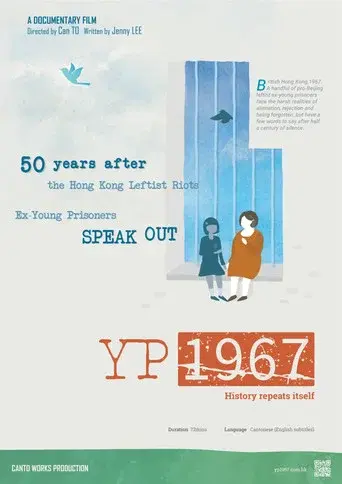
Everyone has their secrets. Everyone has the past no one’s heard about. But what makes an entire generation sit in stunned silence with unmentionable hesitation to talk about their past? Even the past was 50 years ago. Five decades after the Hong Kong leftist riots, six ex-young prisoners speak out for the first time about their personal and unmentionable experience. Documentary film YP1967 is about their love and hate towards their country, their honour and dishonour as a convicted criminal, their condonation and condemnation of the parties involved, and their truth-seeking and reconciliation with the past.
YP1967

Although the Chinese government promised that Hong Kong would retain separate status until 2047, in recent years the Chinese state has consolidated its power over the metropolis. Large-scale protests by the populace have been brutally suppressed. This mix of documentary, fiction, and visions of the future reveals the current state of desolate depression among the people of Hong Kong. “A desperate attempt to capture the final moments of a sinking island”, as maker Chan Tze-woon himself puts it.
Blue Island

The documentary “Not One Less” records the clash in Hong Kong Island on 31st August, 2019, and the assembly on Mid-Autumn festival night supporting protestors in custody. The protests initiated by the "Extradition Bill" has continued for more than 100 days. In this period, over 1000 citizens were arrested, a number of people committed suicide, and there are rumors that some protestors are missing. In the clash scene, protestors strive to protect their comrades from being isolated. After the clash, they still care about their comrades in custody. On the mid-autumn festival night, they sang loudly outside the Lai Chi Kok Reception Centre, to let their comrades know that they were not abandoned.
Not One Less

As pro-democracy activists and armed police battle in the streets of Hong Kong, ordinary citizens are choosing sides. Historically an outlier of both western and Chinese power, Hong Kong wields its own economic force, affording the city and its people a spirit of independence that has now erupted into clouds of tear gas. Filmmaker Bing Zhou uses a nimble camera to follow a group of protagonists—two opposing political candidates, a tea shop owner, a cab driver, a police officer, a paramedic—on two separate days of conflict. On September 21, 2019, protestors from three districts join forces, resulting in unprecedented violence. Just 10 days later on October 1, the National Day of the People’s Republic of China, previously undecided onlookers show their stripes. Thoughts transform into action in this demonstration of how mercurial and personal Hong Kong’s politics have become.
Hong Kong Moments

Franco Mella is a devoted figure whose life bridges Catholicism and Communism. He has journeyed through Asia, lived simply, and fought for social justice, notably within Hong Kong's protest history as depicted in "Ordinary Heroes" (1999). Mella's path weaves through religious and revolutionary movements, from church beginnings to Communist activism and the Handover, always driven by his missionary spirit and communist ideals. For four decades, he has steadfastly championed the oppressed, undeterred by shifting politics, expressing solidarity through music and protest, and remaining a symbol of wisdom and resilience for the people of Hong Kong.
Franco Mella
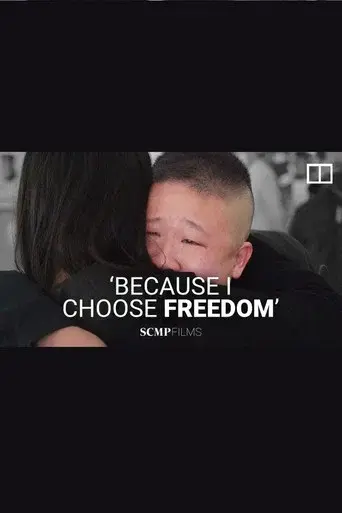
Matthew Leung Ming-hong had been working as a breaking-news reporter for six years in Hong Kong but recently emigrated to the United Kingdom because of concerns about growing restrictions on journalists working in the city. Three Hong Kong media outlets popular with the opposition have folded in just six months, following the introduction of a controversial national security law in Hong Kong on June 30, 2020, raising fears about the future of press freedom in the city. The 29-year-old is starting a new life in Britain’s northern city of Manchester and plans to eventually resume his journalism career in Europe.
Because I Choose Freedom

The 2005 World Trade Conference in Hong Kong was the starting point of the "direct action" that emerged from the Hong Kong protest movement. It was also the first time the Hong Kong police used a large number of tear-gas and beanbag rounds on the street after the 1967 riots. Outside the conference, there were many Hong Kong protestors. Why and how did they get involved in this movement centered on Korean farmers?