Walk The Line
“Chinese migrants are entering US illegally. We follow their perilous odyssey.”
Overview
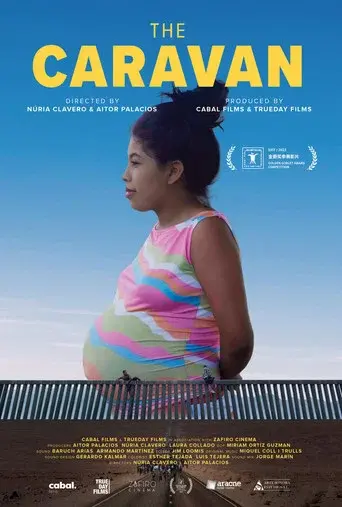
More than 37,000 Chinese citizens entered the US illegally via its southern border in 2023, hoping to find a better life in America. Many more are following in their footsteps, often with young children in tow. To reach the Land of the Free, they embark on a most treacherous journey: the migrants first need to reach Ecuador, the country closest to the US that would grant Chinese passport holders visa-free entry. From there, they need to cross Colombia, Panama, Costa Rica, Nicaragua, Honduras, Guatemala and Mexico, all illegally, to reach California. In this documentary series, CNA correspondent Wei Du travels the route with the Chinese migrants, and try to understand why they've been driven to such desperation, and if the American Dream is all it's made out to be.
Top Cast

Wei Du
Key Film Crew
Production Stats
You May Also Like


Between 1990 and 1993, at a time when rap was not yet on the radio in France, Olivier Cachin hosted a musical TV show on M6 called "RapLine". The show exclusively devoted to rap and other alternative music. This cult show presented all the facets of these emerging movements through interviews, lives and clips made especially for the show, around fifty clips were produced by RapLine. Another sequence of the show consisted of broadcasting new US rap clips subtitled in French.
RapLine


A Liberian refugee SAM REAYAH and his family have been separated for five years and live in uncertainty waiting for family reunion. While Sam and his younger daughter Ruth continue their lives in Buduburam Refugee camp in Ghana, his wife Decontee and his older daughter Joyce have already started a life in Rochester, USA. The film explores the idea of home. Sam's family had a home in Liberia, but they had to give it up. They were forced to build homes elsewhere. They built a home in Ghana. They build a home in The United States. They built homes together, they build homes separate of each other. But which home does the heart want?
Destination Home

Czech anti-immigration and anti-Islam activists have decided to start building an empire. But do they really believe what they preach? And how is this activity perceived by those around them? The film, three years in the making, is generally about the rise and fall of the popularity of right-wing populist parties and specifically follows the failed political career of Petr Hampel and Martin Konvička. Amateur reporter Tomáš Měšt'an also comes to the fore, first as a cameraman and then as an active co-creator of conspiracy stories.
Empire Builders

MEUTHEN'S PARTY unmasks the rise of the provincial politician Dr. Jörg Meuthen who doesn't shy away from spreading racist sentiments with a smile on his face.
Meuthen's Party

In 804 AD, Kūkai traveled to Tang China with the Japanese diplomatic mission to study under Master Huiguo, the seventh patriarch of Tang Esoteric Buddhism. After returning to Japan, his knowledge and practices went on to influence religion, literature, calligraphy, architecture, and education, shaping religious practice, artistic tradition, and intellectual life across East Asia for more than 1,250 years. Rooted in rigorous historical research, location-based storytelling, documentary techniques, cinematic reconstruction, and CG technology, the film recreates Kūkai’s world and revisits the Tang-era cultural exchange that transmitted ideas, philosophy, and spiritual traditions across East Asia. Through Kūkai’s journey, the documentary explores enduring themes of faith, learning, compassion, and cultural exchange, inviting timely conversations on ethical leadership, education, mental well-being, and intercultural dialogue in today’s increasingly interconnected world.
KŪKAI

The decision to move to Holland doesn't sound like a wise idea. Why move to a country that could be flooded at any moment? For the last 25 years, the political climate has shifted. The public debate on migration has become harsher, more heated, and polarized. What would have been considered right-wing xenophobia back then, is now considered mainstream. Populists simplify complex realities into good and evil, victims and perpetrators: ‘us’ versus ‘them’. Their rhetoric often consists of dehumanizing words and metaphors. One of these is ‘water’. In reality, water is not an immediate threat to the average Dutch person; but it is a huge threat to the thousands trying to reach the Netherlands. People trying to survive the Mediterranean Sea in rubber boats. Trying to survive winter on the Aegean coast in primitive tents. To them, water really is deadly.
The Flood
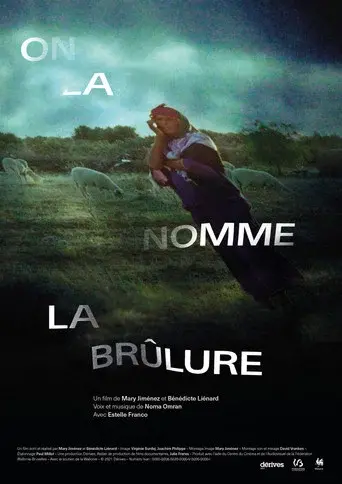
One night, nine children from the same Tunisian village attempt the deadly crossing. Like a poem or a prayer, this film welcomes the words of bereaved mothers and gives dignity to their grief.
Call it the burning

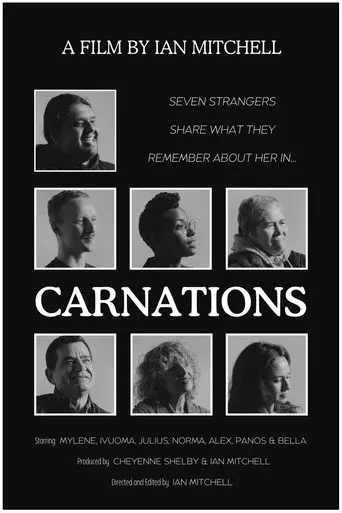
Seven strangers are interviewed to talk about the relationship they have with their mother.
Carnations
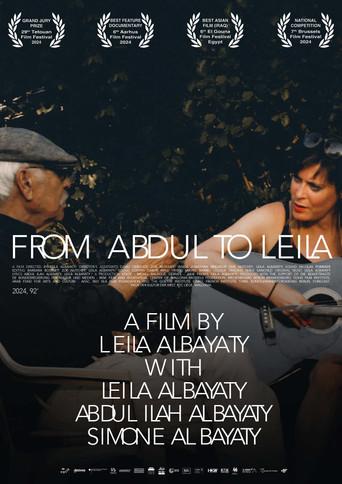
After losing part of her memory in an accident, Leila, a young French woman of Iraqi origin, reconstructs her story by reconnecting with her family and exploring her roots. Through music and cinema, she brings her exiled father's poems to lite, dis-covers the reality of the Middle East, and embarks on a personal quest to understand her identity and find her voice.
From Abdul To Leila

A Palestinian activist's fight for freedom draws a Japanese American filmmaker into confrontation with detention regimes of past and present.
Enemy Alien

Rosa is a Mexican woman who, at the age of 17, migrated illegally to Austin, Texas. Some years later, she was jailed under suspicion of murder and then taken to trial. This film demonstrates how the judicial process, the verdict, the separation from her family, and the helplessness of being imprisoned in a foreign country make Rosa’s story an example of the hard life of Mexican migrants in the United States.