

The Stasi: Secrets, Lies and British Spies
Overview
With access to recently-opened court files, Julie Etchingham reveals some of the Stasi's UK operations and asks why its other secrets are yet to be revealed.
Top Cast

Julie Etchingham
Self

Siegfried Wittenburg
Self (Photographer)
Wolfgang Welsch
Self (Former Stasi Prisoner)
Katja Hoyer
Self (King's College London)
Anne McElvoy
Self (Author & Journalist)

Tom Tugendhat
Self (Security Minister)
Sir Graham Watson
Self (Former MEP)
Felix Müller
Self (Stasi Museum)
Annie Machon
Self (Former MI5 Officer)
Simon Cranfield-Thompson
Self (Former Special Branch Detective)
Bernd Roth
Self (Former Stasi Officer)
Key Film Crew
Production Stats
You May Also Like

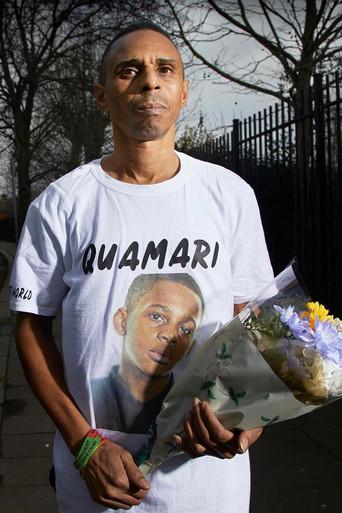
Between January 1st and 31 December 2017, 768 people died as a result of murder or manslaughter in Britain - approximately 14 people a week. This powerful and original film tells the stories of some of those cases, exploring the human cost of murder - the ordinary people whose lives are changed forever and the communities left to wrestle with the consequences. Filmed over 12 months, it follows families and friends from the immediate aftermath of the crime, through the court process, and as they try to rebuild their lives. These stories are shown alongside statistical analysis of homicide figures for Britain since the Millennium, which reveal that so far this century, the pattern of homicides has remained strikingly similar in terms of the profiles of victims and the circumstances of the killing. This urgent, unflinching and intimate film goes beyond individual incidents to ask what the patterns of murder in our time say about the state of Britain.
A Year Of British Murder
Russian army recruits complete training and take their posting in late 1980s Afghanistan, where the insurgents are slowly gaining the upper hand.
9th Company

A sociological portrait of the United Kingdom after the historic Brexit vote of 2016. A funny, sometimes terrifying and non-judgemental look at the new populist politics sweeping western democracies.
Brexitannia
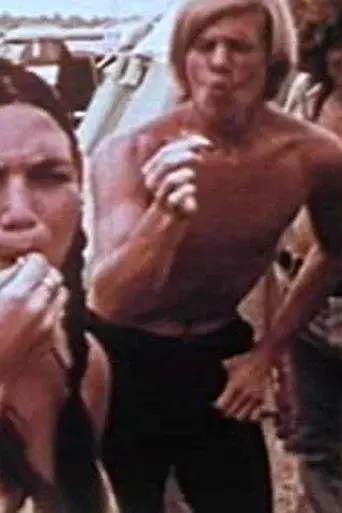
Contrasting radical mobs, anarchy, and 1960s counterculture with footage of American manufacturing and innovation, this film celebrates the concept of American exceptionalism and argues that anti-Vietnam War protesters were influenced by communism, atheism, and immorality. Set mostly in a university library, this political debate between a medical student, his 1770s ancestor, and a history professor is a sequel to the 1972 National Education Program film, Brink of Disaster! Two additional characters appear in this drama: a 19th-century steamboat captain, and the student’s grandfather - an early 20th-century automobile worker. The National Education Program at Harding College in Searcy, Arkansas created a variety of widely-distributed anti-communism films from the mid-1940s to the early 1970s.
Tragedy or Hope

13 August 1961: the GDR closes the sector borders in Berlin. The city is divided overnight. Escape to the West becomes more dangerous every day. But on September 14, 1962, exactly one year, one month and one day after the Wall was built, a group of 29 people from the GDR managed to escape spectacularly through a 135-meter tunnel to the West. For more than 4 months, students from West Berlin, including 2 Italians, dug this tunnel. When the tunnel builders ran out of money after only a few meters of digging, they came up with the idea of marketing the escape tunnel. They sell the film rights to the story exclusively to NBC, an American television station.
Tunnel to Freedom

Made at the height of 'cold war' paranoia, this drama-documentary shows the work of the UK Warning and Monitoring Organisation, who's duties included the issuing of public warnings of any nuclear missile strike and the subsequent fallout.
The Hole In The Ground
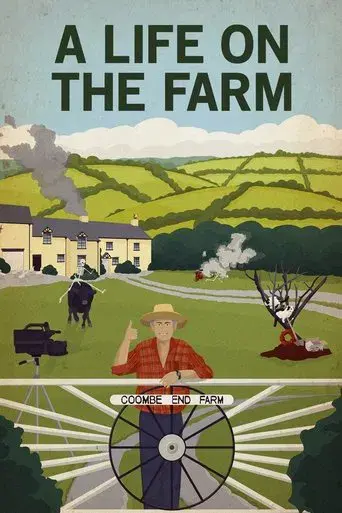
A strange story from Somerset, England about a filmmaking farmer and the inspiring legacy of his long-lost home movies.
A Life on the Farm

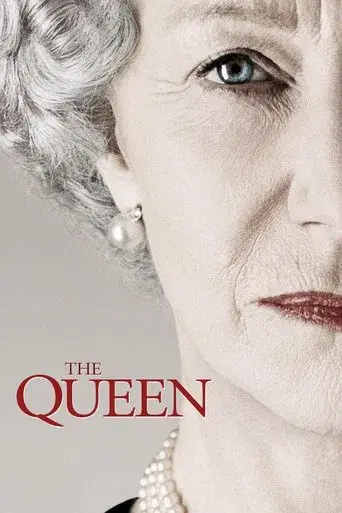
The Queen is an intimate behind the scenes glimpse at the interaction between HM Elizabeth II and Prime Minister Tony Blair during their struggle, following the death of Diana, to reach a compromise between what was a private tragedy for the Royal family and the public's demand for an overt display of mourning.