Landscape of our Body
Original Title: “Thân Thể Rừng Thiêng”
“What can we discover in the landscape our bodies?”
Overview
As queer trans and gender non-conforming children of the Vietnamese diaspora, we are fragmented at the crossroads of being displaced from not only a sense of belonging to our ancestral land, but also our own bodies which are conditioned by society to stray away from our most authentic existence. Yet these bodies of ours are the vessels we sail to embark on a lifetime voyage of return to our original selves. It is our bodies that navigate the treacherous tides of normative systems that impose themselves on our very being. And it is our bodies that act as community lighthouses for collective liberation. Ultimately, the landscape of our bodies is our blueprint to remembering, to healing, to blooming.
Top Cast

cát nguyên
Themself, Narrator 1

Trâm Anh Nguyễn
Narrator 2
Tô Thị Kim Thuý
Auntie's Hand
Key Film Crew
Production Stats
You May Also Like
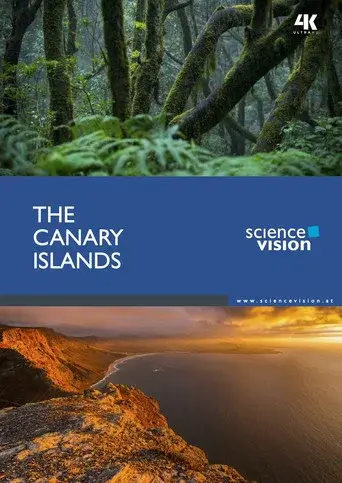
There are few places on earth that have such a diverse variety of terrain and range of climates concentrated in a relatively small area - temperate coastline, scorching arid deserts and tundra, tropical rainforests and frozen snowcapped mountains. And there are few places that are as heavily exploited by humans, yet remain a wilderness.
The Canary Islands

A documentary focusing on Polish 60-year-old Henryk Kowalczyk who is deaf-blind and being taught sculpture. Working with clay and other materials is therapeutic light in a world of darkness
The Tower of Babel

Juskatla weaves together perspectives of the people who live on the islands of Haida Gwaii-an archipelago on Canada's Northwest coast, and the ancestral territories of the Haida Nation. From industrial loggers who harvest trees from ancient forests, to Sphenia Jones, a Haida matriarch who bears an intimate knowledge of her People's territories, Juskatla meditates on the divergent ways of being that shape the islands and its people.
Juskatla
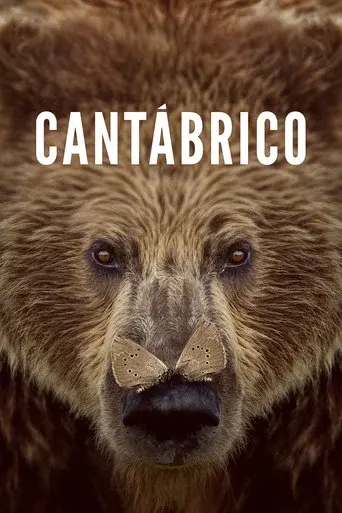
Spreading about 400 km in parallel to the Cantabric Sea, the Cantabrian Mountains, located North to Spain are a natural top wall full of animal and vegetable life that live in an extreme conditions across any year. Making a review along the four seasons, the documentary examines the situation and the relation of the different species, focusing in the brown bear's life in addition with the salmons travel along of thousand kilometers to return home to spawn, showing too the difficult of a landscape where danger is everywhere, including in the smallest size. A fascinating travel for revealing the wonder of nature.
Cantábrico
“Balance of Life” is a film about life’s and human kinds’ fight to find the balance between our own evolving life style and the nature of the planet we inhabit. The human race is drifting further and further away from its real roots and from what being a human is really about. The speed of development has increased to a state where humans have a hard time keeping up. We find ourselves in a situation where both our own and the planets’ wellbeing is severely threatened. As a last resort human is relying on faith to find the balance. Is faith the last defense of man or is this world guided by forces greater than us? Is this force God, evolution or just the mere sum of coincidences that formed the universe, the natural order and laws of physics?’ Watch it here (https://vimeo.com/51203265)
Balance of Life
Who were the Shakers? This short documentary explores the design, cultural, and spiritual legacy of this utopian religious community
The Shaker Legacy

Eye of the Pangolin is the story of two men on a mission to get all four species of African pangolin on camera for the very first time. As they travel the continent to learn more about those caring for and studying pangolins they are captivated by these strange, secretive creatures and document the race to save them from being poached to extinction. The film was released Endangered Species Day in May 2019 and our goal is to make it the most watched wildlife documentary ever. Therefore we've made it freely available as an open source documentary, accessible for viewing by millions of people around the world via YouTube, through educational establishments and at screenings supported by international conservation organisations everywhere.
Eye of the Pangolin
Sandra rummages in the fragments of her memory and photographs in order to reconstruct the portrait of the life and death of her brother.
Family album


Eerie images of landscapes after the Fukushima nuclear disaster shot on black and white 8mm.