The Princess and the Peacock
Overview
Mona is a 22 year old trans girl from a small village in France. She puts needles attached to peacock feathers in her skin, under bright lights, late at night. She bleeds, half naked, in front of small crowds of people. Sometimes they faint whilst watching her. Why would she do this? How did she learn to do it? And why would someone want to watch?
Top Cast

Mona Guyard
Mona LaDoll
Buba Sababa
Buba Sababa
Julietta Ladoll
Julietta Ladoll
Key Film Crew
Production Stats
You May Also Like

A documentary that proposes to create a dialogue between LGTBQ+ of different ages to show and discuss the challenges of aging as part of this community.
Tempo em Cores


Over the course of their sessions, what began as an artist-model relationship developed into something more. Now officially BFs (boyfriends), Wilfrid continues to draw Theo regularly and has somewhat effortlessly amassed hundreds of drawings that were brought together for an exhibition appropriately titled ‘Drawings of my BF’. As Wilfred studies Theo, and Theo returns his gaze, the two lovers discuss the romantic ideals and human realities of the sketcher-subject dynamic and the role that creating art together has played in their lasting connection.
Drawings of My BF
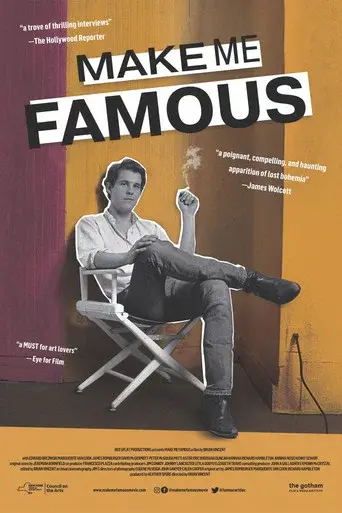
An investigation of Edward Brezinski, an ambitious, charismatic Lower East Side painter hell-bent on sucess, who thwarted his own career with antics that roiled NYC’s art elite. Brezinski’s quest for fame gives an intimate portrait of the art world’s attitude towards success and failure, fame and fortune, notoriety and erasure.
Make Me Famous

Documentary examines the history and evolution of the Olympic Games, taking a close look at the Olympic charter, oath and ideals. Also featured are rare home movies and interviews with Olympic athletes and the oldest known color footage of the Olympic Games from Berlin in 1936.
Spirit of the Games


In a remote area of northern Spain, the wind has a name: Tramuntana. Tramuntana takes what it wants—clothes, trees, boats, and the people of the landscape who live with the endless threat of being carried away by its force. This film is a lyrical portrait of this furious wind, woven from the stories passed down by local villagers.
Tramuntana


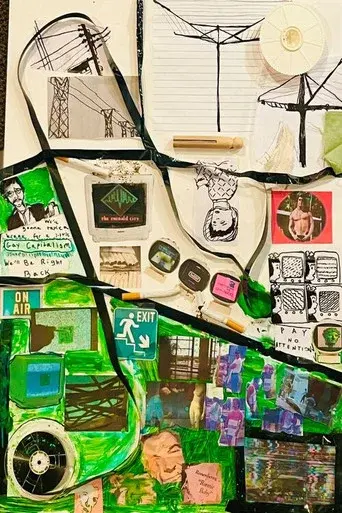
A continuously running two-channel installation, presented on 9" and 13" CRT monitors atop pedestals and overlooked by a green Kit-Cat clock. The smaller CRT bears a painted green square and is framed by a pair of crossed silver opera gloves, at whose intersection rests a vintage push-puppet of two boxers sharing a single red stand. Together, the two monitors display distinct video collages interweaving footage from Emerald Square Mall and the strike during its 1989 construction with remixed interferences from Channel J's Emerald City TV (1976–1979), Huge Video's Heat in the Night (1989), Genet's Un Chant d'Amour (1950), various cigarette commercials, The Wizard of Oz (1939), and a performance of a mylar-clad entity wrapping one of the televisions in videotape. The work has most frequently circulated publicly through its primary video channel.
Emerald ▣


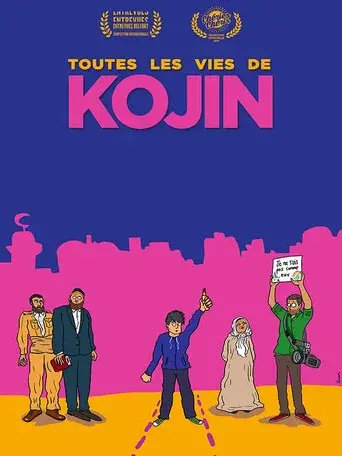
In a first-person documentary, Diako Yazdani, a political refugee in France, returns to see his family in Iraqi Kurdistan and introduces them to a 23-year-old gay man from Kojin who seeks to exist in a society where he seems unable to find its place. With humor and poetry, the director delivers a moving portrait where the meetings of each other invite to a universal reflection on the difference.
The Many Lives of Kojin

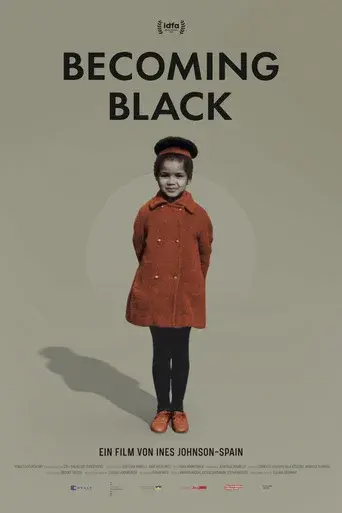
In the 1960s, a white couple living in East Germany tells their dark-skinned child that her skin color is merely a coincidence. As a teenager, she accidentally discovers the truth. Years before, a group of African men came to study in a village nearby. Sigrid, an East German woman, fell in love with Lucien from Togo and became pregnant. But she was already married to Armin. The child is Togolese-East German filmmaker Ines Johnson-Spain. In interviews with Armin and others from her childhood years, she tracks the astonishing strategies of denial her parents, striving for normality, developed following her birth. What sounds like fieldwork about social dislocation becomes an autobiographical essay film and a reflection on themes such as identity, social norms and family ties, viewed from a very personal perspective.
Becoming Black

Former "Titanic" satire magazine editor Martin Sonneborn takes an undercover trip around Berlin and discovers the East-German mentality and what is left of the socialist German Democratic Republic.
Heimatkunde

A taxi drives through the city of Berlin. Its driver is a punk, left and a well-known figure in the autonomous scene. The stations of his trip are the most important places of the autonomous scene: all in the struggle for survival. The last evictions have not yet been processed and the next ones are coming right up.