
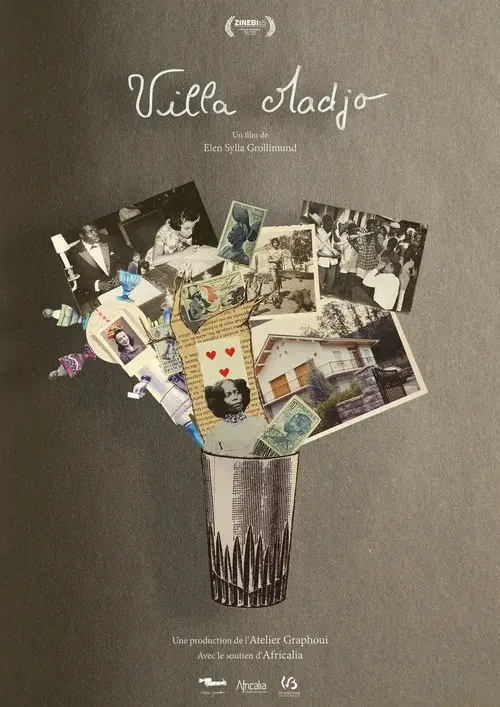
Villa Madjo
Overview
No overview summary available for this movie.
Top Cast

Elen Sylla Grollimund
Narrator
Key Film Crew
Production Stats
You May Also Like

The history and art of ikebana, a centuries old Japanese art of flower arrangement and a look inside the Sogetsu School of Ikebana, where the director's father Sofu Teshigahara worked as the grand master of the school.
Ikebana

Out of Darkness is a full length three-part documentary by director Amadeuz Christ (Δ+), examining the untold history of African people, the African cultural contribution to the nations of the world, and the events that have contributed to the condition of African people today. Out of Darkness will explore the Nubian/Kushitic origins of Nile Valley Civilization, contact between Africa and the Americas since the times of antiquity, as well as the influence of the Moors in Europe leading to Europe’s intellectual Renaissance. In addition, the film will analyze the history of modern day racism, the concept of “white supremacy,” the impact of Hip Hop as a social movement, and the idea of nationhood. Out of Darkness is narrated by Prof. Kaba Kamene and co-stars Dr. Umar Johnson, Dr. Claud Anderson, Tim Wise, Prof. James Small, Dr. Joy DeGruy, Anthony Browder, Sabir Bey, Atlantis Browder, and Taj Tarik Bey.
Out of Darkness

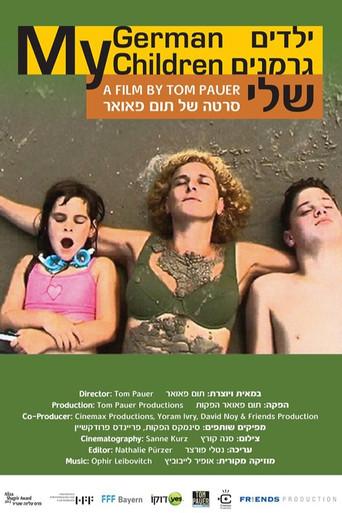
Tom Tamar Pauer's family is both Israeli and German, Jewish and Christian. When she moves to Israel with her German children after 16 years in Munich, the question of her own identity in the third generation emerges.
My German Children

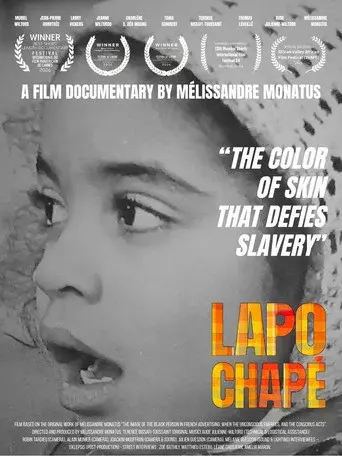
The term "Lapo Chapé", derived from Martinican Creole, means "the skin color that escapes the status of a slave." This documentary thus explores the themes of skin color and mixed heritage from a unique perspective, through a series of testimonies that shed light on the invisible influences of history. These influences have shaped our social representations and continue to challenge our perceptions of identity today.
Lapo Chapé

In 1963, Rosans, a village in the Hautes-Alpes region depopulated by the rural exodus, welcomed Harkis (military soldiers) forced to leave Algeria for supporting France during the Algerian War. Around thirty families settled in a camp below Rosans. Nearly half a century after their arrival, first- and second-generation Harkis and native Rosanais recount their experiences of this culture clash, often painful, sometimes happy. Language barriers, religious differences, living in barracks for 14 years, and unemployment were all obstacles to overcome in order to be accepted and then achieve mutual enrichment. Enriched with archive footage to explain the historical context of the time, the film seeks above all to express feelings and unspoken words.
Rosans, Bitter Honey
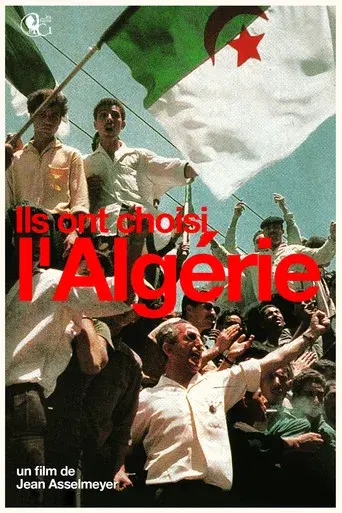
Many of them participated in the struggle for Algerian independence. There are "those who believed in heaven", priests, Christians committed against torture, friends of the "natives", there are "those who did not believe in it", communist activists, students, progressive intellectuals, others remained in this country because they could not imagine living anywhere other than in this land of all passions. They are European and chose to stay in Algeria after independence, most of them opted for Algerian nationality. The film is another vision of the history of Algeria from the end of the fifties to the present day, told by these Europeans filmed at home, or in the context of their activities, illustrated by unpublished archive documents.
They Chose Algeria

A wooden rocking chair serves as a tool to delve through the history of Quebec in the last century.
Crac!

Pauline Horovitz has been filming her father since 2009. In this new chapter with hints of a bittersweet documentary comedy, the hero, a former doctor “programmed” to work, takes advantage of his retirement to become an actor. Following the first steps of this liberating new life, the daughter-filmmaker watches her “creature” escape her…
Papa s'en va


Through the unrelenting winter in the north of Japan, a small group of workers must brave unusual working conditions to bring to life a 2,000-year-old tradition known as sake. A cinematic documentary, The Birth of Sake is a visually immersive experience of an almost-secret world in which large sacrifices must be made for the survival of a time-honored brew.
The Birth of Saké


Inspired to make an original, intimate family portrait, Gracie Otto directs a feature length documentary on her father, Barry Otto, whose career in Australian theatre, film and television has spanned more than 50 years. Baz as he is affectionately known is one of a kind - a truly creative, endearing and extremely eccentric personality who embraces the serious and the silly. This story is about Gracie's relationship with her father, in the twilight of his career and his life, as she tries to capture his memories, before his memory disappears. This is not a traditional biopic, but a deeply personal, artistic and cinematic reflection. Sometimes poignant in its exploration of deteriorating health, the film looks at the world through Baz's eyes, an ode to living a passionate life, that both honours him and preserves his memory.
Revealed: Otto By Otto

CE QUE CACHE LA FORÊT (What the Forest conceals) explores the invisible inheritance we carry within us: that of the family unconscious passed down from generation to generation. Personalities as varied as psychologist Anne Ancelin Schützenberger, systemic therapist Bert Hellinger and artist Alexandro Jodorowsky have, each in their own way, revealed the existence of these unresolved stories that profoundly influence our lives. Today, epigenetic research confirms that trauma can mark our genome, and be passed on beyond those who experienced it. But how do these memories get inscribed in us? How can they be recognized, overcome and healed? Filmmaker Louis Mouchet shares his own journey through this deeply personal film. This process was nourished by : The making of and follow-up to the film La Constellation Jodorowsky, An introspective dive triggered by the death of his mother and the simultaneous birth of his first child, A powerful session with Romanian therapist Cristina Schmidt.
What the Forest conceals
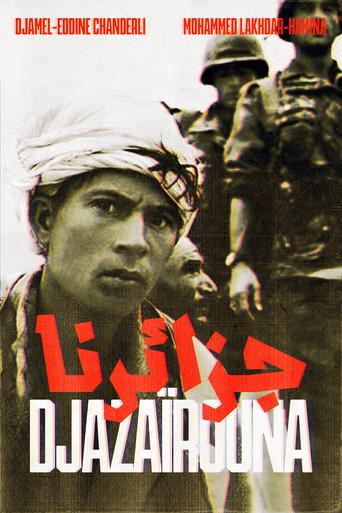
"Djazaïrouna", produced by the cinema service of the Provisional Government of the Algerian Republic (GPRA), is a montage film intended to inform the international community at the UN in 1959 on the objectives pursued by the Algerian resistance during the war of 'Algeria. Independence in Algeria (1954-1962). In 1959, Djamel-Eddine Chanderli and Mohammed Lakdar-Hamina produced Djazaïrouna (Our Algeria) from images taken by René Vautier and Doctor Pierre Chaulet. This film, completed a little later and will result in the film “The Voice of the People”. This documentary on the history of Algeria through a montage of current events, traces the political and military actions of the A.L.N, the demonstrations of December 1960, and the attack on a fortified French base on the border between Algeria and Tunisia.
Our Algeria

In the coastal village of Amed, Bali, life moves to a rhythm set by the sea and the volcano. However, an unexpected change is taking shape on the courts: the global rise of pickleball. "Shifting Courts" is an observational documentary short that explores how this sport has become a silent bridge between the local community and the outside world, capturing an intimate look at Balinese identity in the face of globalization and international tourism.