Near Earth Asteroids: Dr. Anne Virkki
“What if the biggest threat to life on Earth isn't humans?”
Overview
At Arecibo Observatory in Puerto Rico, “Near Earth Asteroids: Dr. Anne Virkki” tells the story of Research Scientist Anne Virkki and her ongoing studies on asteroids and their threat to humanity. Originally from Finland, Anne Virkki shares her experience in education as well as her studies on asteroids, including her work hunting and tracking asteroids headed for Earth.
Top Cast

Anne Virkki
Anne Virkki
Key Film Crew
Production Stats
You May Also Like
NASA's James Webb Space Telescope, from its conception to completion.
Ultimate Space Telescope
214 million years ago a gigantic meteorite broke up and impacted Earth. 65 million years ago, the impact that killed the dinosaurs occurred where the country of Belize stands today. 200 thousand years ago early humans were walking and died when they were hit by a 40 meter wide meteorite hit South Africa creating a 1.4 km wide crater. This meteorite fragment, the largest ever found hit Namibia 80 000 years ago and more recently a major impact occurred in Toungouska, Russia in 1908. Every year 10 000 tons of meteoritic matter fall onto Earth in much smaller but not necessarily less influential pieces. This film will explore how the impact of these meteorites big and small through the ages have changed our world and what they brought from outer space with them that may have been the seed of life itself on Earth.
Cosmic Fireballs

Partly adapted from cosmologist Stephen Hawking's popular book about his theories of the universe, this in-depth documentary also presents Hawking's daily life as he deals with the ALS that renders him virtually immobile and unable to speak without the use of a computer. Hawking's friends, family, former classmates and peers are interviewed about not only his theories but the man himself.
A Brief History of Time
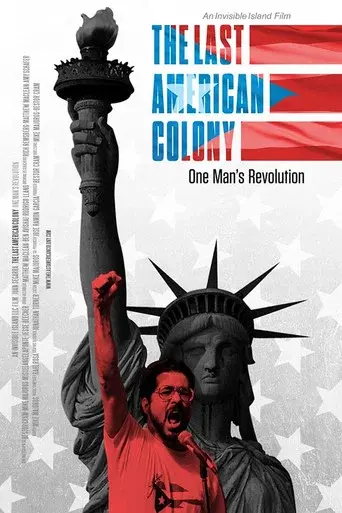
Puerto Rico, the last relic of colonization in the western hemisphere, has been a dependent territory of the USA since 1917. Los Macheteros and one of its leaders Juan Segarra have been fighting for its full independence for many decades.
The Last American Colony

What forms might life take in the Solar System and beyond? In the Academy's newest original planetarium show, see how a deeper understanding of Earth might help us locate other living worlds, light years away.
Living Worlds
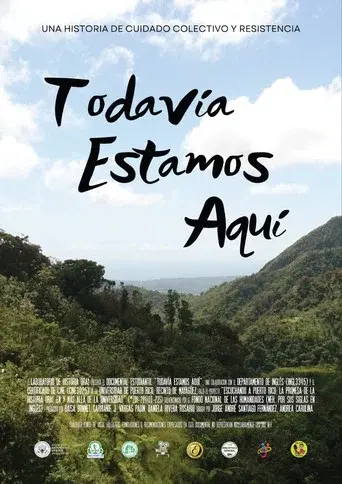
We Are Still Here is a student-made documentary from the University of Puerto Rico, Mayagüez campus (UPRM) about the lives and experiences of the Peñolanos from Barrio Rucio and adjacent communities who have resisted generations of adversities due to their geographical location and at the hands of the Puerto Rican government. Centered on resistance and collective care among communities, this inaugural documentary produced by the Oral History Lab at UPRM and funded by the National Endowment for the Humanities showcases how community work by projects like Aula en la Montaña and organizations like Impacto Juventud GC Inc. demonstrate that strength lies in union and that true healing occurs through mutual accompaniment between community and volunteers.
Todavía Estamos Aquí


An exploration of the territorial complexities of the emerging astro-industry in the Chilean Desert.
The Sky Commodified
CERN and the University of California-Santa Barbara are collaborating in the search for the elusive substance that physicists and astronomers believe holds the universe together -- dark matter. Where is this search now in the realm of particle physics and what comes next?
The Hunt for Dark Matter
The Faraway Nearby follows the tragic life of pioneer physicist Joseph Weber, whose pursuit of gravitational waves takes him on a dizzying journey from the height of acclaim to the depths of despair and disdain when he breaks the cardinal rule of science and clings to his ideas though his results can't be duplicated. Physicists, artists, and other creatives explore the emotional side of discovery and question whether the risk is worth the journey.
The Faraway Nearby


Cave paintings and lunar calendars exist in the caves and remains of prehistoric hunters studied recently. What if Prehistoric Man were clever enough to develop in depth scientific knowledge? As unlikely as it may seem, new data tend to prove that Prehistoric Man actually invented Astronomy!
Prehistoric Astronomers
A documentary that reflects on the vision of 'progress' that governments cling to in times of climate change, focusing on the personal and collective experience lived in Puerto Rico after Hurricane Maria struck the island in 2017.
Golpe de agua


A giant ball of gas and raw energy with a temperature of up to 15 million degrees, the sun is the origin of life on earth and influences an infinite number of natural phenomena. This documentary is dedicated to the search for the significance of our home star for mankind, science and nature. Researchers at the American Space Agency NASA, the Canary Islands observatories, and the hottest and coldest places on earth share their insights. We can expect an emotional journey through science and history, peppered with human stories, at the end of which the complex bandwidth of life is revealed. Never before in the history of mankind has it been more important to uncover the secrets of the sun. Because for our earth, the sun is not just any star. It is the ultimate star.