

British Paramount News No. 1532
Overview
Britain welcomes children liberated from the notorious Bergen-Belsen concentration camp.
Key Film Crew
Production Stats
You May Also Like

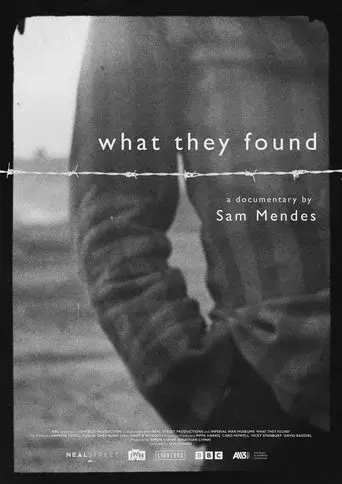
The story of two soldier-cameramen, Sgt Mike Lewis and Sgt Bill Lawrie, who witnessed the liberation of Belsen during the closing days of World War II.
What They Found

Most 72 is the very first film essay directed and produced by The Markerists and the inaugural installment in the series 'Most'. The footage and the audio were recorded in a single day on June 17th, 2013 on location in Auschwitz-Birkenau with post-production being completed within 72 hours. Surbhi Goel, a professor of cultural studies from India on her first trip outside of her homeland, recorded extemporaneous impressions as she walked the grounds of the death camp with the filmmakers. These were later used as the voice-over narration. The project serves as the template in which future Markerists film essays will be produced--shot and recorded on location and completed immediately afterwards, staying relevant in this age of instant global communication.
Most 72
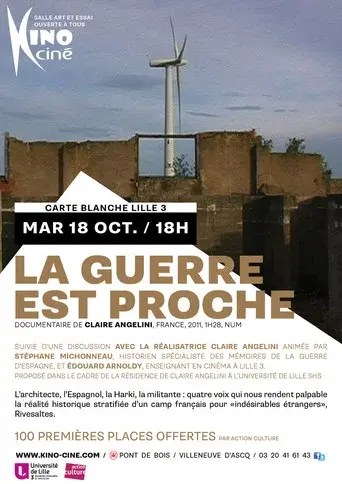
This film takes a look at the French concentration camp at Rivesaltes. It does not deal with the site of memory but rather memories of the site through the concrete and physical data visible on the ground perceived as a holed-out space mined by disappearance, in particular the buildings, which subsist as ruins. This film is less preoccupied with drawing lessons from history than fuelling the present with a history that, like a blinding mirror, is of the utmost concern.
War is Looming


From May to August of 1992, during the Bosnian War, more than 3000 Bosnian Muslims--known as Bosniaks--and Croats were murdered by Serbian authorities in the town of Prejidor, Bosnia, and its surroundings and in the Omarska concentration camp near the city.
Bosnia: The Camp

Live footage from concentration camps after the liberation, and the complex transport and lodging of masses of prisoners of war and other deported people back to their home countries, at the end of World War II. A 45min 35mm print also exists (shown at Cinémathèque française in 2023).
Reunion
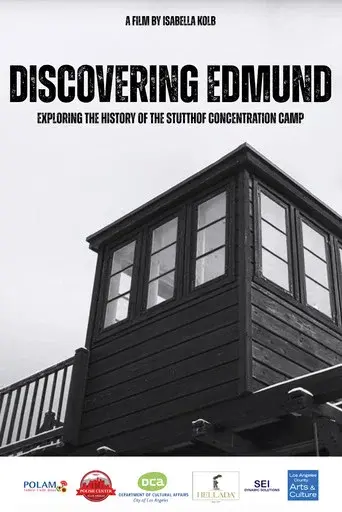
When director Isabella Kolb learned that her great-great-uncle was imprisoned in Stutthof, the first German concentration camp established on Polish soil during the Second World War, she begins an investigation into his story and the camp's little-known history. Despite its significance, Stutthof remains one of the least documented sites of Nazi persecution, leaving families of its victims with lingering questions. Through witness testimonies and archival traces, the film follows Kolb's search for Uncle Edmund and the lives of those who endured Stutthof, offering a quiet reflection on memory, loss, and the lasting echoes of trauma that continue to shape the generations that followed.
Discovering Edmund
Recently, two photo albums with photos from Auschwitz were found in 1944. One belongs to Officer Karl Höcker and the other prisoner Lili Jacob, who survived the concentration camp. The pictures taken during the same months show completely different worlds. A documentary that once again tells this important and awful part of Europe's history.
Album(s) d'Auschwitz

The ocean contains the history of all humanity. The sea holds all the voices of the earth and those that come from outer space. Water receives impetus from the stars and transmits it to living creatures. Water, the longest border in Chile, also holds the secret of two mysterious buttons which were found on its ocean floor. Chile, with its 2,670 miles of coastline and the largest archipelago in the world, presents a supernatural landscape. In it are volcanoes, mountains and glaciers. In it are the voices of the Patagonian Indigenous people, the first English sailors and also those of its political prisoners. Some say that water has memory. This film shows that it also has a voice.
The Pearl Button
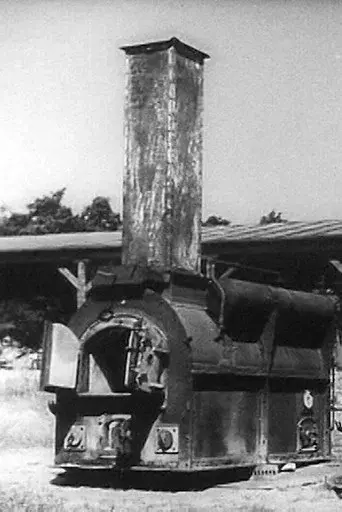

Near Munich, in Bavaria, Germany, is the Schleißheim Palace, where French filmmaker Alain Resnais shot his film Last Year at Marienbad in 1960. Nearby is the Dachau concentration camp, where thousands of people were killed between 1933 and 1945. An essay about the present and the past, beauty and horror, life and death.
Last Year in Dachau
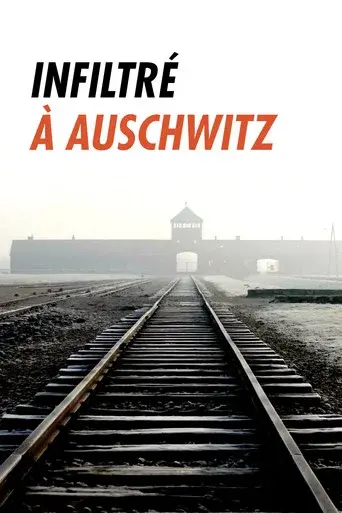
Warsaw, September 19, 1940: a Polish officer is captured during a raid by the German army. In reality, the SS have just fallen into a trap. This man has organized everything to be arrested. His name: Witold Pilecki. His mission: to be interned in Auschwitz, to infiltrate the death camp. This film traces the story of one of the greatest resistance fighters of WWII, through the compilation of reports that the infiltrator smuggled to London from the concentration camp where he was detained.