Who were the Neanderthals? | DW Documentary
“Long before Homo sapiens populated the earth, the Neanderthals lived in Eurasia.”
Overview
Long before Homo sapiens populated the earth, the Neanderthals lived in Eurasia. Now, paleoanthropologists in England and France are using new archeological methods to shed light on some previously unexplained Neanderthal mysteries.
Key Film Crew
Production Stats
You May Also Like
Over 60,000 years ago, the first modern humans left their African homeland and entered Europe, then a bleak and inhospitable continent in the grip of the Ice Age. But when they arrived, they were not alone: the stocky, powerfully built Neanderthals had already been living there for hundreds of thousands of years. So what happened when the first modern humans encountered the Neanderthals? Did they make love or war?
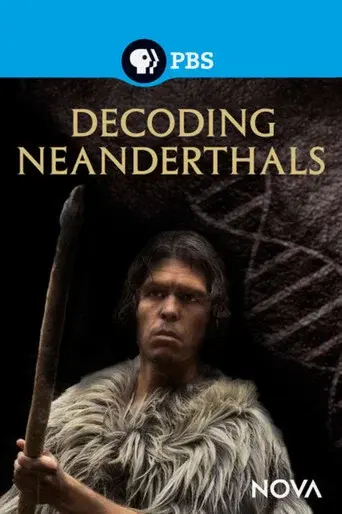
Decoding Neanderthals





40, 000 years ago the steppes of Eurasia were home to our closest human relative, the Neanderthals. Recent genetic and archaeological discoveries have proven that they were not the dim-witted cave dwellers we long thought they were. In fact, they were cultured, technologically savvy and more like us than we ever imagined! So why did they disappear? We accompany scientists on an exciting search for an answer to this question and come to a startling conclusion …
Neanderthal Apocalypse

Long before the arrival of Homo Sapiens, the Neanderthals wandered the vast European plains, and regularly drowned into the Ice Ages. Several discoveries, in France and England, and especially on the island of Jersey, now allow archaeologists to understand the lifestyle of those first great nomads of Europe, that lasted 300.000 years.
Meeting Neanderthal


He was said to be the "First European", our mystic brother out of the ice age. Nobody knows exactly, why he disappeared 30. 000 years ago. It was in 1856 when the first bones of this prehistoric man where discovered in Germany. Since that time the Neanderthal is surrounded by mystery. How much of him does still exist inside us?
The Neanderthal in Us

The Mandrin Cave in southern France has been attracting the attention of archaeologists for 30 years. The cave was regularly occupied in prehistoric times, and a remarkable record of human habitation going back thousands of years has been preserved by its soils. In 2015, the remains of a Neanderthal were uncovered, and the archaeological evidence points to this individual, named Thorin, living in close proximity to newly arrived Homo sapiens. This documentary follows an international team of scientists as they discover and investigate precious relics of the Paleolithic period, resulting in groundbreaking revelations about the human populations of around 50,000 years ago as researchers uncover some of the secrets of the Mandrin Cave.
The Lost Neanderthals


Science, in light of recent archaeological findings, exposes new theories about Neanderthals, the humans who preceded us, which bring us closer to their lifestyle, the differences with our species and the causes of their disappearance 40,000 years ago.
Meeting the Neanderthals

What would have happened if the Neanderthals had prevailed over Homo Sapiens? How would our species have evolved? How does art relate to evolution, and why in the world does evolution behave like a bricoleur? Last of all, just what does Marcel Duchamp have to do with all of this? This film is neither a documentary nor a portrait of the artist Pable Echaurren; it’s a kaleidoscopic meditation on our past, present and future.