

Top Cast

Monika Žáková
Giroflé / Giroflá

Jiřina Marková Krystlíková
Giroflé / Giroflá (singing voice)
Jiří Miegl
Don Bolero
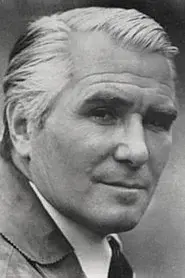
Jiří Zahradníček
Don Bolero (singing voice)

Miriam Kantorková
Aurora
Blanka Vítková
Aurora (singing voice)

Vladislav Beneš
Pedro
Jiří Ceé
Pedro (singing voice)

Helena Brabcová
Paquita
Věra Nováková
Paquita (singing voice)

David Prachař
Marasquin
Vratislav Kadlec
Marasquin (singing voice)
Key Film Crew
Production Stats
You May Also Like
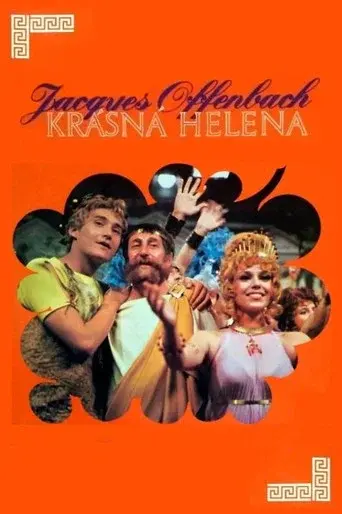

Captain Stanton, who because of a misunderstanding over a woman with Major Davolo, has been cited for a court martial. As a scout, he is sent to escort a wagon train which is under military escort. It turns out that this escort is his own former regiment. When he meet Davolo, there is another fight and between Stanton and Davolo in which Davolo is killed.
Song of the West

As they are leaving the church following their wedding, Count Adrian Beltrami and Countess Anna-Marie are told that the Austrians are marching on the town to quell an Italian uprising. The bride and relatives induce the count to flee to his castle, but Tangy, a silhouette cutter, brings word from the revolutionary committee asking him to return; the count goes, asking Tangy to pose as the count and protect Anna-Marie.
Bride of the Regiment

La Vie parisienne (Parisian life) is an opéra bouffe, or operetta, composed by Jacques Offenbach in 1866, with a libretto by Henri Meilhac and Ludovic Halévy. This work was Offenbach's first full-length piece to portray contemporary Parisian life, unlike his earlier period pieces and mythological subjects. It became one of Offenbach's most popular operettas.
La Vie parisienne


Austrian composer Franz Léhar's opera Giuditta receives a unique interpretation by the Seefestspiele Mörbisch in this stage production, which stars Natalia Ushakova and Mehrzad Montazeri as the principal leads. The Morbisch Festival Orchestra accompanies the production, while the Chorus and Ballet of the Seefestpiele Mörbisch lend added support.
Giuditta
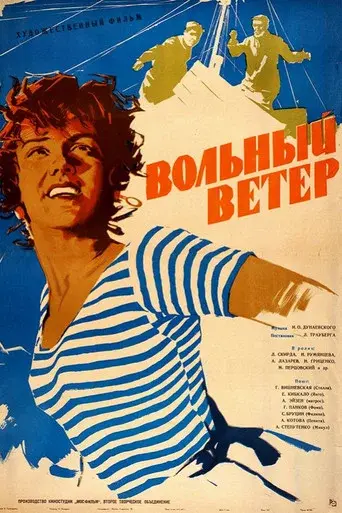
The port town of one of the small southern countries. After the Nazi occupiers left, the port's berths were empty, the steamers did not smoke, cargo cranes stood. Fearing retaliation for collaborating with enemies, port owner Georg Stan fled the city. After waiting a while and securing the support of local authorities, Stan nonetheless returns - and loading operations begin in the port. While loading oranges, the sailor Yango and the beautiful Stella are preparing for the wedding. Suddenly, Stan makes a proposal to the girl and tricks her into agreeing. Upon learning of the deception, the girl runs away to Yango. Having discovered weapons intended to support fascism in the drawer of the hold, the heroes do everything possible to make the boxes fall to the bottom of the sea.
Wind of Freedom


Based on the classic Broadway operetta by Victor Herbert and Glen MacDonough, this live television special became an annual Christmas tradition with rotating cast members.
Babes in Toyland

A young girl becomes lost in a department store during the Christmas shopping rush. The frightened child is comforted by a department store Santa Claus who tells her a tale of storybook characters brought to life - of Tommy Tucker's love for the lovely Jane Piper and the cold-hearted villainy of evil Silas Barnaby. Through the girl's dreams, the viewer is transported to Toyland. Based on the classic Broadway operetta by Victor Herbert and Glen MacDonough, this was its second live television special production, with some new cast members and some returning.
Babes in Toyland

Kálmán Imre's beloved operetta comes to the screen in this comedy of music, marriage and class set in Budapest and Vienna before the outbreak of the First World War, recorded at the Budapest Opera in 1963.
Gypsy Princess

A film about Johnny Bode. Schlager diva, Operetta hero, filth musical innovator, enfant terrible, compulsive liar and amoral rogue. Johnny Bode (1912-1983) was very successful in Sweden and Europe. Yet he is today almost completely forgotten. Why? His life was so overwhelming, glamorous, fast and bizarre. So un-Swedish. He became fascinated by the nazism. Was arrested by the Gestapo and detained at Grini concentration camp in Norway. For five weeks. After the war he moved to East Berlin and proclaimed himself a dear friend of the GDR. Later he was deported and returned to Sweden. A time of fencing and small crimes followed. Escaped to Brussels at first and later Vienna. He was, as Juan Delgada, hired by the Vienna Opera to create new operettas. And was very successful. Johnny Bode died exhausted alone and abandoned in Malmö during the summer of 1983.