

Il museo degli orrori di Dario Argento
Overview
Newly edited version of Luigi Cozzi's 1997 documentary "Il mondo di Dario Argento 3: Il museo degli orrori di Dario Argento" focusing on the museum-part of the "Profondo Rosso" shop.
Top Cast
Luigi Cozzi
self

Dario Argento
self
Tom Savini
self
Tim Burton
self
Riccardo Freda
self
Key Film Crew
Production Stats
You May Also Like


A trio of female reporters find themselves staying overnight in a house occupied by a hostile being lurking in the basement
The Unseen
In the past few days Rome has been the scene of a singular event: when it rains, the manholes exhale a dense steam whose origin and composition is unknown. No one can imagine that whoever breathes in the mysterious substance will have to deal with what he/she represses, their darkest instincts, their anger. Not even the Morel family.
Flowing
An intimate portrait of an inter-generational family as they bid farewell to the common ground that binds them together.
Chop Thye Bee

A tribute not so much to the river that runs through the Eternal City, but to that part of Rome that very often remains invisible to the eyes of tourists-the suburbs, with their streets and rituals.
Argini

George Escher, eldest son of M.C. Escher, shares personal stories of growing up in Rome and witnessing his father at work.
The House of Four Winds
People looking at the Mona Lisa in the Louvre – or are they just looking at themselves?
#monalisa
Diana, a high-class prostitute trying to escape from a serial killer, suffers a car accident that leaves her blind and kills the family of Chin, a ten-year-old boy.
Dark Glasses
Commentator-comic Bill Maher plays devil's advocate with religion as he talks to believers about their faith. Traveling around the world, Maher examines the tenets of Christianity, Judaism and Islam and raises questions about homosexuality, proof of Christ's existence, Jewish Sabbath laws, violent Muslim extremists.
Religulous

Fifteen naturally mummified bodies were found during the excavations of 2011 in the old church of El Piquete, —a building that suffered almost total devastation as a consequence for being a refuge for civilians during the Spanish Civil War—, this discovery allowed the creation of the Museum of the Mummies of Quinto where this collection with unique characteristics in Spain is exhibited thanks to the research of historians, scientists, bio anthropologists and archaeologists.
Momias De Quinto
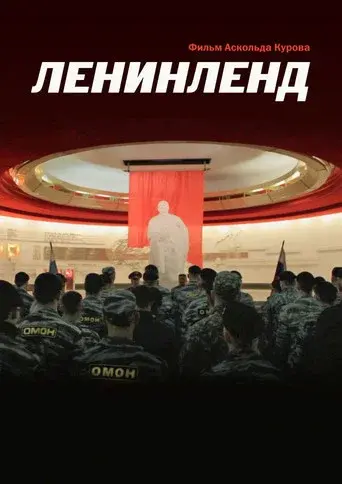
At the peak of Perestroika, in 1987, in the village of Gorki, where Lenin spent his last years, after a long construction, the last and most grandiose museum of the Leader was opened. Soon after the opening, the ideology changed, and the flow of pilgrims gradually dried up. Despite this, the museum still works and the management is looking for ways to attract visitors. Faithful to the Lenin keepers of the museum as they can resist the onset of commercialization. The film tells about the modern life of this amazing museum-reserve and its employees.
Leninland

Focused on the experiences of Manuel "Manolo" Díaz Caballero, who was a local police officer in Malaga for more than 30 years, his memories of those years are the subject of this documentary.
My Uncle Manolo
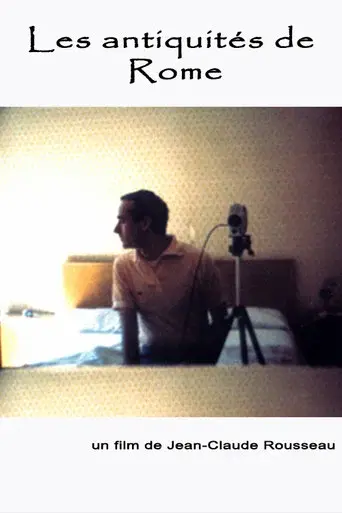
A structuralist work composed of static, long-duration shots of Roman ruins and architectural details, all filmed on Super 8. The film operates without a traditional narrative or dialogue, relying on fixed compositions to document the interplay of light and shadow across ancient stone. By framing monuments through windows and doorways, Jean-Claude Rousseau explores the relationship between historical space and the act of observation.