Overview
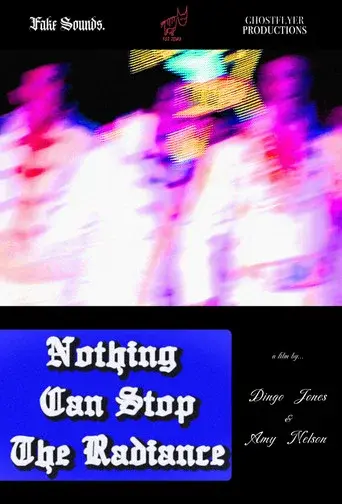
A snooze alarm clock cannot wake a sleepy person. The bell of the alarm clock hence becomes a hypnotic trigger. Such an ordinary sound is redefined in our drowsy moments, and we are also liberated from the sounds that condition our lives—queue management systems, electric scooters, air raid drills, and public demonstrations. These sounds are released from the soft soil of our consciousness and grow into a new scene. And we sail with those who cannot be awakened on a boat drifting off course into a new realm projected by frequency. This is a film you can watch with your eyes closed.
Key Film Crew
Production Stats
You May Also Like


Faced with an assignment to film something personal, Cem begins a quiet search for what that really means. A casual conversation with a close friend leads him to turn the camera toward the people who already shape his life. Through moments with his grandmother, spontaneous talks about family, and reflections on his dream of becoming a filmmaker, MozikMoro slowly transforms into a portrait of connection and self discovery. Between the ordinary and the intimate, Cem captures a world that is both deeply personal and universally human.
MozikMoro

During the last forty years, the photographer Sebastião Salgado has been travelling through the continents, in the footsteps of an ever-changing humanity. He has witnessed the major events of our recent history: international conflicts, starvations and exodus… He is now embarking on the discovery of pristine territories, of the wild fauna and flora, of grandiose landscapes: a huge photographic project which is a tribute to the planet's beauty. Salgado's life and work are revealed to us by his son, Juliano, who went with him during his last journeys, and by Wim Wenders, a photographer himself.
The Salt of the Earth

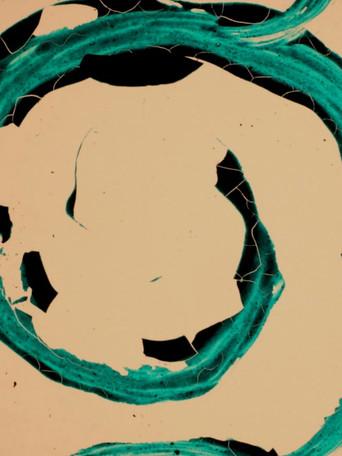
The Red Tide follows a life changing move to Florida. Exploring a new home located near famous earthworks by Robert Smithson, the enormous art collection-turned-museum of John Ringling, and beaches plagued by a toxic phenomenon called the ‘red tide’. Beginning with a recreation of Nancy Holt and Robert Smithson’s 1969 film, Swamp, the film describes a confusion between multiple anxieties: art’s legacy, climate change, and a longing to stay connected. Taken From Sally Lawton's Website: http://www.sallylawton.net/the-red-tide.html
The Red Tide
Having lost her memory, A. could barely recall glimpses of her childhood in Argentina. After her death, her son visits the empty house for the last time. A sensory journey through a house without objects but filled with memory.
A.

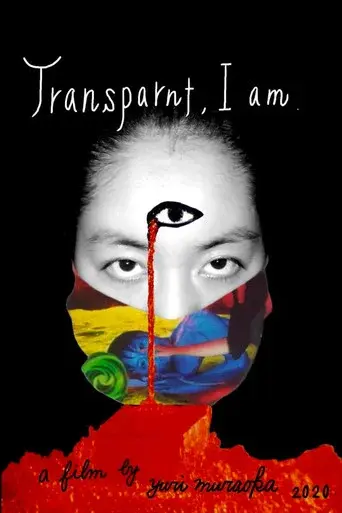
In the year 2020, when the world was forced to ‘change’, I wanted to confirm what changed and what did not change in me. The white mask I wore became the screen projecting my past. My family is sometimes hurt, but support me as I suffer from schizophrenia. We live today while looking for the answer to ‘Who are we?’
Transparent, I am.

A grandmother faintly narrates her quilts, as seen through the warped glass lens of a broken camera, a laptop webcam, and a clunky Xerox scanner.
Blanket Song
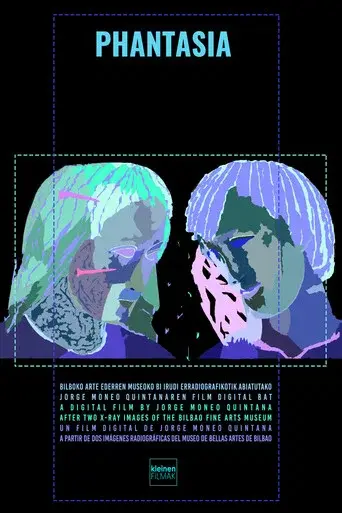
X-ray images were invented in 1895, the same year in which the Lumière brothers presented their respective invention in what today is considered to be the first cinema screening. Thus, both cinema and radiography fall within the scopic regime inaugurated by modernity. The use of X-rays on two sculptures from the Bilbao Fine Arts Museum generates images that reveal certain elements of them that would otherwise be invisible to our eyes. These images, despite being generally created for technical or scientific purposes, seem to produce a certain form of 'photogénie': they lend the radiographed objects a new appearance that lies somewhere between the material and the ethereal, endowing them with a vaporous and spectral quality. It is not by chance that physics and phantasmagoria share the term 'spectrum' in their vocabulary.
Phantasia

Departing from peripheral details of some paintings of the Bilbao Fine Arts Museum, a female narrator unravels several stories related to the economic, social and psychological conditions of past and current artists.
Exergo
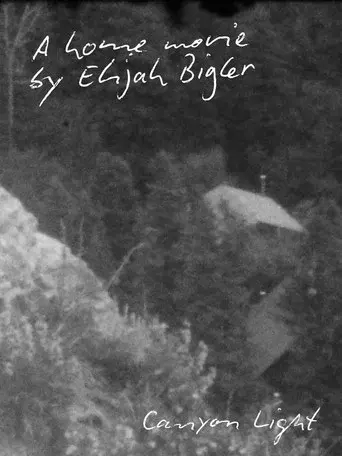
Phyllis Bigler has been going to the Spanish Peaks of Colorado since she was a child. Now in her 90s, she tells her stories.
Canyon Light
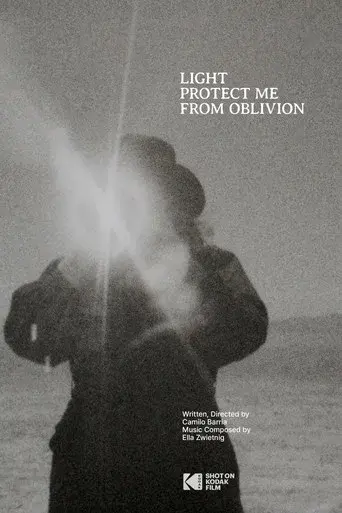


In 2002, Lana Kaiser became well known in the first season of the German version of the Idol television franchise. She was born in 1985 and went by her birth name Daniel Küblböck. At only 17 years old she polarised the audience with her androgynous appearance and open bisexuality. On September 9th 2018, Lana disappeared from a cruise ship on her way to North America. Most media outlets and the majority of the public didn‘t consider calling her by her chosen name, Lana Kaiser. Philipp Gufler's video installation is a personal portrait of the singer and entertainer.
Lana Kaiser
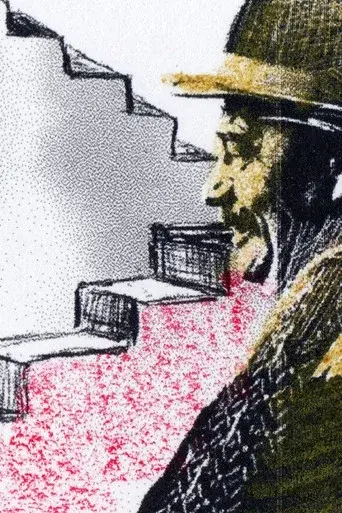
Jazz, dreams, and hope. The protagonist of the film is Wiesław Mrzygłód, a musician and artist. He has an extraordinarily positive attitude to the world, life, and music. In the 1980s, together with the Old Dixieland Players, he played at the most important jazz events in Poland and Europe. Despite doctors' opinions, he says, "Someday, I will play again." He refuses to give up. The film was made using analog and combined techniques, based on drawing using oil pastels, prints, and re-filming methods.