

Overview
A long-term resident of Casa Milà, the last house designed by Antonio Gaudí, reflects on the experience of living inside a work of art.
Key Film Crew
Production Stats
You May Also Like

Catalan architect Antonio Gaudí (1852-1926) designed some of the world's most astonishing buildings, interiors, and parks; Japanese director Hiroshi Teshigahara constructed some of the most aesthetically audacious films ever made. With camera work as bold and sensual as the curves of his subject's organic structures, Teshigahara immortalizes Gaudí on film.
Antonio Gaudí


A study of Antoni Gaudí's architecture, his sources of inspiration and his influence on Picasso.
Antonio Gaudí


Images of the Church of the Sagrada Familia by Antoni Gaudí confronted with brief flashes of housing projects and industrial areas. The furious display of a effervescent imagination is opposed to a grey functionality.
Gaudi Killed by a Tram


In 1959 Hiroshi Teshigahara shot the following 16 mm footage of he and his father’s first trip to Barcelona and the outlying Catalonian countryside, including a visit to the home of Salvador Dali in Port Lligat. The footage was recorded without sound.
Gaudi, Catalunya

Viktor, an architect student from Kyiv, loves Barcelona and the Gaudí work. He wants to get a scholarship in Barcelona, so he’s waiting for a reply from Spanish university. While in Barcelona they decide whether to grant a scholarship to Ukrainian student, he’s going down fast… Will the letter reach him too late?
Gaudi
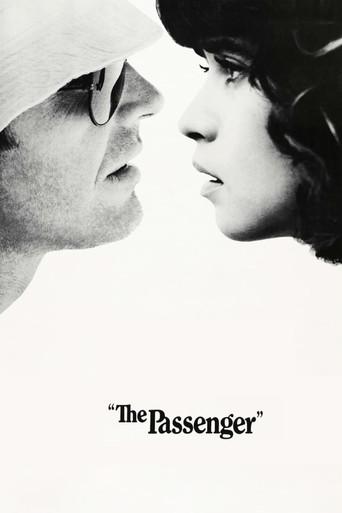
David Locke is a world-weary American journalist who has been sent to cover a conflict in northern Africa, but he makes little progress with the story. When he discovers the body of a stranger who looks similar to him, Locke assumes the dead man's identity. However, he soon finds out that the man was an arms dealer, leading Locke into dangerous situations. Aided by a beautiful woman, Locke attempts to avoid both the police and criminals out to get him.
The Passenger

Since 1975 Kiyoshi Awazu has been obsessed with the "designer" Antonio Gaudi. Then there was no stopping this man. He went to Barcelona, took his own 16mm camera, made a film, wrote a book called "In Praise of Gaudi" and was the main force behind the subsequent tour of the Gaudi exhibition in Japan. (Ken Awazu).
Gaudi

When I first arrived in Barcelona in 1974 I decided to make a film about architect Antoni Gaudi's Park Guell. I found a film already conceived in the 1914 design; it was enough to follow the trajectories traced by Gaudi, imagine them as a labyrinth, reproduce the bursting of the mosaics through an analogous fracture of linear temporality. In the editing I tried to avoid showing passers-by. No human figure should get in the way of the appearance of that fantastic architecture. The stop-motion technique applied to the position and parameters of the camera still seems suitable for representing the undulating space of the park.
