The Maine Frontier: Through the Lens of Isaac Walton Simpson
Overview
The Maine Frontier: Through The Lens of Isaac Walton Simpson, combines the scarcely seen turn-of-the-century photography of Isaac Simpson with both archived and current films, oral histories, and a compelling musical soundtrack performed live.
Top Cast

Marguerite Simpson
Herself
Athlyn Titcomb
Herself
Deanie Simpson-West
Susan Beasley
Key Film Crew
Production Stats
You May Also Like

A sock puppet explores a family history told from the perspective of a mother and father.
We Exist Triply

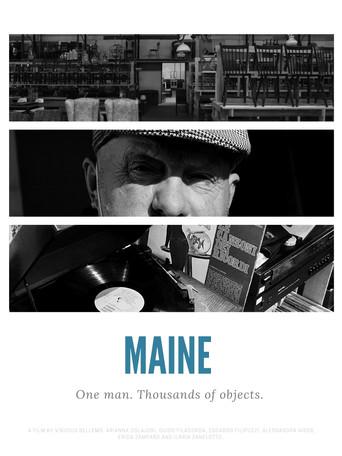

From the Marx Brothers to Schindler's List, this compilation of Jewish film trailers offers a glimpse at the history of Jews in American cinema. A mixture of humor, social commentary, and drama, these original coming attractions trailers offer insight into the relationship between Hollywood's studio marketing departments and the growing visibility of Jews in American life. Trailers Schmailers includes spotlights on Woody Allen and Barbra Streisand, an overview of films about New York Jewish life, a look at the evolution of films about the holocaust, and more.
Trailers Schmailers

In early 19th century New England, an unscrupulous woman uses her beauty and wits to seduce, deceive and control the men around her.
The Strange Woman
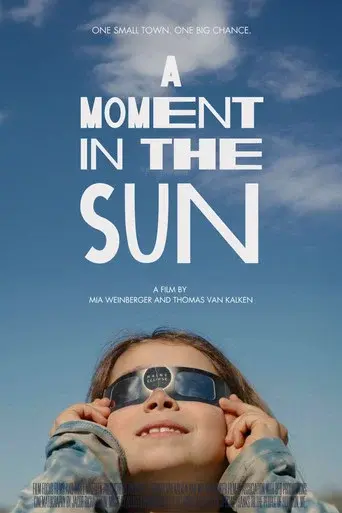
As the solar eclipse of 2024 races towards Houlton, Maine - a township of approximately 6,000 people - they must find a way to host 40,000 stargazing strangers the only way they know how: with open arms and open hearts.
A Moment in the Sun
A darkly beautiful visual essay that explores human emotion in response to societal standards. With a lone cello providing the soundtrack, this collage of archival footage from 1950’s-era films is a superb example of manipulation via sound and image (Dorothy Woodend, DOXA Documentary Film Festival)
In Light, In!

An undocumented immigrant explores his and his family's immigration trauma while grasping hope through a voicemail.
Time Keeps Marching On

Filmmaker Erin Hobden travels back to her home town to explore her father's documenting of her childhood.
Looking Back
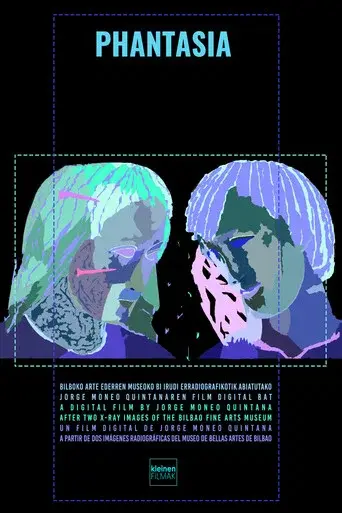
X-ray images were invented in 1895, the same year in which the Lumière brothers presented their respective invention in what today is considered to be the first cinema screening. Thus, both cinema and radiography fall within the scopic regime inaugurated by modernity. The use of X-rays on two sculptures from the Bilbao Fine Arts Museum generates images that reveal certain elements of them that would otherwise be invisible to our eyes. These images, despite being generally created for technical or scientific purposes, seem to produce a certain form of 'photogénie': they lend the radiographed objects a new appearance that lies somewhere between the material and the ethereal, endowing them with a vaporous and spectral quality. It is not by chance that physics and phantasmagoria share the term 'spectrum' in their vocabulary.
Phantasia

The film delves into the work processes of an archaeological team from the Aranzadi Science Society at the San Adrián Tunnel site. Interspersing this observation with archival materials, the film explores the relationships between archaeology and museography, as well as the different ways in which these two practices produce the displacement of objects.
Stone and bag


An early experimental film by Toshio Matsumoto. Produced as part of the student riots in Japan at the start of the 1960s, Matsumoto uses collage, archival footage, and impassioned narration to create an expressive, visceral criticism of the US-Japan Security Treaty.
Security Treaty

A short documentary about a trailer weighing over 300 tons that carries material for the construction of a dam toward Tokyo.
300 Ton Trailer

Lake gazes down at a still body of water from a birds-eye view, while a group of artists peacefully float in and out of the frame or work to stay at the surface. As they glide farther away and draw closer together, they reach out in collective queer and desirous exchanges — holding hands, drifting over and under their neighbors, making space, taking care of each other with a casual, gentle intimacy while they come together as individual parts of a whole. The video reflects on notions of togetherness and feminist theorist Silvia Federici’s call to “reconnect what capitalism has divided: our relation with nature, with others, and our bodies.”
Lake

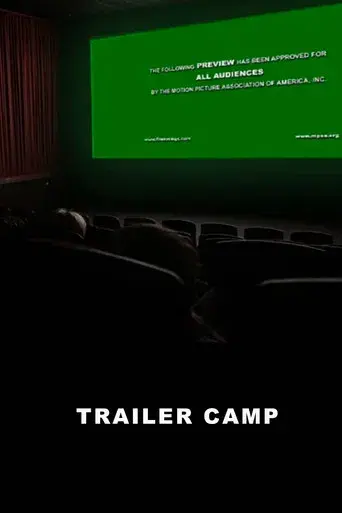
Film archivist and former director of the San Francisco Lesbian and Gay Film Festival Jenni Olson created this fast-paced and often funny, campy 75-minute film comprised entirely of spliced together movie trailers. Some of the segments have themes such as a breezy look back at John Travolta's career that includes trailers from such films as Saturday Night Fever, Staying Alive, Grease, Perfect, and Moment by Moment. Other trailers include Mae West in Sextette, the disco camper Thank God It's Friday, Raquel Welch in Kansas City Bomber, Pier Paolo Pasolini's The Gospel According to St. Matthew and the rarely seen Chastity, the serious acting debut of Cher.
Trailer Camp

Hot Splice is a semi-serious short documentary that highlights how destructive film repairs leave behind raw materials to experiment and play with. In a mixture of archival video, 16mm film scans, inexplicable French narration, and Atlanta trap history, this short takes bits and pieces collected during my time as an archival assistant to make something nouveau.
Hot Splice
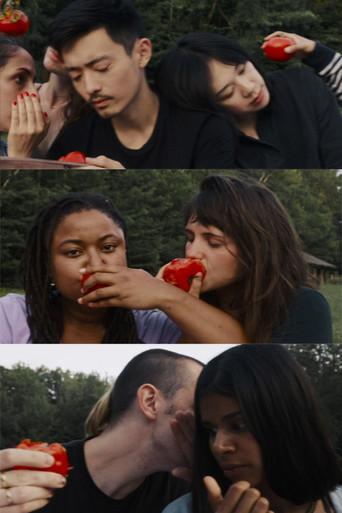
Across the installation's multiple channels, the camera circles a group of artists as they sit together in a field eating, licking, and squeezing ripe tomatoes. Throughout the ever-changing scene, kisses, whispers, and caresses are shared with a casual, gentle intimacy that reflects interconnectivity and abundance. These queer and desirous exchanges constitute a portrait of collectivity wherein individuals come together as distinct parts of a whole.